#Computer Use setup
400 related articles

·3 min
Monocular RGB Human Mesh Reconstruction: Real-Time Motion Capture at 18 FPS with Rust + CUDA
A deep dive into a real-time 3D human mesh reconstruction project using a single RGB camera, built with Rust, Candle, and CUDA, achieving 55ms/frame on an RTX 5080.
Read more →
·3 min
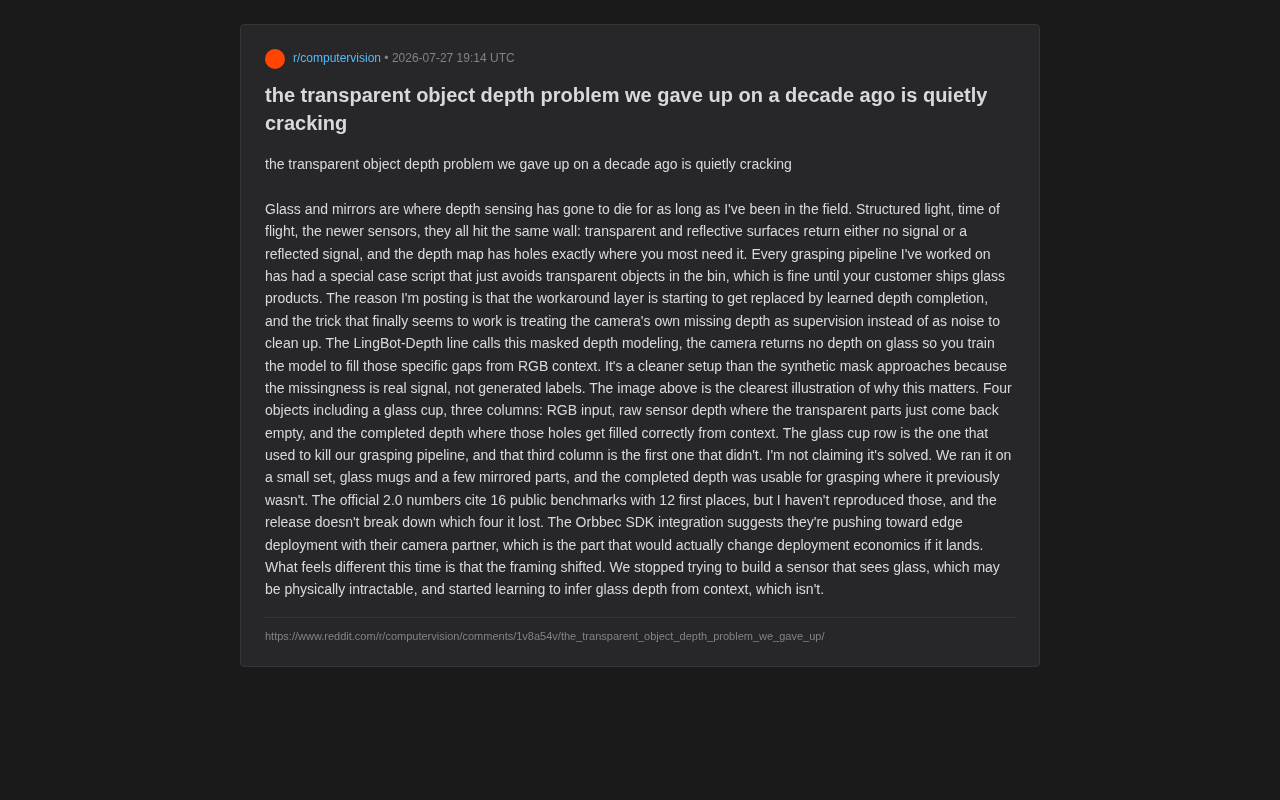
The Depth Perception Challenge for Transparent Objects: How LingBot-Depth Breaks Through with Masked Depth Modeling
Depth perception for transparent and reflective objects has long been a core challenge in robotic grasping. LingBot-Depth uses masked depth modeling to turn sensor failure into supervisory signals, inferring glass depth from RGB context.
Read more →
·3 min
The Depth Perception Challenge for Transparent Objects: How LingBot-Depth Breaks Through with Masked Depth Modeling
Transparent and reflective object depth perception is a core challenge in robotic grasping. LingBot-Depth uses masked depth modeling to turn sensor failure into supervision, inferring glass depth from RGB context.
Read more →

·3 min
Getting Started with Codex: The Right Way to Use AI Coding Agents
A detailed comparison of OpenAI Codex and Claude Code with hands-on testing. From AI agent concepts to account setup, helping developers quickly master AI coding agents.
Read more →

·3 min
Flux 3 Hands-On: Generating Dual-Camera Synchronized Video from a Single Prompt — How Good Is It?
Flux 3 demo generates dual-camera synchronized video from one complex prompt, featuring fluid dynamics, multi-view consistency, and precise temporal control.
Read more →

·3 min
Why IPFS and Filecoin Failed to Gain Traction in the Self-Hosting Community
IPFS and Filecoin promise decentralized storage and censorship resistance, yet the self-hosting community ignores them. This article analyzes why simpler tools like Syncthing and BitTorrent win.
Read more →
·6 min
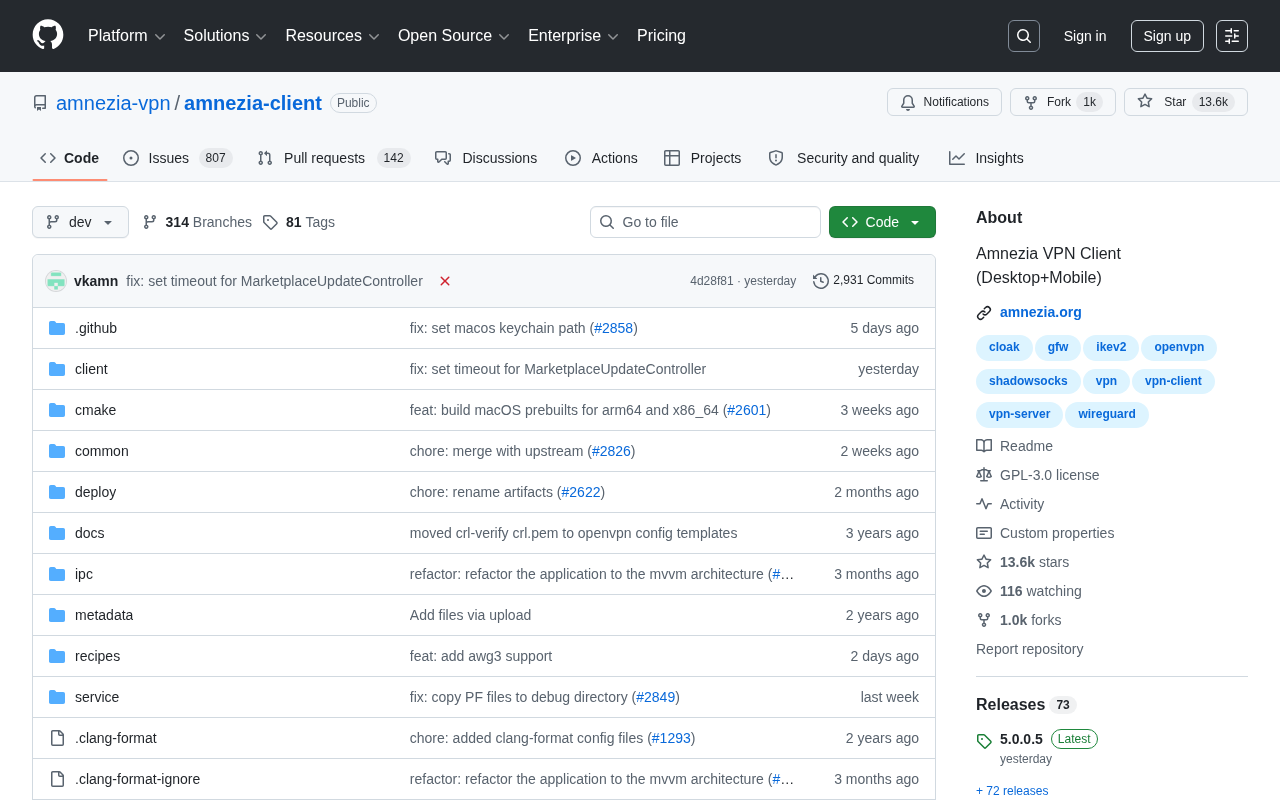
AmneziaVPN Deep Dive: The Open-Source Powerhouse for Self-Hosted, Censorship-Resistant VPN
Deep dive into the AmneziaVPN open-source client: AmneziaWG anti-DPI obfuscation, self-hosted VPS deployment, multi-protocol support, and cross-platform privacy.
Read more →
·3 min
Flux 3 Hands-On: Generating Dual-Camera Synchronized Video from a Single Prompt — How Good Is It?
Flux 3 demo generates dual-camera synchronized video from a single complex prompt, featuring fluid dynamics, multi-view consistency, and precise temporal control.
Read more →

·3 min
GLM 5.2 Hands-On: An Open-Source, Low-Cost Model That Rivals Opus
In-depth hands-on review of GLM 5.2: a 753B-parameter open-source model with a 1M-token context, rivaling Opus 4.8 at about one-tenth the price. Full setup guide for Claude Code and Cursor.
Read more →

·4 min
AI Testing in Practice: A Complete Guide to Three Types of AI Tools and the New Paradigm of Test Development
A complete guide to the three core categories of AI tools in the testing era (personal assistants, CLI geek tools, AI IDEs), revealing the real challenges of AI test case generation and the new AI test development paradigm.
Read more →

·4 min
AI Testing in Practice: A Complete Guide to Three Types of AI Tools and the New Paradigm of Test Development
A comprehensive guide to three core AI tool types (personal assistant, CLI geek, AI IDE) in the testing era. Uncover the real challenges of AI test case generation and the new AI test development paradigm.
Read more →

·2 min
Codex Hands-On Tutorial: Generate MG Animation with an AI Agent in One Sentence
Get started with Codex AI Agent from scratch: project creation, plugin setup (Computer Use/Remotion), Plan Mode vs Goal Mode, and a hands-on demo of generating MG animation in one sentence.
Read more →

·7 min
Enterprise AI Agent Security Isolation and Memory Design: NanoClaw Founder Breaks Down Real-World Lessons
NanoClaw founder David Boyd breaks down the core engineering of enterprise autonomous Agents: a triple security isolation model, LLM Wiki memory design, and the real-world path from personal Agents to team-scale deployment.
Read more →

·3 min
Zero-Cost QQ Group Minesweeper Bot in 6 Minutes with DeepSeek
Step-by-step guide to using DeepSeek with the OICQ framework to generate a runnable QQ group Minesweeper bot Python script in 6 minutes — zero cost, real pitfalls included.
Read more →

·3 min
Codex Beginner's Guide: A Step-by-Step AI Work Assistant Tutorial for Non-Coders
Complete beginner's guide to OpenAI Codex desktop client: installation, setup, project management, and plugins — no coding required. Let AI actually do work for you.
Read more →

·2 min
Getting Started with LangGraph: Graph Orchestration and State Machines for AI Agents
A comprehensive guide to LangGraph's core concepts: Graph API vs Functional API, three-layer architecture, and workflow visualization methods for building AI Agents.
Read more →

·7 min
The Complete AI Character LoRA Training Workflow: Hands-On Multi-Character Consistency Generation with Local Deployment
A detailed guide to a complete local AI character generation workflow: from the five golden rules of LoRA training and automated ComfyUI dataset construction to hands-on comparisons of Crea2, Ideogram4, and Wan for multi-character same-frame interaction—all running free on personal hardware.
Read more →

·6 min
The Complete Codex Guide: From Beginner to Pro with the All-in-One AI Assistant
OpenAI Codex is more than a coding tool—it's an AI agent that writes code, makes slides, and operates browsers. This guide covers its four versions, permission modes, plugins, automation, and six best practices.
Read more →

·2 min
Codex in Practice: AI-Powered Programming with Natural Language Instructions — No Coding Background Required
Learn how to use Codex for AI-powered programming with natural language prompts — from generating origami assets to building a gesture-interactive portfolio site. No coding required.
Read more →

·2 min
LangChain Agent Email Integration: Gmail API vs AgentMail — A Practical Comparison
Integrating email into LangChain agents: Gmail API's OAuth flow is too complex, while AgentMail offers a lightweight agent-native email API. A practical engineering comparison.
Read more →