#Cursor alternatives
164 related articles

·3 min
Chinese Open-Source AI Conquers Silicon Valley: The Industry Upheaval Behind a 58% Compute Share
Chinese open-source AI models surged from under 10% to 58% of U.S. market share. Kimi K3, DeepSeek, and Qwen are being adopted by DoorDash, Airbnb, and other Silicon Valley giants, reshaping AI costs and competition.
Read more →

·4 min
Chinese AI Accounts for 58% of US Compute Consumption: How Open-Source LLMs Are Disrupting Silicon Valley
OpenRouter data shows Chinese AI models now account for 58% of US AI consumption. Silicon Valley giants like DoorDash and Airbnb adopt Kimi, DeepSeek, and Qwen for their low cost and open-weight advantages.
Read more →
·4 min
Chinese AI Accounts for 58% of US Compute Consumption: How Open-Source LLMs Are Disrupting Silicon Valley
OpenRouter data shows Chinese AI models now account for 58% of US AI consumption. Silicon Valley giants like DoorDash and Airbnb adopt Kimi, DeepSeek, and Qwen, leveraging low cost, high performance, and open weights.
Read more →
·4 min
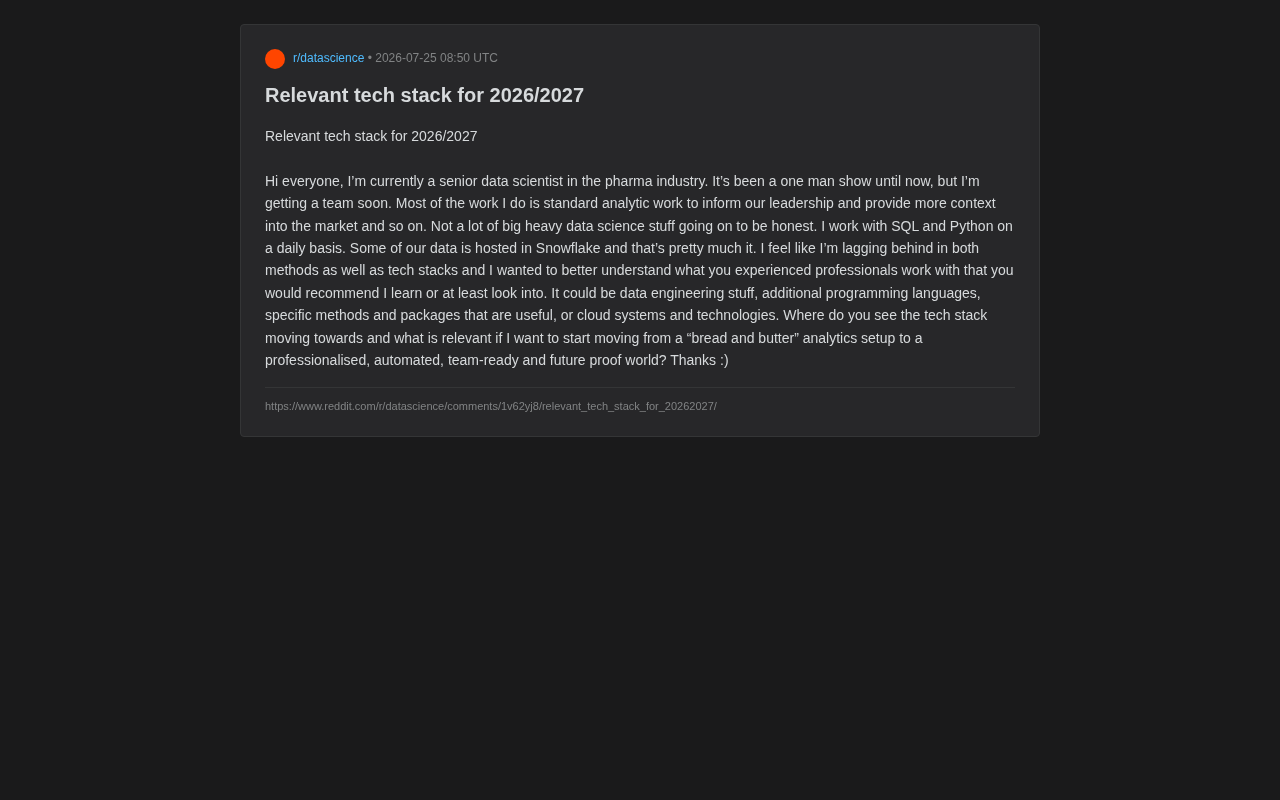
From Solo Analyst to Team Data Platform: A Practical Guide to Leveling Up Your Tech Stack
How should a data scientist upgrade their tech stack when transitioning from IC to team lead? A phased roadmap covering Git, dbt, Snowflake, modern data stack, and generative AI.
Read more →

·4 min
Do Cursor Promo Codes Still Work? A Developer's Guide to Saving on AI Coding Tools
Are Cursor referral codes and discount codes still valid? This guide analyzes Cursor's pricing model, promotional policy trends, and practical savings strategies including annual billing, education discounts, and competitor comparisons.
Read more →

·6 min
Making Money with AI Coding Gigs: A Sober Breakdown and Honest Assessment of the Four-Week Learning Path
Can beginners really earn over 10,000 yuan in their first month with AI coding gigs? This article breaks down the four-week AI coding learning path week by week and objectively assesses the real monetization barriers.
Read more →

·4 min
Beyond Vibe Coding: A Complete Guide to Enterprise-Grade AI Engineering
Hit the Vibe Coding ceiling? This guide covers the three-stage AI coding progression path, Claude Code vs. Codex, SuperPower SDD, and how to go from vibe coding to enterprise-grade AI engineering.
Read more →

·2 min
Why Does Vibe Coding Fail? The Community Reveals the Overlooked Truth About Success
A 160+ comment Reddit debate asks: are Vibe Coding projects doomed to fail? We break down the real success logic behind AI-assisted development, internal tools replacing SaaS, and what actually makes projects succeed.
Read more →

·5 min
Inside Cursor: How Recursive Model Improvement Enables AI to Self-Evolve
A Cursor ML engineer breaks down AI training methodology: outer/inner loop acceleration, preventing reward hacking, textual feedback, and recursive self-improvement (RSI) where models train the next generation.
Read more →

·3 min
Claude Code Practical Guide: Environment Setup, Git Workflows, and Engineering in Production
A complete guide to Claude Code: environment setup, switching to domestic LLMs, CLI commands, Git workflows, MCP, Subagents, and enterprise project walkthroughs.
Read more →
GitHub Daily · July 20: AI Agent Infra…
·3 min
GitHub Daily · July 20: AI Agent Infrastructure Explodes Across the Board
AI Agent infrastructure explodes across GitHub Trending: OmniRoute unifies 268+ providers, cognee adds long-term memory, and self-hosted openship tops growth with +1719 stars.
Read more →

·2 min
Heap Code: The Open-Source VS Code AI Coding Assistant That Truly Supports Local Models
Heap Code is an open-source VS Code extension supporting local models via Ollama and LM Studio, plus OpenAI-compatible APIs. Features completions, chat, inline edit, and agent mode — zero telemetry, no account required.
Read more →
PostHog Deep Dive: The Open-Source All…
·2 min
PostHog Deep Dive: The Open-Source All-in-One Platform for Product Analytics and AI Observability
PostHog is an open-source all-in-one platform combining product analytics, session replay, feature flags, A/B testing, and AI Observability. Supports self-hosting and MCP protocol.
Read more →

·2 min
GPT-5.6 Launch Triggers Industry Chain Reactions: The New Competition Landscape of Compute, Energy, and Open Source
GPT-5.6 raises frontier model expectations, Anthropic extends Fable 5; data center power bottlenecks emerge; open-source GLM5.2 rivals top closed models; AI review burden overlooked.
Read more →

·2 min
MCP vs. Skills: A Clear Breakdown of AI Agent Architecture Layers
MCP and Skills aren't alternatives — they occupy different layers of AI Agent architecture. This article breaks down Function Call, MCP, and Skills to clarify each layer's role.
Read more →

·3 min
Programmer to AI Engineer: You're Already 80% There — Here Are the 6 Skills You're Missing
Programmers transitioning to AI engineering aren't starting from scratch. Learn the 6 core skills — LLM APIs, RAG, prompt engineering, LLMOps — needed to make the leap.
Read more →

·3 min
Getting Started with Codex: A Comprehensive Comparison with Claude Code and How to Choose
A deep comparison of Codex vs. Claude Code on pricing, stability, and frontend/backend strengths — plus how to choose between Cursor, Claude Code, and Codex.
Read more →

·4 min
MCP Protocol Deep Dive: Its Relationship with Function Calling and Agents, Plus a Practical Guide
Deep dive into MCP (Model Context Protocol): clarifying the three-layer relationship between MCP, Function Calling, and Agents, covering protocol roles, call flows, transport choices, and production security for AI developers.
Read more →

·2 min
After SpaceX Acquires Cursor: The Developer Psychology Behind the Surge in Alternative Searches
After SpaceX allegedly acquired Cursor, searches for "Cursor alternatives" surged. We analyze developers' concerns, review top AI coding tools like GitHub Copilot, Windsurf, and Cline, and explore low migration barriers and the trend of tool sovereignty.
Read more →

·4 min
Claude Sonnet 5 In-Depth Review: Impressive Performance, but Hidden Traps in the Pricing Strategy
A full review of Claude Sonnet 5: major agentic gains, benchmarks near Opus 4.8, but a Tokenizer switch inflates real costs, nearly erasing the price gap with Opus. We break down the pricing traps.
Read more →