#DeepSeek-R1
226 related articles

·5 min
Getting Started with LangChain: LLM Invocation, Agent Practice, and Environment Setup Guide
Starting from the three limitations of LLMs, this guide systematically explains LangChain's core positioning, environment setup, API key prep, model init, and the message system. Learn init_chat_model and AIMessage/HumanMessage/SystemMessage.
Read more →

·5 min
AI Data Centers Competing for Power: Why U.S. Manufacturing Energy Costs Keep Soaring
The explosive expansion of AI data centers is voraciously consuming electricity, directly driving up U.S. manufacturing energy costs. This article dissects the crowding-out effect and the path forward.
Read more →
·3 min
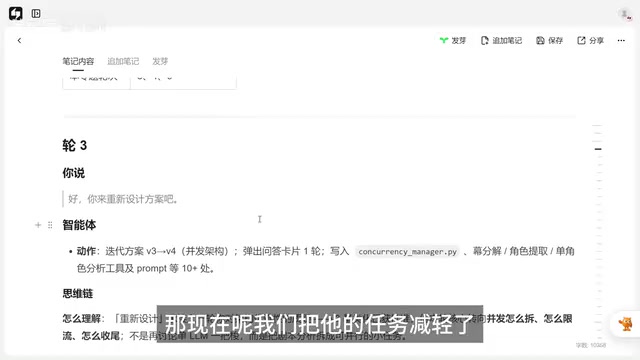
Vibecoding in Practice: Task Concurrency Splitting Makes AI Inference 3x Faster
Learn how to split AI reasoning tasks by act and character, run 14 concurrent streams, and cut processing time from 100s to 30s — a reusable schedule-concurrency-aggregate methodology.
Read more →

·7 min
50 AI Research Job Applications to FAANG, 0 Replies? Unpacking the Truth Behind the Job Search Struggle
An AI research engineer with 3 years of experience sent 50 applications to FAANG with zero replies. This article breaks down the hidden barriers of top-tech AI roles, the truth about LinkedIn ghost jobs, and the MLE vs. Research Engineer divide.
Read more →

·7 min
Getting Started with AI Agents: A Deep Dive into the Perception-Decision-Action Loop
A clear, in-depth guide to how AI Agents work: the paradigm shift from traditional programs, the perception-decision-action loop, and the four pillars—LLMs, tool calling, memory, and RAG.
Read more →

·4 min
AI Agent Learning Path for Beginners: From Theory to Real-World Practice
A complete AI Agent learning roadmap covering BDI theory, core components (Perception/Planning/Execution), AutoGen multi-agent frameworks, and DeepSeek RAG projects for beginners.
Read more →

·4 min
DeepSeek-V4 Deep Dive: Million-Token Context Architecture Breakthrough and Core Innovations
Deep dive into DeepSeek-V4: 1.6T-parameter MoE, CSA+HCA hybrid attention, MHC & MUON optimizer. Inference FLOPs drop to 27% of V3.2, redefining open-source LLM SOTA.
Read more →

·4 min
Reinforcement Learning for AI Agents: A Deep Dive into RLHF and Agentic RL
A deep dive into RL for AI agents: from RLHF to Agentic RL, covering PPO vs. GRPO, sparse rewards, tool-calling optimization, and verifiable rewards.
Read more →

·7 min
Tencent DiscoBench: The First Benchmark for Evaluating LLM Search Agents' Ambiguity Clarification Capabilities
Tencent Hunyuan and Tsinghua jointly release DiscoBench, the first benchmark evaluating search agents' dynamic ambiguity clarification. Covering 463 ambiguity instances across 11 domains, it reveals real weaknesses of mainstream LLMs.
Read more →

·6 min
Unsloth Major Update: DeepSeek-V4 Support and a Deep Dive into NVFP4 Quantized Export
Unsloth v0.1.481-beta adds full DeepSeek-V4-Flash support, NVFP4/FP8/imatrix GGUF quantized export, 1.3x faster GRPO, 3-5x faster MoE training, and an OpenAI-compatible API service in Studio.
Read more →

·6 min
GPT-5.6 Three-Model Launch: Soul/Terra/Luna Tiered Strategy and the AI National Security Game
OpenAI previews the GPT-5.6 series — Soul, Terra, and Luna — with a massive 1.5M-token context. In-depth analysis of coding leaps, the Fable 5 national security game, the heating U.S.-China AI race, and workflow economics.
Read more →
·6 min
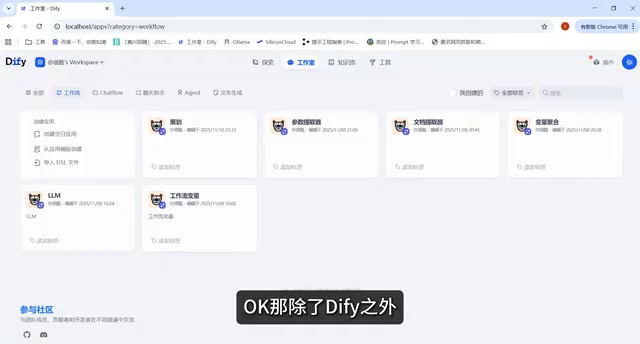
Complete Guide to Deploying Dify Locally: Docker + Ollama + RAG Setup Tutorial
A detailed guide to deploying the Dify agent platform locally: from Docker setup and integrating Ollama + DeepSeek local LLMs to workflow orchestration and RAG knowledge base construction.
Read more →
·7 min
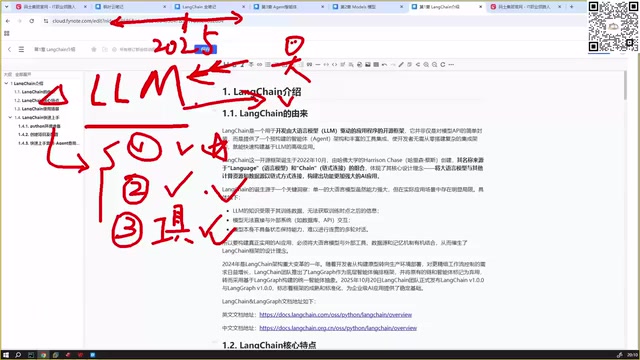
LangChain Hands-On Guide: From LLM Calls to Agent Development
Master LangChain from scratch: the three limitations of LLMs, init_chat_model unified interface config, the Message type system, and the path from LLM calls to Agent development.
Read more →

·7 min
A Java Developer's Guide to AI: Framework Selection and Practical Tutorial for LangChain4J
As LLM costs keep falling, how can Java developers seize the AI opportunity? This article explores LangChain4J's core capabilities, supported models and vector databases, and compares LangChain4J vs. Spring AI to help you build local knowledge bases and intelligent customer service systems.
Read more →

·6 min
Verification Loops Quadruple DeepSeek's Intelligence at One-Seventh the Cost of Claude Opus
By introducing an engineered verification loop reasoning framework, DeepSeek's effective pass rate on complex tasks can improve ~4x, matching Claude Opus at one-seventh the cost. A deep dive into verification loops, test-time compute scaling, and their practical implications.
Read more →
·5 min
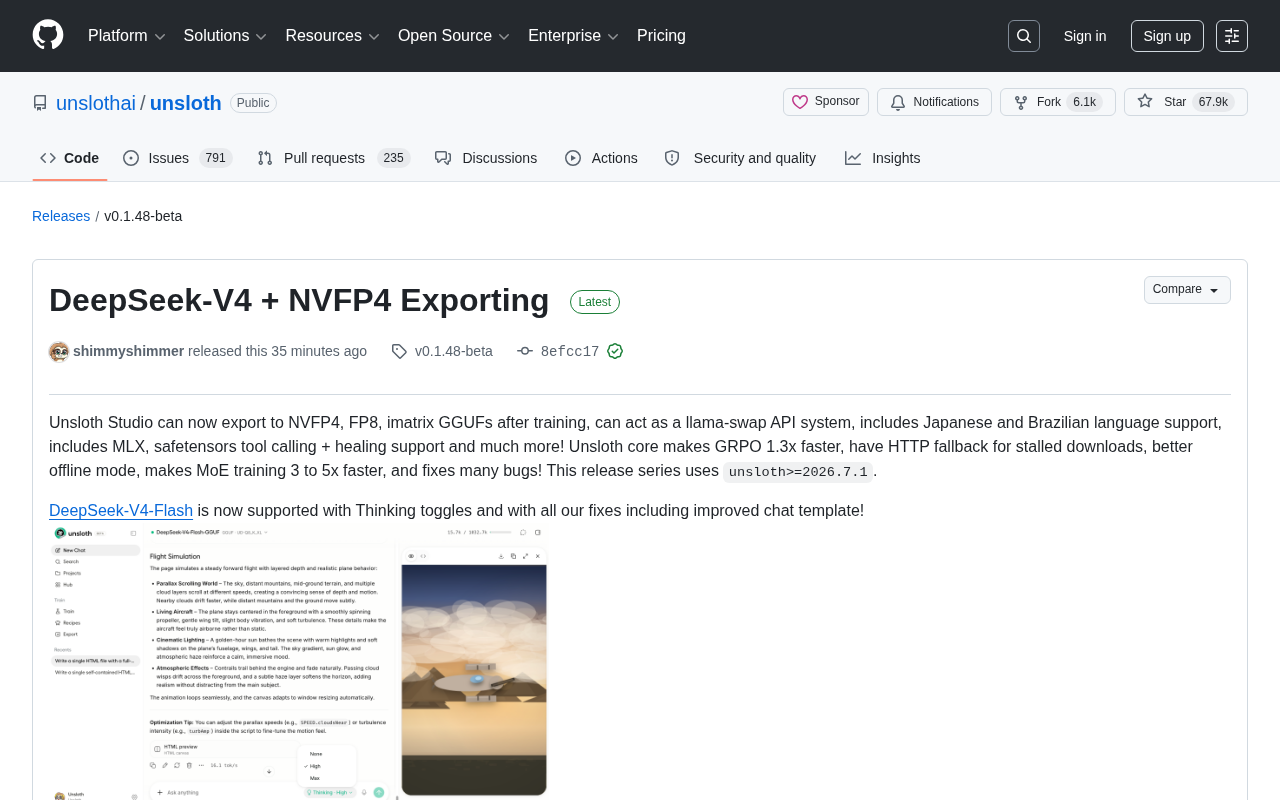
Major Unsloth Update: NVFP4 Quantization Export and DeepSeek-V4 Training Support
Unsloth v0.1.48-beta released, adding NVFP4/FP8 quantization export, OpenAI-compatible API hot-swapping, 3-5x faster MoE training, and 1.3x faster GRPO, covering the full LLM fine-tuning, quantization, and local deployment pipeline.
Read more →

·2 min
LLM Thought Visualization: Making AI Reasoning Transparent and Interpretable
LLM thought visualization is emerging as a key breakthrough in AI explainability. This article explores the value, technical approaches, and challenges of visualizing Chain-of-Thought reasoning.
Read more →

·3 min
Unsloth v0.1.45-beta Released: 2x Faster LLM Fine-Tuning with 70% Less VRAM
Unsloth v0.1.45-beta (PyPI: 2026.6.2) delivers 2x faster LLM fine-tuning and up to 70% VRAM reduction. Now at 67.9k GitHub stars, upgrade via pip install.
Read more →

·6 min
GLM 5.2 Arrives: Industry Upheaval on the Eve of AI Margin Collapse
The rise of Zhipu's GLM 5.2 is accelerating the democratization of LLM capabilities. This article analyzes the commoditization of foundation models, the logic behind margin collapse, and the opportunities and challenges facing application-layer and foundation model firms.
Read more →

·2 min
Training Just One Transformer Layer Can Match Full-Parameter RL Training?
A controversial study shows training just one Transformer layer can match full-parameter RL training. We analyze the technical principles, engineering value, and limitations of this approach.
Read more →