#DiCE
111 related articles

·3 min
GeoLibre: An Open-Source Cloud-Native GIS Platform and Lightweight Cross-Platform Geospatial Tool
GeoLibre is an open-source lightweight cloud-native GIS platform built with TypeScript, supporting Web browsers, desktop, mobile, and Jupyter Notebook environments. Explore its core features and advantages.
Read more →

·3 min
GeoLibre: An Open-Source Cloud-Native GIS Platform and Lightweight Cross-Platform Geospatial Tool
GeoLibre is an open-source lightweight cloud-native GIS platform built with TypeScript, running across web browsers, desktop, mobile, and Jupyter Notebook environments.
Read more →

·3 min
Spring AI Explained: Unified API, RAG, and Enterprise AI Development Practical Guide
Deep dive into Spring AI framework's core features including provider-agnostic unified API abstraction, RAG retrieval-augmented generation, and structured output to help Java developers build enterprise AI apps.
Read more →

·4 min
Foundry VTT Public Access Guide: The Right Way to Securely Expose Self-Hosted Services
Learn how to securely expose Foundry VTT to the public internet. Compare port forwarding, Cloudflare Tunnel, and reverse proxy solutions with practical advice on network isolation and layered defense.
Read more →
·6 min
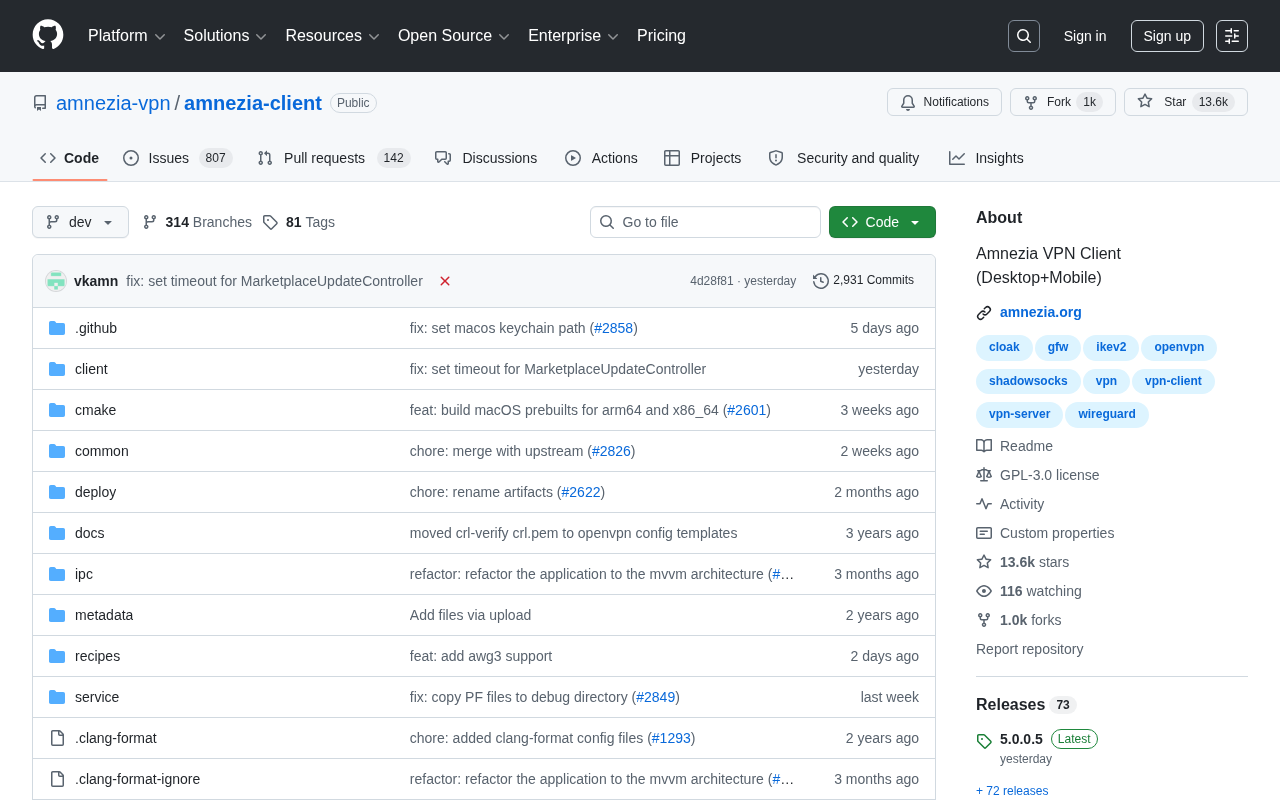
AmneziaVPN Deep Dive: The Open-Source Powerhouse for Self-Hosted, Censorship-Resistant VPN
Deep dive into the AmneziaVPN open-source client: AmneziaWG anti-DPI obfuscation, self-hosted VPS deployment, multi-protocol support, and cross-platform privacy.
Read more →

·3 min
Rust and Mojo Are Quietly Replacing Python's Low-Level Engine
Python tops the language rankings again, but AI teams are quietly swapping its internals for Rust and Mojo. A look at Python's speed and GIL pains, the two-language problem, and the rise of Rust tooling and Mojo on GPUs.
Read more →
·7 min
Auditing Cryptographic Libraries with AI: What We Found in Cloudflare's CIRCL
An in-depth look at using AI LLMs to audit Cloudflare's open-source cryptographic library CIRCL, covering constant-time detection, side-channel vulnerabilities, and human-AI collaboration.
Read more →

·6 min
Vue3 from Scratch: A Hands-On Journey to Building an AI Health Monitoring System
A Vue3 beginner tutorial centered on "learn just enough, apply immediately." A three-stage path covers reactivity, Composition API, Element Plus, and data visualization, culminating in an enterprise-grade AI health monitoring system with blood sugar management, RAG consultation, and doctor-patient collaboration.
Read more →
Why Switzerland Resists Air Conditioni…
·2 min
Why Switzerland Resists Air Conditioning: The Deep Tensions Between Climate, Energy, and Social Values
Why does Switzerland — a wealthy, developed nation — resist widespread air conditioning? This article explores the interplay of climate change, energy policy, architectural heritage, and social values behind Switzerland's cautious stance on cooling.
Read more →

·3 min
OpenClaw Multi-Agent AI Programming Workflow in Practice: From Coder to Manager
Deep dive into OpenClaw multi-agent AI programming workflows: context layering, CMUX parallel terminal management, work trees, and manager-perspective debiasing for scalable AI dev automation.
Read more →

·3 min
OpenAI Cuts Inference Costs in Half: AI Competition Shifts from 'Who's Strongest' to 'Who's Cheapest'
OpenAI engineers have found ways to cut inference costs by over 50%. Combined with Anthropic's research AI tools and an $800M chip startup, the AI race is shifting from capability to cost efficiency.
Read more →
WebRTC P2P Local File Transfer Explain…
·2 min
WebRTC P2P Local File Transfer Explained: How It Works, Benefits, and Limitations
A deep dive into WebRTC-based P2P local file transfer: no cloud relay, end-to-end encrypted direct connections via DataChannel. Covers NAT traversal, privacy benefits, large-file challenges, and comparisons with Snapdrop.
Read more →
·5 min
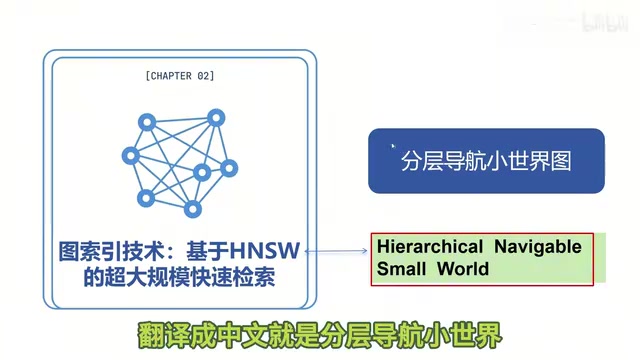
A Deep Dive into Vector Search for AI Agents: The Technical Foundations of RAG and Long-Term Memory
An in-depth look at the core tech behind AI Agents: how the HNSW, IVF, and PQ vector search algorithms power RAG and long-term memory. Understand where a model's "memory" and "knowledge" come from.
Read more →

·3 min
Cracks in the AI Boom: Why Ordinary People Are Being Left Behind
AI-driven growth enriches tech giants while ordinary workers fall behind. We examine wealth concentration, job displacement, and the skills gap in the AI economy.
Read more →

·6 min
OpenAI Merges ChatGPT and Codex: The Super App for the AI Agent Era Is Here
OpenAI merges ChatGPT and Codex into a super app and releases three new GPT-5.6 models: Sol, Terra, and Luna. A deep dive into four hands-on workflows—Computer Use, Loops, and multi-threading—for the AI agent era.
Read more →
AI Boosts Research Careers While Pushi…
·2 min
AI Boosts Research Careers While Pushing Scientific Discovery Toward Homogeneity
AI tools are accelerating individual research careers, but as the scientific community converges on similar AI models, discovery risks becoming homogeneous. An analysis of the incentive problem.
Read more →

·3 min
AI-Powered OSINT in Practice: A Learning Path and Tool Guide for CS Professionals
How can OSINT practitioners with a CS background automate intelligence with AI? This guide covers computer vision, VLMs, and Agent frameworks including YOLO, SAM, and Grounding DINO.
Read more →

·4 min
Deep Learning Data Normalization: Global Statistics vs. Per-Image Normalization — A Practical Guide
A deep dive into global vs. per-image normalization in deep learning, with remote sensing segmentation case studies covering data leakage, Min-Max vs. Z-score, and best practices for multi-channel satellite imagery.
Read more →

·5 min
Complete Guide to the National Mathematical Modeling Contest: Modeling, Topic Selection, and Award-Winning Strategies in the AI Era
A comprehensive guide to preparing for the National Mathematical Modeling Contest: covering the essence of modeling, judging rules, topic selection, AI usage guidelines, and a four-day schedule to boost your chances of winning.
Read more →

·2 min
LingBot-Video 1.3B Selective FP8 Quantization Benchmark: 22% Faster Sampling
Reddit developer ALX-CODE shares a selective FP8 quantization scheme for LingBot-Video 1.3B, achieving ~22% faster sampling (4.65s→3.65s) on an RTX 5080. This article breaks down the mixed-precision strategy, open-source resources, and ComfyUI adaptation.
Read more →