#Feynman Technique
18 related articles

·3 min
IBM Claims Quantum Advantage: Why the New Verification Technique Is a Key Breakthrough
IBM announces quantum advantage with a novel verification technique, addressing the trust problem in quantum computing results. Analysis of the method's logic, differences from Google's quantum supremacy, and implications for commercialization.
Read more →

·3 min
The Jargon Trap: Why Engineers Can Never Seem to Speak Plain Language
Why do engineers struggle to communicate in plain language? Exploring the curse of knowledge, jargon as identity, and practical tips for clearer technical communication.
Read more →

·5 min
Multiway Turing Machines: A New Paradigm from Single Computation to Multiple Possibilities
An in-depth analysis of Wolfram's multiway Turing machines, exploring how computation expands from single paths to multiway graph structures, and deep connections to AI search algorithms and quantum computing.
Read more →

·3 min
The Software 3.0 Era: An AI Programming Evolution Guide for Frontend Engineers
Natural language programming is reshaping frontend development. This article explains AI code generation, Prompt formulas, pitfall avoidance, RAG, Agent orchestration, and skill maintenance.
Read more →

·3 min
How CS Students Should Use AI to Learn Programming — Without the "Used It But Learned Nothing" Trap
Many CS students use AI to learn programming but later feel they didn't truly learn. This article breaks down the two AI learning traps and offers Socratic questioning, the Feynman Technique, and more to turn AI into a real learning accelerator.
Read more →

·3 min
MLOps from Scratch: A 100-Day Learning Challenge Roadmap and Practical Guide
A college student's MLOps 100-day challenge documents the full journey from Python engineering and Git to Docker, model deployment, and monitoring. A practical roadmap for data scientists transitioning to ML engineering.
Read more →

·2 min
Peer Instruction for ML Self-Learners: A Practical Guide to Breaking Through Plateaus
A civil engineering student's Reddit plea reveals ML self-learning's most overlooked obstacle: lack of feedback and peers. Explore peer instruction theory and actionable tips for cross-disciplinary AI learners.
Read more →

·3 min
Will Vibe Coding Ruin Programmers? Coding Anxiety and How to Break Through in the AI Era
As Vibe Coding rises, many developers can't write code without AI. We break down the risks, whether traditional coding skills still matter, and how to rebuild them.
Read more →

·6 min
An Efficient Learning Guide for Data Science: Study Partnerships and Hands-On ML in Practice
Struggling to learn data science alone? This article explores the value of study partnerships and pairs them with the classic Hands-On ML textbook to offer a phased learning plan from math foundations to deep learning.
Read more →
·4 min
No Competitive Programming Required: How CS Students Can Pivot to AI/ML and Land Internships
How can CS students who dislike competitive programming systematically pivot to AI/ML? This guide covers skill priorities (Python/SQL/ML/deployment), portfolio strategy, Kaggle tips, and real paths to landing AI/ML internships.
Read more →
Flashcard Learning: The Science of Spa…
·3 min
Flashcard Learning: The Science of Spaced Repetition and a Practical Guide to Mastery
Why flashcards remain irreplaceable in the AI age — exploring active recall, spaced repetition algorithms, and Anki practices to build lasting, internalized knowledge.
Read more →
·6 min
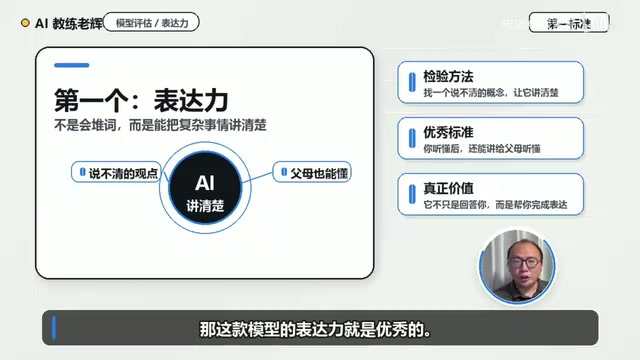
Forget Benchmark Scores! Four Practical Standards to Judge an LLM's Real Capability
High benchmark scores don't mean an LLM is actually useful. This article shares four field-tested standards—expressiveness, insight, cognitive depth, and problem-solving—to help you find the AI that truly fits you.
Read more →

·4 min
Python Learning Path for Absolute Beginners: A Science-Based Guide to Avoid Common Pitfalls
How can beginners learn Python without getting lost? This guide outlines a 3-stage learning path covering basics, advanced topics, and hands-on practice in web scraping, data analysis, and office automation.
Read more →

·4 min
Frontend to Full-Stack AI: A Complete NestJS + LangChain Roadmap
Pure frontend roles are shrinking fast. Learn how mastering NestJS and LangChain AI agent development can unlock a 20–30% salary boost on your full-stack AI transition path.
Read more →

·3 min
6 Practical Prompt Techniques to 10x the Quality of AI Responses
6 proven prompt techniques — role-playing, deep questioning, adversarial critique, failure pre-mortem, reverse engineering, and dual-version explanation — to dramatically improve AI output quality.
Read more →
 Expert Opinions
·3 min
Thinking Can Be Outsourced, Understanding Cannot: The Most Overlooked Cognitive Blind Spot of the AI Era
AI can replace thinking but not understanding. This article explores the key difference, reveals three cognitive traps for AI users, and offers practical ways to preserve your understanding.
Read more →
 Expert Opinions
·2 min
You Are a Product of Your Actions, Not Your Aspirations: Bridging the Gap from Daydreaming to Execution
Why aspirations can't define you and only actions shape identity. A deep analysis of the action-driven vs. aspiration-driven mindset with four practical strategies to bridge the knowing-doing gap.
Read more →
 Expert Opinions
·2 min
Why Should Technical Professionals Create Content? Three Core Benefits from a 7-Year Creator
A 7-year technical creator with 1,000+ videos shares three core benefits of content creation: deep learning, portfolio over resume, and influence monetization.
Read more →