#GPU compute
1468 related articles

·4 min
Cross-Cloud GPU Preemption Migration: How to Slash 40% of Compute Costs
Deep analysis of how cross-cloud GPU preemption migration technology helps MLOps teams cut 40% of compute costs through predictive telemetry, cross-cloud state migration, and compute arbitrage.
Read more →

·3 min
Is LLM Inference Really That Expensive? Breaking Down the Cost Reduction Logic of GPU Compute and Inference Frameworks
Analyzing real LLM inference costs: from B200 GPU compute gains, vLLM framework optimization to MTP multi-token prediction, explaining why serving costs are widely overestimated.
Read more →
·2 min
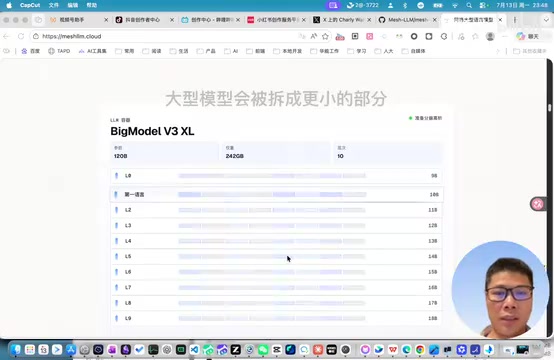
Mesh LLM: Pool Multiple Old Computers Into a Virtual Super GPU for Running Large Models
Mesh LLM is an open-source distributed inference framework that splits model layers across multiple devices, creating a virtual super GPU to run 100GB+ LLMs on consumer hardware.
Read more →

·7 min
Practical RL Compute Optimization: Core Strategies to Boost CPU and GPU Utilization
An in-depth look at why CPU and GPU utilization is low in RL training, covering vectorized environment parallelism, distributed Actor-Learner architectures, GPU-side simulation (Isaac Gym/Brax), and Ray RLlib practice.
Read more →

·7 min
Complete Guide to Training Small Models on Kaggle's Free Compute: GPU Quotas and Practical Tips
In-depth guide to Kaggle's free-tier compute: P100/T4 GPU with 30 hours/week quota, 12-hour sessions, suitable models like CNN and BERT fine-tuning, plus tips like mixed precision and checkpointing to start deep learning at zero cost.
Read more →

·2 min
The Compute Crisis: Why Google and Anthropic Are Paying SpaceX a Premium to Rent GPUs
Microsoft, Google, and Anthropic face severe compute shortages. Anthropic pays SpaceX $1B/month for GPUs. From TSMC capacity to HBM, storage, and power, the AI supply chain is in full crisis.
Read more →

·3 min
The Scaling Dilemma of Vertical AI Engine MLOps: Engineering Practices from Prototype to Scale
Exploring MLOps scaling challenges for vertical AI engines moving from prototype to production, covering model iteration pipelines, data drift detection, and inference cost optimization.
Read more →

·3 min
DeepSeek V4 Flash Real-World Test: The Secret Behind Spending Only $3 on 120M Tokens
A developer tested DeepSeek V4 Flash 0731, spending only $3 on 120M tokens. Learn how cache hit mechanisms slash API costs and tips for long-context optimization.
Read more →

·3 min
Cloudflare OS Explained: An Edge Computing Open Platform for AI Agents
Deep dive into Cloudflare OS's technical architecture and strategic positioning—how it leverages its global edge network, Workers runtime, and Durable Objects to provide low-latency, secure environments for AI agents.
Read more →

·3 min
Learning Machine Learning from Scratch: How to Find a Study Partner and Level Up Efficiently
A complete learning path for machine learning from scratch—from Python basics to PyTorch deep learning—plus practical strategies for finding study partners and overcoming self-study plateaus.
Read more →

·4 min
How Databricks Cut AI Coding Costs by 70%: Strategies and Insights
Databricks cut AI coding tool costs by 70% through intelligent model routing, prompt caching, context optimization, and self-hosted open-source models. Learn actionable strategies for controlling LLM inference costs.
Read more →

·2 min
The Mystery of Composer 3's Disappearance: Replaced by Grok 4.5 or Still in Development?
Cursor's previewed Composer 3 model has vanished from official docs, replaced by Grok 4.5. We analyze three possibilities and the broader build vs. integrate debate in AI coding tools.
Read more →

·3 min
The Age of Embeddings: A Paradigm Shift in Data Science from Feature Engineering to Representation Selection
Explore how foundation model embeddings are reshaping data science workflows. The shift from feature engineering to representation selection with pre-trained models and lightweight downstream heads is becoming standard practice across domains.
Read more →

·3 min
Kitesurf: A V8 Isolate-Based Lightweight Browser Designed for AI Agents
Deep dive into Kitesurf—a lightweight browser built on V8 Isolates for AI Agents. Learn how its millisecond cold starts, high concurrency, and sandbox isolation solve traditional browser bottlenecks in AI automation.
Read more →

·3 min
SAM3 + RTMPose Zero-Shot on 1950s Factory Footage: A Real-World Test of Foundation Model Generalization
A developer applied SAM3 and RTMPose to 1950s black-and-white factory footage with zero fine-tuning and got accurate results. We analyze the technical logic and implications.
Read more →

·3 min
Ollama Cloud Unsubscription Story: A Real-World Comparison of GLM vs DeepSeek
A Django developer shares their Ollama Cloud subscription experience, comparing GLM 5.2 and DeepSeek V4 Pro for PHP programming, analyzing cloud AI coding service value for indie developers.
Read more →

·3 min
xAI Ignores Environmental Regulations: The Compliance Dilemma and Double Standards of an AI Giant
xAI faces controversy over alleged Clean Air Act violations at its Tennessee data center. An analysis of compliance issues, Hacker News debates, and AI governance challenges.
Read more →

·2 min
Got a GPU Cluster but Don't Know What to Do? A Practical Guide to Choosing AI Projects
Facing GPU cluster resources as an AI beginner? This guide covers project ideas from AI safety to model evaluation to RAG optimization, helping students effectively leverage compute resources.
Read more →

·3 min
Software Optimization Makes a Single B200 Rival Dedicated Inference Chips
Analysis of how a single NVIDIA B200 GPU surpasses Groq LPU and approaches Cerebras performance through software optimization alone, covering CUDA kernels, TensorRT-LLM, and FP8 quantization.
Read more →

·3 min
Practical Guide to Building a Multimodal RAG Application with Nemotron 3 Nano Omni
Learn how to build a multimodal RAG application with NVIDIA Nemotron 3 Nano Omni, covering Modal cloud deployment, Gradio frontend, and document retrieval Q&A workflows.
Read more →