#Jellyfin
48 related articles
GitHub Daily · July 19: The Dual Advan…
·3 min
GitHub Daily · July 19: The Dual Advance of Heterogeneous Inference and Agent Toolchains
GitHub Trending July 19: ktransformers tops the list with heterogeneous inference optimization, while jcode, cua, and AstrBot signal a maturing Agent ecosystem.
Read more →

·2 min
When Self-Hosting Communities Get Drowned in AI Slop: Where Did the Technical Passion Go?
A Reddit post sparks broad resonance: self-hosting communities are being diluted by AI-generated apps and homogenized content. Exploring "AI slop," vibe coding, and how to preserve genuine technical passion.
Read more →

·2 min
Goodbye Paid Subscriptions: A Complete Practical Guide to Self-Hosting
A complete guide to self-hosting: replace paid subscriptions with Nextcloud, Jellyfin, Vaultwarden and more. Covers Docker deployment, backup strategy, and secure remote access.
Read more →
·3 min
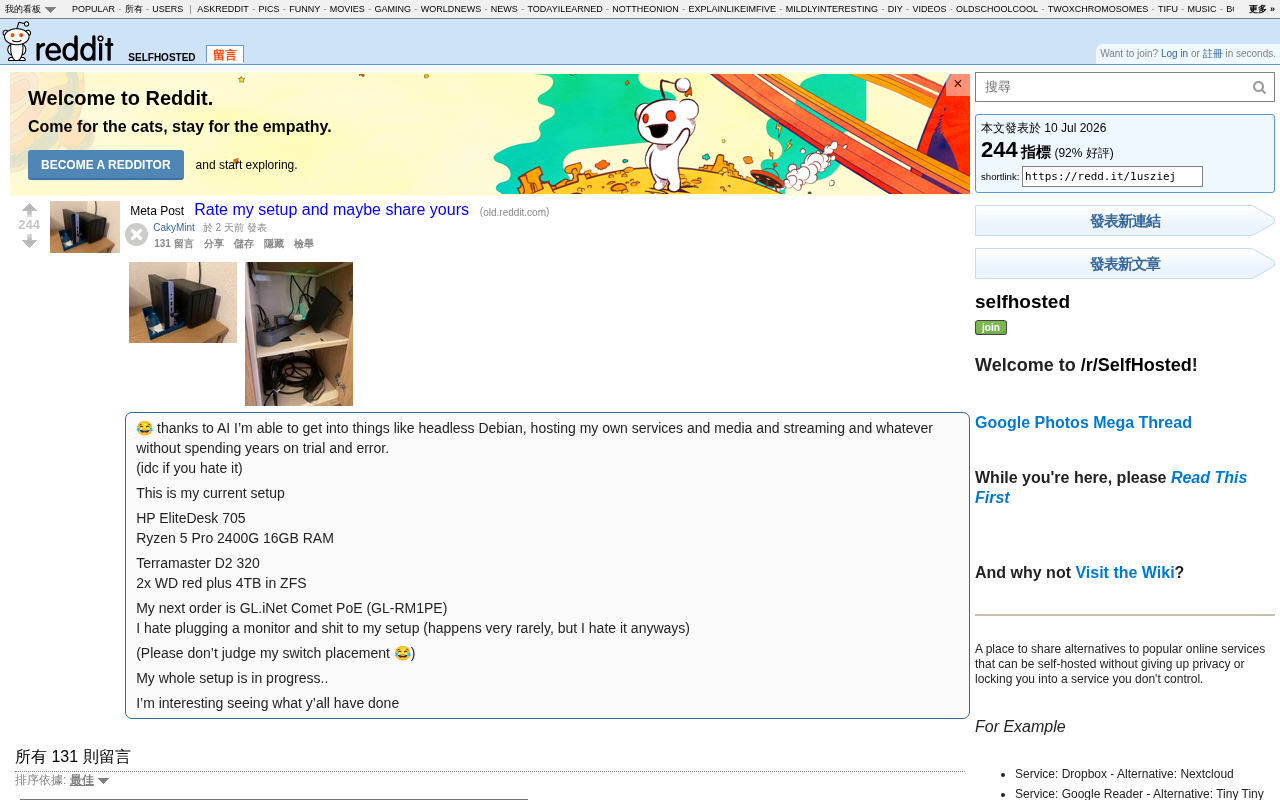
AI-Powered Home Server Setup from Scratch: Hardware Selection to Remote Management
With AI tools, beginners can build a home self-hosting server without years of experience. This guide covers hardware selection (HP EliteDesk, ZFS, IP-KVM), Docker deployment, and how AI compresses the technical learning curve.
Read more →

·6 min
Home Self-Hosting Server Setup Guide: Building a Private Cloud Ecosystem from Scratch
One 32GB server, 8 hours to build a complete home self-hosting ecosystem. This article details the selection logic behind core services like Jellyfin, Forgejo, Immich, and Ollama, plus infrastructure setup essentials for Nginx Proxy Manager and Podman Compose.
Read more →

·5 min
A €35 IKEA Coffee Table Hides an Entire Home Server: Where Aesthetics Meets Function
A Reddit user hid a NAS, hard drive array, and modem inside a €35 IKEA Gillersberg coffee table, winning his partner's approval. Here's how this high-WAF home server solution works.
Read more →

·4 min
SparkyFitness: The Rise of an Open-Source, Self-Hosted Health Tracking App
SparkyFitness is an open-source, self-hosted alternative to MyFitnessPal and Flo. In one year: 4,500 users, 73 contributors, covering nutrition, sleep, women's health, GLP-1 tracking, and more.
Read more →

·3 min
RomM: The Open-Source Self-Hosted ROM Manager for Retro Game Collections
RomM is an open-source self-hosted ROM manager with automatic metadata fetching, in-browser gameplay, and Docker deployment. Build your own retro game media library.
Read more →