#LLM API pricing comparison
265 related articles

·2 min
GPT-5.6 Released: Redefining the Price-Performance Boundary of AI Models
OpenAI releases GPT-5.6, targeting the price-performance frontier. Analysis of how architectural optimization and inference efficiency reduce costs, and how LLM competition shifts from capability to cost efficiency.
Read more →

·2 min
LangWatch Open-Source Tool: Making Every Token Cost in Claude Code Crystal Clear
LangWatch launches an open-source tool for Claude Code usage tracking — one command to trace token consumption, cache breakdowns, call chains, and terminal replay to optimize AI coding costs.
Read more →

·2 min
Moving State Out of Framework Memory: A Multi-Agent Architecture Refactoring Guide
Exploring how 70% of multi-agent memory is consumed by non-reasoning state, and a refactoring approach using email threads to replace framework memory for better token efficiency, auditability, and resilience.
Read more →

·2 min
Grok 4.5 Released: A Next-Gen AI Model Targeting Coding and Agentic Tasks
Grok 4.5 is officially released, purpose-built for coding, agentic tasks, and knowledge work. A deep dive into its core positioning, efficient reasoning, three key use cases, and value for developers.
Read more →

·2 min
Google Releases Three New Gemini Models: Faster, Cheaper, and More Specialized
Google launches Gemini 3.6 Flash, 3.5 Flash-Lite, and 3.5 Flash Cyber—three new models targeting quality-cost balance, extreme affordability, and cybersecurity specialization for AI Agent use cases.
Read more →

·3 min
Lessons from Claude Code's 80% Prompt Reduction: Less Is More in Prompt Engineering
Anthropic cut Claude Code's system prompt by 80% and got better performance. Learn why verbose prompts hurt, how to streamline them, and key takeaways for AI developers.
Read more →

·3 min
Gemini 2.5 Flash Deprecation: A Practical Migration Guide for Image Understanding Models
Gemini 2.5 Flash will be deprecated in October 2026. Learn how to choose between gemini-3.1-flash-lite and gemini-3.5-flash-lite for image understanding tasks with migration evaluation methods and architecture tips.
Read more →

·3 min
Lessons from Claude Code's 80% Prompt Reduction: Less Is More in Prompt Engineering
Anthropic cut Claude Code's system prompt by 80% and got better results. Learn why verbose prompts hurt performance, how to streamline them, and key lessons for AI developers.
Read more →

·2 min
Gemini 3.6 Flash Hands-On: Upgrades in Both Quality and Token Efficiency
In-depth analysis of Google Gemini 3.6 Flash's core upgrades including output quality improvements and token consumption optimization, with developer migration advice.
Read more →

·2 min
Gemini 3.5 Flash-Lite: A Low-Cost, High-Throughput Powerhouse for Scaling AI
A deep dive into Google's Gemini 3.5 Flash-Lite model. Designed for high-frequency repetitive tasks like ticket sorting and data extraction, it tackles the core cost challenge of enterprise AI scaling through ultra-low pricing and high throughput.
Read more →
·3 min
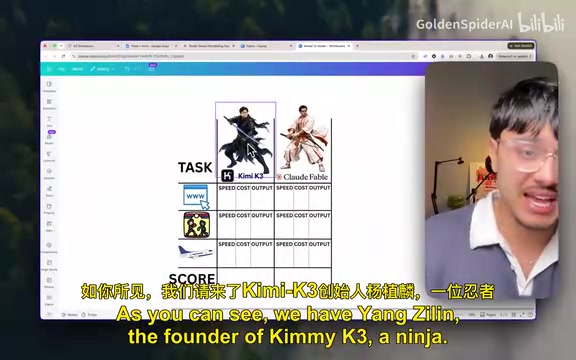
Kimi K3 vs Claude Real-World Test: Near-Equal Performance at 1/8 the Price
Real-world comparison of Kimi K3 vs Claude flagship across e-commerce pages, 3D fighting games, and flight simulators. Kimi K3 delivers 90% output quality at 1/8 the price with faster speeds and local deployment support.
Read more →

·3 min
Kimi K3 Real-World Testing in 3D Modeling & Game Development: Can Open-Source Models Overtake Closed-Source Giants?
In-depth testing of Kimi K3 in 3D modeling, physics simulation, animation rigging, and game development vs Fable 5 and GPT Solve 5.6. Open-source model delivers top-tier results at one-quarter the price.
Read more →

·3 min
Claude Code vs Codex: Hands-On Comparison and Installation Guide for AI Programming Tools
In-depth comparison of Claude Code and Codex AI programming tools covering accuracy, installation, and network setup tips to help developers choose the best solution.
Read more →

·3 min
How to Elegantly Access Top AI Models Like GPT and Claude from China
Chinese users face registration, payment, and network barriers when accessing GPT, Claude, and other top AI models. This guide covers AI aggregation platforms as a one-stop solution.
Read more →

·3 min
Anthropic Opus 5 Real-World Testing: Outperforms Competitors at Half the Price
Anthropic Opus 5 hands-on review: first to break 30% on ARC-AGI, near Fable 5 agentic coding at half the price. Benchmarks, token costs, and GPT-5.6 comparison.
Read more →

·3 min
Anthropic Opus 5 Real-World Testing: Outperforms Competitors at Half the Price
Anthropic Opus 5 hands-on review: first to break 30% on ARC-AGI, near Fable 5 in agentic coding at half the price. Benchmarks, token costs, and GPT-5.6 comparison.
Read more →

·4 min
Kimi K3 Deep Dive: 2.8 Trillion Parameter Open-Source Model Closes the Gap with Closed-Source Frontier for the First Time
Moonshot AI releases Kimi K3 open-weight model with 2.8T parameters and 1M token context. Our deep dive covers coding, 3D dev, agent capabilities, and safety concerns.
Read more →

·3 min
How to Choose an AI Agent Platform for Your Team: 5 Evaluation Dimensions and a Decision Framework
Choose the right AI Agent platform by evaluating model flexibility, observability, tool integration, security compliance, and total cost. A complete decision framework to help technical leaders avoid vendor lock-in.
Read more →

·3 min
How to Choose an AI Agent Platform for Your Team: 5 Evaluation Dimensions & Decision Framework
Choose an AI Agent platform by evaluating model flexibility, observability, tool integration, security compliance, and total cost. A complete decision framework to avoid vendor lock-in.
Read more →

·4 min
Opus 5 Real-World Testing: Cheaper Yet Stronger — Why It's Now My Default Coding Model
In-depth testing of Claude Opus 5's coding abilities vs Fable 5 and 5.6 Sol. Why Opus 5 outperforms pricier models at half the token cost, plus selection guide and distillation explained.
Read more →