#LLM non-determinism
44 related articles

·3 min
Graph Engineering: The Core Paradigm and Design Patterns for AI Agent Orchestration
Explore how graph engineering uses state machines and directed graph structures to constrain AI agent behavior, covering reflection, routing, human-in-the-loop, and parallel execution patterns.
Read more →
·4 min
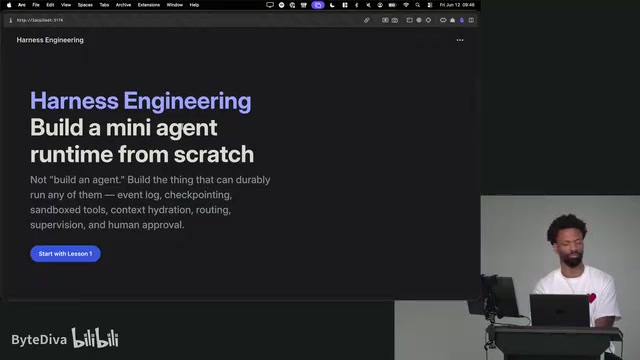
Harness Engineering: The Core Infrastructure for Taking AI Agents from Demo to Production
Deep dive into Harness Engineering: why AI Agents need memory management, durable execution, guardrails & approvals to go from demo to production.
Read more →

·4 min
Harness Engineering: The Core Infrastructure for Taking AI Agents from Demo to Production
Deep dive into Harness Engineering: why AI Agents need memory management, durable execution, guardrails & approvals to reach production. Based on Scott Moss's workshop.
Read more →

·3 min
API Mock vs. Sandbox in Agent Testing: A Detailed Layered Strategy Guide
API Mock is fast but misses bugs; Sandbox is realistic but costly. This article analyzes their core differences and provides a layered testing strategy for building reliable Agent test systems.
Read more →

·2 min
From Workflow Graphs to Distributed Protocols: Dissecting Multi-Agent System Architecture Paradigms
How does Cosmonapse replace LangGraph's graph structure with event-driven distributed protocols? A deep dive into two multi-agent architecture paradigms, their trade-offs, and when to use each.
Read more →

·2 min
Deterministic Attention Transformer: H100 Benchmark Achieves Just 0.63 Joules Per Token
Researchers propose the Deterministic Attention-Transformer, measuring just 0.63 J/token on NVIDIA H100 GPUs. Explore the tech behind it and its green AI implications.
Read more →

·3 min
Codex vs Fable Head-to-Head: Letting AI Autonomously Discover Business Problems
Head-to-head test of Codex vs Fable AI Agents autonomously auditing a business with zero instructions. Codex executes reliably but self-limits; Fable shows deeper strategic vision. Includes optimal combo strategy and reusable automation skill framework.
Read more →

·4 min
Getting Started with AI Test Development: Core Principles and Underlying Logic of Large Language Models
New to AI test development? This article breaks down the differences between machine learning and traditional programming, the origins of AI hallucinations, and the core principles of NLP/NLU/NLG to help test engineers build a solid AI knowledge framework.
Read more →

·4 min
Stop Shipping Skills Blindly! A Google DeepMind Engineer's Hands-On Guide to Agent Evaluation
Google DeepMind engineer Philip reveals: almost everyone uses coding agent Skills, yet almost no one writes evals for them. A deep dive into Skill evaluation methods, 8 actionable tips, and a real Gemini API case study.
Read more →
·2 min
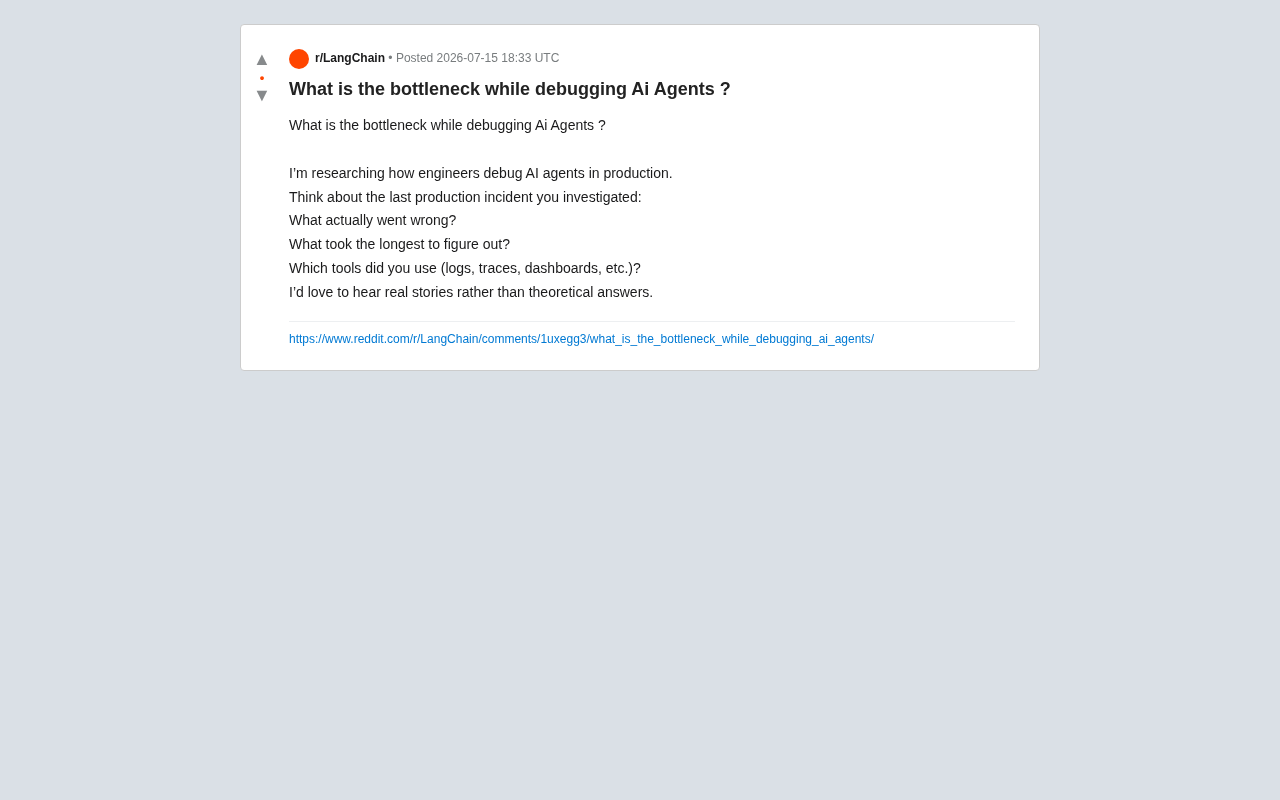
AI Agent Debugging Bottlenecks: A Practical Guide to Production Observability
Explore core AI Agent debugging challenges in production: non-determinism, multi-step error propagation, and observability gaps — with practical guidance on LangSmith and tracing tools.
Read more →
shadcn/helpers Open-Sourced: createCha…
·2 min
shadcn/helpers Open-Sourced: createChat Makes AI Component Testing More Efficient
shadcn open-sources @shadcn/helpers with createChat — a utility for AI SDK and TanStack AI that enables scripted conversations, tool calls, and deterministic testing.
Read more →
Java Local LLM Inference: Low-Latency …
·2 min
Java Local LLM Inference: Low-Latency LLM Deployment with Panama FFM
Learn how Java and OpenJDK Panama FFM API enable local LLM inference. Explore the technical foundations, JVM ecosystem benefits, and low-latency AI deployment in enterprise Java systems.
Read more →

·2 min
Quantifying LLM Output Quality with Pydantic Evals and Integrating It into CI Quality Gates
Learn how to build an LLM evaluation system with Pydantic AI and Amazon Bedrock — turning fuzzy AI output quality into automated, CI-enforceable engineering metrics.
Read more →

·3 min
How to Test High-Risk Actions in AI Agents Before Going Live: A Complete Strategy Beyond Mocking
Mock testing can't cover the real side effects of high-risk, irreversible AI Agent actions. Learn sandbox environments, shadow mode, dry run, HITL, and more.
Read more →
AI Agent in 100 Lines of Lisp: Minimal…
·2 min
AI Agent in 100 Lines of Lisp: Minimal Code Reveals the True Nature of Intelligent Agents
A fully functional AI Agent in just 100 lines of Lisp reveals the essence of the ReAct loop. Deep dive into Agent architecture, Lisp's unique strengths, and minimalist engineering philosophy.
Read more →

·6 min
Grok 4.5 Hands-On: A Faster, Cheaper Coding Dark Horse — Can It Replace Opus and GPT?
In-depth Grok 4.5 hands-on review: priced at a fraction of Opus 4.8, twice the token efficiency of peers, and coding ability in the top tier. A real-project breakdown of its strengths, highlights, and shortcomings.
Read more →

·7 min
The Prompt is the Platform: How AI Agents Deeply Participate in System Design and Specification
Resonate's founder proposes "The Prompt is the Platform": as AI agents generate production-grade implementations from abstract specs, engineers' value shifts to specification. A deep dive into deterministic simulation and forbidden-fruit debugging.
Read more →

·5 min
The Halo Open-Source Project: Building Tamper-Evident Runtime Evidence for AI Agents
Halo is an open-source tool providing tamper-evident runtime evidence for AI agents, recording every action via hash chains and cryptography to solve auditing, compliance, and accountability challenges.
Read more →

·7 min
LangSmith Engine: An Intelligent Operations Tool That Automatically Diagnoses and Fixes Agent Failures
LangChain's LangSmith Engine is an intelligent agent tool for tracking Agent failures, prioritizing issues, and auto-drafting fixes. Deep dive into its core capabilities, sandbox isolation, sub-Agent architecture, and continuous evaluation challenges.
Read more →

·7 min
Context Warp Drive: A Deep Dive into Deterministic Context Folding for AI Agents
An in-depth look at 'Deterministic Context Folding' from Context Warp Drive: solving AI agent context window management with reproducible, cacheable, debuggable context compression for production-grade agents.
Read more →