#LLM request routing
353 related articles

·4 min
Getting Started with Claude Code: Environment Setup, Common Commands, and Git Workflow in Practice
A detailed guide to Claude Code installation, domestic model switching, project analysis commands, and Git workflow practice to help developers quickly master this AI programming collaboration tool.
Read more →

·3 min
Agent Skill Routing: Engineering Trade-offs Between Retrieval and LLM, and the Two-Stage Layered Architecture
Deep dive into Agent skill routing: comparing pure model vs. pure retrieval approaches, with a detailed two-stage layered architecture balancing accuracy, latency, and cost.
Read more →

·4 min
WebMCP in Practice: How MakeMyTrip Is Reshaping the Travel Booking Experience
India's largest OTA platform MakeMyTrip uses WebMCP to standardize AI Agent interactions with web apps, replacing fragile DOM scraping with natural language-driven test automation and simplified complex booking scenarios.
Read more →

·4 min
WebMCP in Practice: How MakeMyTrip Is Reshaping the Travel Booking Experience
India's largest OTA platform MakeMyTrip uses WebMCP to standardize AI Agent interaction with web apps, solving DOM scraping fragility, enabling natural language test automation, and simplifying complex international flight bookings.
Read more →

·2 min
Kimi K3 Launches on Telnyx Inference API: A New Path for Chinese LLMs Going Global
Moonshot AI's Kimi K3 is now available on Telnyx Inference API. Explore how Chinese LLMs are entering global developer ecosystems through third-party inference platforms.
Read more →

·3 min
Deconstructing Agents: Task Decomposition, Context Compression, and the Case Against Heavy Frameworks
A deep engineering analysis of Agent internals: how LLMs decompose tasks via tool calling, why context compression and memory are essential, and why solo developers should avoid heavy frameworks.
Read more →

·4 min
AI Agent Development in Practice: A Complete Path from Zero to Production
A systematic guide to AI Agent development covering core modules, framework selection, tool calling, data preparation, and production deployment to help developers build production-ready Agent applications.
Read more →

·5 min
Complete Breakdown of Core Competencies for AI Agent Engineers: From Demo to Production-Grade Systems
Deep breakdown of 4 core AI Agent engineer competencies: business decomposition, multi-Agent architecture, quantitative evaluation, and engineering delivery—bridging the gap from Demo to production.
Read more →

·3 min
Unified Prompt Management, Evaluation & Observability: A Comprehensive Comparison of LangSmith and Other Leading Platforms
In-depth comparison of LangSmith, Langfuse, PromptLayer, Helicone, and Orq.ai across Prompt management, Evals, and observability to help teams choose the best unified LLM Ops platform.
Read more →

·3 min
Claude Opus 5 High Reasoning Mode: The Concerns and Insights of Overthinking
Claude Opus 5's high+ reasoning mode has been jokingly called an "anxious overthinker." This article analyzes why LLMs over-reason, the diminishing returns tipping point, and how to balance reasoning intensity.
Read more →

·4 min
Building Self-Hosted Tunnels Under Extreme Censorship: A Layered Architecture with VLESS Reality
Deep analysis of building layered tunnel architectures using VLESS+Reality to evade DPI and domestic relays with whitelisted IPs to bypass geographic blocking in extreme censorship environments.
Read more →
·6 min
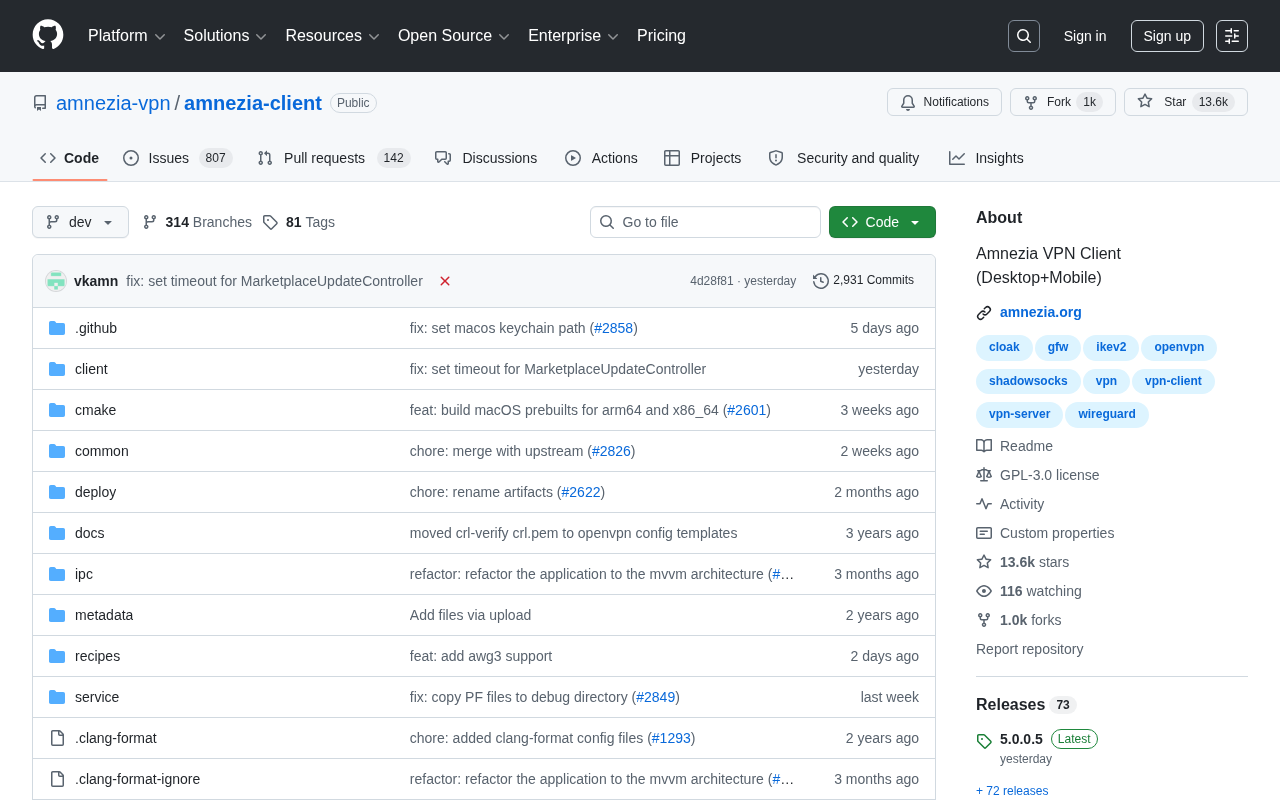
AmneziaVPN Deep Dive: The Open-Source Powerhouse for Self-Hosted, Censorship-Resistant VPN
Deep dive into the AmneziaVPN open-source client: AmneziaWG anti-DPI obfuscation, self-hosted VPS deployment, multi-protocol support, and cross-platform privacy.
Read more →
In-Depth Analysis of the Claude Opus 5…
·3 min
In-Depth Analysis of the Claude Opus 5 Elevated Error Rate Incident and Response Strategies
Deep analysis of the Claude Opus 5 elevated error rate incident, exploring LLM service reliability challenges and providing developers with practical strategies including multi-model redundancy, retry mechanisms, and graceful degradation.
Read more →

·3 min
Wattage: An AI Agent Token Cost Profiling and Regression Protection Tool
Deep dive into Wattage, an AI Agent token consumption profiling and cost regression protection tool, exploring its core features, industry context, and value for developers.
Read more →

·3 min
Beware of Cursor's Cheap Subscription Traps: Official Subscriptions Are the Right Way
Cursor Pro's cheap plans hide risks like account bans, dumbing down, device locks, and data leaks. This article dissects the three main scams and their real costs.
Read more →

·3 min
Agent Intent Recognition: Engineering Practices Behind the Three-Layer Funnel Architecture
An in-depth look at the three-layer funnel architecture for agent intent recognition: rules for fast interception, context for routine intents, and LLM as fallback. Exploring the engineering trade-offs of accuracy, latency, and cost.
Read more →

·2 min
Three Chinese LLMs Launch in Parallel: Qwen, DeepSeek V4, and GLM Next-Gen Models Arriving Soon
Alibaba's next-gen Qwen, DeepSeek V4 GA, and Zhipu's new GLM are all nearing release. Explore the latest progress, hands-on results, and distillation controversy of China's top LLMs.
Read more →

·2 min
Three Flow Control Nodes in Dify Workflows: Question Classifier, Conditional Branch, and Human-in-the-Loop Explained
An in-depth look at three core flow control nodes in Dify workflows: the Question Classifier for intelligent LLM-based routing, the Conditional Branch for precise if-else logic, and Human-in-the-Loop for high-risk confirmation checkpoints.
Read more →
·2 min
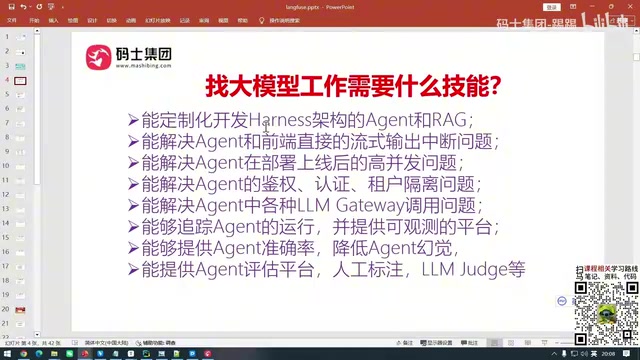
The New Bar for AI/LLM Roles: A Practical Guide to Agent Observability and Evaluation
Enterprise AI/LLM roles now demand engineering skills: streaming recovery, high concurrency, multi-tenancy, LLM gateways, Langfuse observability, and evaluation platforms. Master these 8 core competencies.
Read more →

·4 min
Complete Guide: Connecting DeepSeek and Other Chinese LLMs to Codex
No ChatGPT account? No problem. Learn how to connect DeepSeek and other Chinese LLMs to Codex using the Codex++ management tool — including Base URL setup, API Key creation, and token top-up.
Read more →