#LLM trace classification
143 related articles

·3 min
Ctrlb-decompose: Denoise Logs Before Feeding Them to LLMs — Save Tokens, Improve Quality
Ctrlb-decompose is an open-source log denoising tool that strips redundant noise via templatization and clustering before sending logs to LLMs, reducing Token costs and improving AI analysis quality.
Read more →

·3 min
Ctrlb-decompose: Denoise Logs Before Feeding Them to LLMs — Save Tokens, Improve Quality
Ctrlb-decompose is an open-source log denoising tool that strips redundant noise from logs before sending them to LLMs, reducing Token costs and improving AI analysis quality for AIOps and observability.
Read more →
·4 min
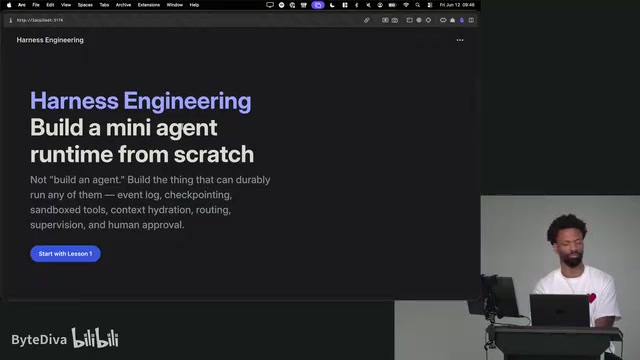
Harness Engineering: The Core Infrastructure for Taking AI Agents from Demo to Production
Deep dive into Harness Engineering: why AI Agents need memory management, durable execution, guardrails & approvals to go from demo to production.
Read more →

·4 min
Harness Engineering: The Core Infrastructure for Taking AI Agents from Demo to Production
Deep dive into Harness Engineering: why AI Agents need memory management, durable execution, guardrails & approvals to reach production. Based on Scott Moss's workshop.
Read more →

·4 min
Statistical Foundations of Machine Learning: From MLE to EWMA and Deep Learning Optimizer Principles
Deep dive into core ML statistics: MLE derivations, multivariate Gaussian, linear regression and least squares equivalence, empirical risk minimization, method of moments, and how EWMA connects to Adam optimizer.
Read more →

·3 min
Simplified Technical English (STE): A Cross-Disciplinary Approach to Optimizing LLM Prompts
Explore how ASD-STE100 Simplified Technical English from aviation can be applied to LLM prompt engineering. STE's disambiguation principles—controlled vocabulary, short sentences, active voice—can improve LLM output accuracy and consistency.
Read more →

·3 min
When Should You Use Machine Learning? A Pragmatic Decision Guide for Data Scientists
Not every data science problem needs ML. This guide offers a decision framework across four dimensions — rule complexity, data quality, prediction needs, and interpretability — to avoid over-engineering.
Read more →
·6 min
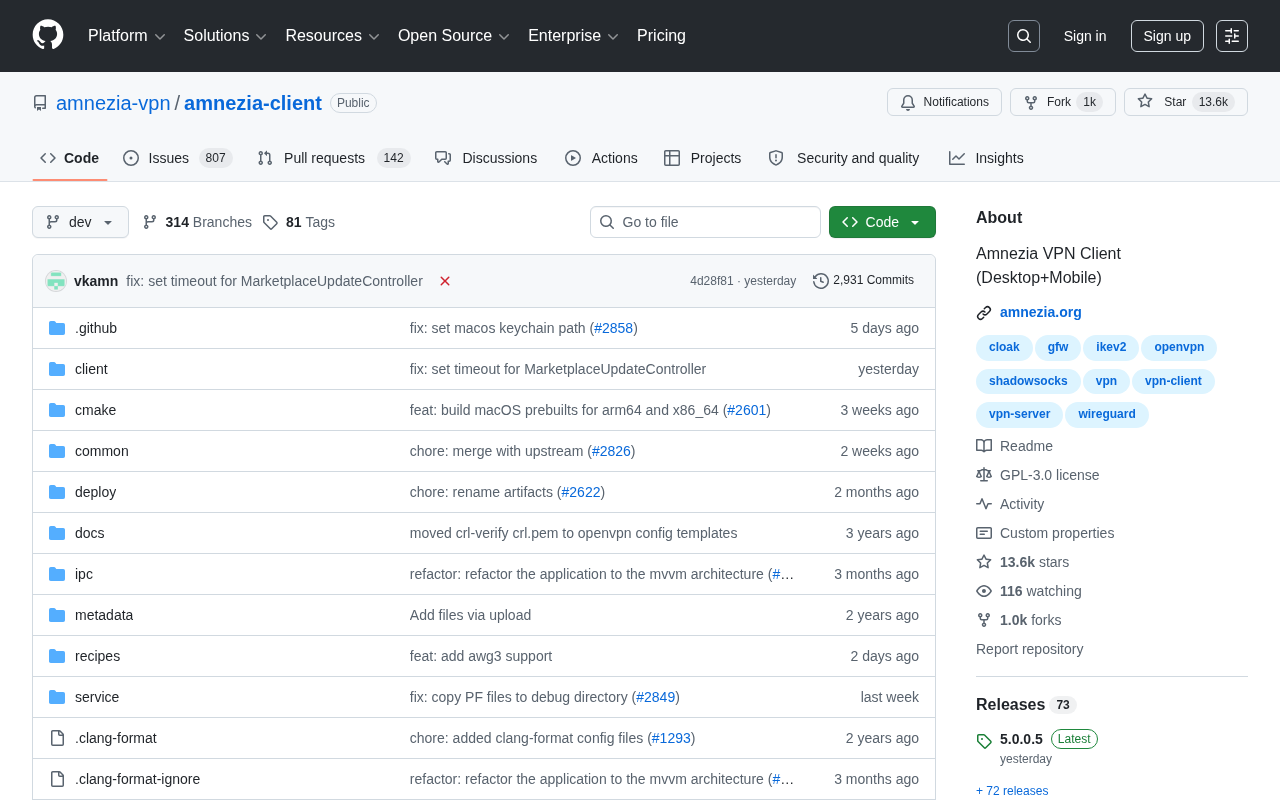
AmneziaVPN Deep Dive: The Open-Source Powerhouse for Self-Hosted, Censorship-Resistant VPN
Deep dive into the AmneziaVPN open-source client: AmneziaWG anti-DPI obfuscation, self-hosted VPS deployment, multi-protocol support, and cross-platform privacy.
Read more →

·4 min
From Solo Analyst to Team Data Platform: A Practical Guide to Leveling Up Your Tech Stack
How should a data scientist upgrade their tech stack when transitioning from IC to team lead? A phased roadmap covering Git, dbt, Snowflake, modern data stack, and generative AI.
Read more →

·3 min
Pinterest Medic: Engineering an AI Agent for Automated Spark Failure Diagnosis
How Pinterest engineers built Medic for Apache Spark — a multi-agent auto-diagnosis tool — covering the evolution from a single ReAct agent, observability, log denoising, and end-to-end testing.
Read more →

·7 min
Getting Started with Claude Code: Five Dimensions That Show Why It Outperforms Ordinary AI
Claude Code isn't just a chat AI—it can directly read projects, modify code, and run commands. This article compares Claude Code with ordinary AI across five dimensions: interaction, context, execution, memory, and tool calling.
Read more →
Human-Centered AI: Real-World Implemen…
·6 min
Human-Centered AI: Real-World Implementation in Healthcare and Design
An MSR workshop reveals the truth about AI deployment: from a $20 corneal diagnostic device to expert-in-the-loop chatbots, researchers share real-world experiences of AI in healthcare and design within resource-scarce environments.
Read more →
Outlines: The Open-Source Tool for Get…
·2 min
Outlines: The Open-Source Tool for Getting Structured Output from LLMs
Outlines is an open-source Python library for structured LLM output. Using constrained decoding with FSMs, it guarantees JSON, regex, and Pydantic-compliant generation with near-zero overhead.
Read more →

·4 min
7 Core Components for Designing Long-Running AI Agents
A deep dive into the 7 core components for building long-running AI Agents: Goal, Evaluator, Verifier, Loop, Orchestration, Observability, and Memory.
Read more →

·3 min
Enterprise RAG Knowledge Isolation in Practice: Physical Isolation vs. Adaptive Soft Boundaries
A deep dive into two enterprise RAG knowledge isolation strategies: physical isolation vs. adaptive soft boundaries — covering metadata tagging, dynamic user-profile filtering, hybrid retrieval architecture, and data quality best practices.
Read more →

·3 min
AI Agent Production Guide: Four Orchestration Patterns That Actually Work
Most AI agents never make it past the demo stage. This guide covers four production-grade agent patterns—workflow orchestration, policy-constrained execution, anomaly handling, and load routing—to help teams build reliable agent systems.
Read more →

·4 min
Getting Started with AI Test Development: Core Principles and Underlying Logic of Large Language Models
New to AI test development? This article breaks down the differences between machine learning and traditional programming, the origins of AI hallucinations, and the core principles of NLP/NLU/NLG to help test engineers build a solid AI knowledge framework.
Read more →
Agnost AI: How to Automatically Extrac…
·2 min
Agnost AI: How to Automatically Extract User Feedback from AI Agent Conversations
Agnost AI, a YC-backed startup, automatically extracts user feedback and product insights from AI Agent conversations. Deep dive into its positioning, technology, and challenges.
Read more →

·3 min
Waku Agent Deep Dive: The Four Core Pillars of a Local-First AI Assistant
A deep dive into Waku Agent's four pillars: Loop Engineering, three-tier Memory system, Eval assessment, and the Harness scaffold. Full walkthrough of a local-first AI assistant from task execution to memory consolidation.
Read more →

·2 min
AI Agent Out of Control? A Practical Guide to Building Traceable Multi-Agent Systems
Agent loops burning money, bills spiking unexpectedly? This article breaks down a traceable multi-agent system covering loop detection, behavior classification, cost prediction, and self-healing.
Read more →