#LangGraph tutorial
134 related articles

·4 min
6-Week Agent Engineering Roadmap: From Beginner to Enterprise Deployment
A structured 6-week roadmap for enterprise Agent deployment covering LangChain, LangGraph, MCP, and RAG — from planning and memory to multi-agent collaboration and production deployment.
Read more →

·4 min
AI Agent: A Complete 6-Week Learning Roadmap from Beginner to Production
A complete 6-week AI Agent learning roadmap covering core architecture (planning/memory/tool use), the ReAct paradigm, multi-agent collaboration, RAG integration, and production deployment.
Read more →

·6 min
LangChain 1.3 in Practice: A Complete Guide to DeepAgent Architecture and the Harness Philosophy
An in-depth look at LangChain 1.3's core modules and DeepAgent architecture—covering the Harness philosophy, LangGraph internals, HITL, memory management, and guardrails to master production-grade AI Agent development.
Read more →

·7 min
Electron + LangGraph in Practice: Building an AI Agent Visual Orchestration App from Scratch
A hands-on guide to building an enterprise-grade AI Agent workflow orchestration app with Electron Forge and LangGraph, covering local LLM deployment (Qwen3-0.6B), node-based visual canvas design, and full Function Calling integration.
Read more →

·6 min
AI Agent Learning Roadmap: A Four-Stage Guide from Beginner to Practical Mastery
A systematic AI Agent learning roadmap in four progressive stages: fundamentals → ReAct core paradigm → memory & tools → multi-agent collaboration. Master LangChain, AutoGen, and more, growing from beginner to practical developer in three months.
Read more →
·3 min
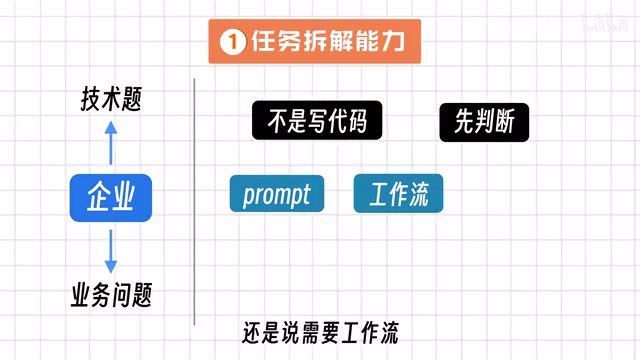
4 Core Competencies Every High-Value LLM Application Engineer Must Have
Why can't companies find qualified AI engineers? Discover the 4 core competencies every high-value LLM application engineer needs: task decomposition, tool calling, observability, and production readiness.
Read more →

·2 min
MCP Protocol Deep Dive: The Unified Standard and Practical Guide for Agent Development
Deep dive into MCP (Model Context Protocol): core principles, communication mechanisms, and security design. Learn how MCP replaces Function Calling and enables remote agent-tool integration.
Read more →

·7 min
Claude Code Command Orchestration: One-Click Content Research and Auto-Publishing
Learn how to orchestrate Claude Code custom commands to chain content research and social media publishing agents into a fully automated workflow with one command.
Read more →

·7 min
Andrew Ng Teams Up with LangChain: Core Principles of LangGraph Agent Development
Andrew Ng and LangChain CEO Harrison Chase present AI Agents in LangGraph, covering five core agent design patterns and LangGraph's graph-based framework for building cyclical agentic workflows.
Read more →
·7 min
Andrew Ng Teams Up with LangChain: Core Concepts of LangGraph Agent Development
Andrew Ng and LangChain CEO Harrison Chase's AI Agents in LangGraph course covers five agent design patterns and LangGraph's graph-based framework for building cyclical AI workflows.
Read more →

·4 min
Building an AI Agent Framework from Scratch: Deep Dive into Tool Calling, Memory, and Dual-Model Scheduling
Build an AI Agent from scratch — no frameworks. Deep dive into Function Call schema design, MCP remote mirroring, dual-model routing, and short-term memory management.
Read more →

·5 min
Building RAG from Scratch: Creating a Domain Expert System with Local Small Models
Step-by-step guide to building a complete RAG pipeline with Ollama + LangChain + FAISS + Qwen 1.5B. Run document retrieval and intelligent Q&A locally without a GPU.
Read more →

·2 min
AI Large Model Development Learning Path: A Complete Guide from Zero to Enterprise Projects
A complete learning roadmap for AI large model development — covering Transformer, Prompt Engineering, RAG, LangChain, Agent development, fine-tuning, and deployment.
Read more →

·4 min
AI Workbench: One-Click Content Creation from Topic Research to Final Output
AI Workbenches automate the full content creation pipeline — from topic research to visual output. Multi-model routing, transparent execution, and reusable workflow templates redefine how creators work.
Read more →

·7 min
AI Agent Practical Guide: From Content Generation to Enterprise Applications
A deep dive into AI Agent's two core directions: 2C content generation (text/images/video) and 2B enterprise applications (RAG/AutoGen/LLM integration). With real startup cases and practical methods.
Read more →

·7 min
Getting Started with LangGraph Multi-Agent Development: Architecture Analysis and Three Practical Case Studies
Learn LangGraph multi-agent development covering Supervisor and Collaboration architectures, with three hands-on projects: code assistant, prompt assistant, and WebRTC digital human.
Read more →

·4 min
Claude Code Beginner's Guide: From Installation and Configuration to Hands-On Projects
Complete Claude Code beginner's guide covering Git, VS Code setup, third-party model integration, permissions, Tools, Hooks, Skills, SubAgents, and a hands-on project walkthrough.
Read more →

·4 min
AI Agent Development Learning Roadmap: A Complete Four-Stage Plan from Zero to Production
A systematic AI Agent development learning roadmap covering LLM fundamentals, ReAct paradigm, memory & tool calling, and multi-agent collaboration across four stages with project suggestions.
Read more →

·4 min
7-Step Framework for Deploying Commercial AI Agents: From Requirements to Production
A detailed 7-step guide to building commercial AI Agents, covering requirements, platform selection (Coze/Dify/FastGPT), prompt engineering, databases, UI, testing, and deployment.
Read more →

·2 min
AI LLM Development Career Path: Four Stages from Zero to $60K+/Year
A four-stage learning path for AI LLM application development: from Python basics and RAG architecture to Agent cluster orchestration, helping developers transition into AI roles.
Read more →