#Linux kernel security
219 related articles

·7 min
Fable AI Coding in Practice: Optimizing Reasoning Levels and Multi-Model Collaboration to Cut Costs
How developer Theo used Anthropic's Fable model to rebuild his AI coding workflow — controlling reasoning levels, multi-model routing with Codex, and sub-agent orchestration to cut costs from thousands to $150.
Read more →

·7 min
Fable AI Coding in Practice: Optimizing Reasoning Levels and Multi-Model Collaboration to Save Money
Hands-on guide: Use Anthropic's Fable model to optimize AI coding workflows — control reasoning levels, leverage Claude-Codex multi-model collaboration, and cut costs from thousands to $150.
Read more →

·6 min
Claude Code Programming from Scratch: A Beginner-Friendly Git Setup Guide for Windows
A beginner-friendly guide to setting up Git on Windows before using Claude Code for AI programming. Covers git.git install, Git for Windows setup, common pitfalls, and verification.
Read more →

·4 min
Microsoft Fixes Windows 11 Storage Bloat Bug Caused by Runaway CapabilityAccessManager Database File
Microsoft's optional update KB5095093 fixes a Windows 11 bug where the CapabilityAccessManager.db-wal SQLite WAL file bloats to several GBs due to a failed checkpoint mechanism.
Read more →
·5 min
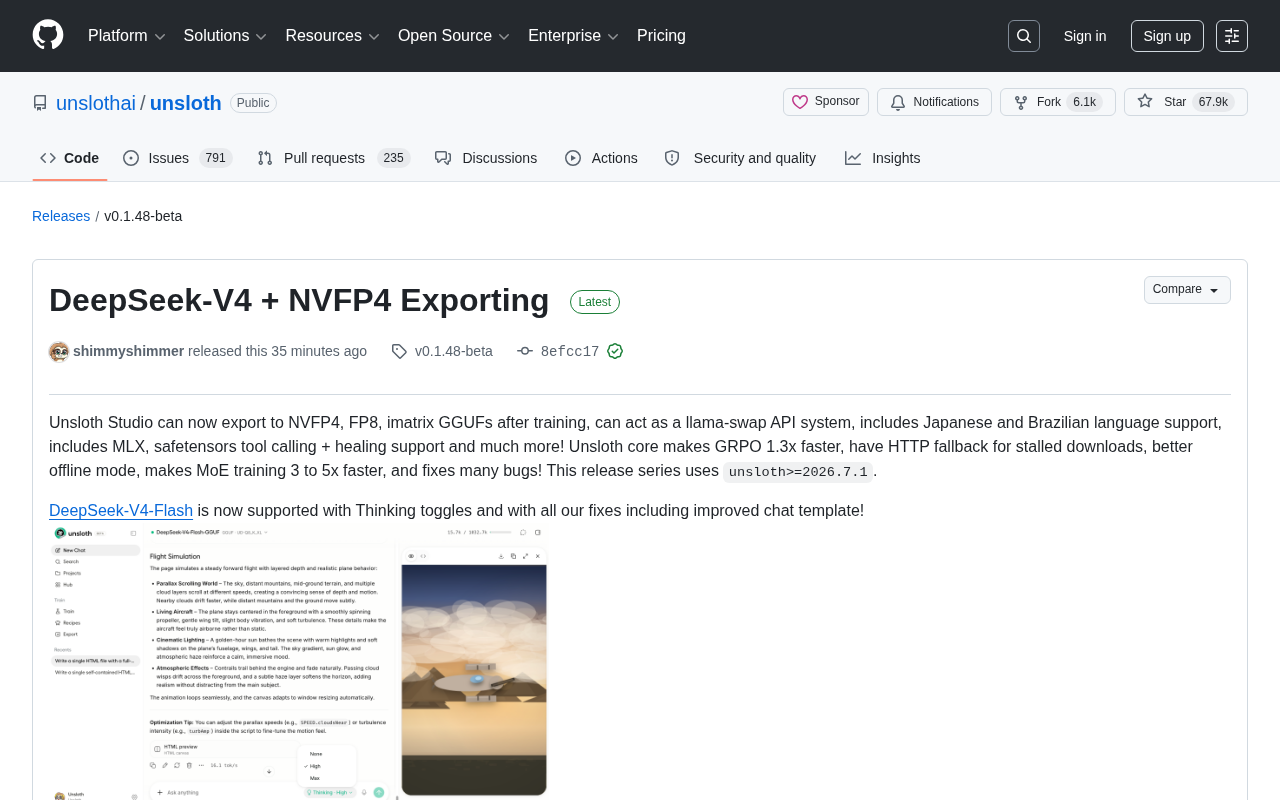
Major Unsloth Update: NVFP4 Quantization Export and DeepSeek-V4 Training Support
Unsloth v0.1.48-beta released, adding NVFP4/FP8 quantization export, OpenAI-compatible API hot-swapping, 3-5x faster MoE training, and 1.3x faster GRPO, covering the full LLM fine-tuning, quantization, and local deployment pipeline.
Read more →

·4 min
Deep Dive into actions/checkout: The Core Foundation of GitHub Actions CI/CD
A comprehensive guide to GitHub Actions' actions/checkout: how it works, key parameters, and best practices covering fetch-depth, cross-repo checkout, security, and version pinning strategies.
Read more →

·7 min
The Birth of Claude Code: Design Philosophy from Internal Tool to AI Programming Assistant
An in-depth look at Claude Code's development and design philosophy: why the CLI form, how the "minimal scaffolding" architecture works, and how it balances safety with autonomy in AI programming.
Read more →

·2 min
Unsloth v0.1.45 Released: Gemma 4 MTP Acceleration, Cross-Platform Fixes, and Studio Upgrades
Unsloth v0.1.45-beta adds Gemma 4 MTP support, AMD ROCm & NVIDIA Blackwell fixes, a new Hub download manager, and a compact RAG system for local LLM fine-tuning.
Read more →
·7 min
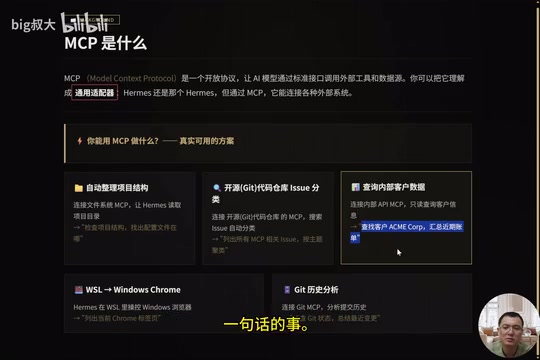
Connecting Hermes Agent to MCP: One Protocol to Unify All External Systems
Learn how to extend Hermes Agent's external system capabilities via MCP (Model Context Protocol): setup, whitelist permissions, WSL-to-Chrome bridging, and multi-server orchestration for AI Agent developers.
Read more →

·3 min
Unsloth v0.1.46-beta Update: DiffusionGemma Tool Calling Disabled and Artifacts Canvas Enabled by Default
Unsloth v0.1.46-beta is out with key DiffusionGemma changes: tool calling disabled by default, artifacts canvas enabled. A deep dive for LLM fine-tuning devs.
Read more →

·6 min
From Firefox to Android Root: Deep Analysis of a Browser Privilege Escalation Attack Chain
Deep analysis of a complete mobile exploit chain: how attackers start from Firefox, escape the sandbox, exploit kernel vulnerabilities, and achieve Android Root. Security insights for developers.
Read more →

·7 min
The Complete Codex Guide: From Installation to Real-World Practice
Master OpenAI Codex fast, even from scratch! Learn Codex vs ChatGPT differences, four versions, interface tips, plugins & skills, browser automation, plus six best practices.
Read more →

·7 min
The C Readability Crisis: Engineering Reflections Behind Clever Tricks
Why do C programmers keep creating readability disasters? An in-depth look at macro abuse, fancy pointer tricks, and over-nesting—and how coding standards, static analysis, and code review protect maintainability.
Read more →

·3 min
Unsloth Major Update: GLM-5.2 Support, 3x Longer Context, and a New Model Hub
Unsloth v0.1.471-beta adds full GLM-5.2 support, 3x longer context (up to 200K tokens on a single GPU), a new Model Hub, and Chat Canvas — a major leap for local LLM fine-tuning.
Read more →

·3 min
Unsloth Major Update: DiffusionGemma & Gemma 4 MTP Support, 2x Inference Speed Boost
Unsloth v0.1.464-beta adds DiffusionGemma, Gemma 4 MTP, and MiniMax-M3 support, delivering ~2x inference speed boost, new Hub, RAG Q&A, tensor parallelism, and full CUDA/ROCm/Windows coverage.
Read more →

·7 min
The Complete Guide to OpenCode: Installing, Configuring, and Using the Terminal AI Coding Assistant
An in-depth guide to installing, configuring, and extending OpenCode, the terminal AI coding assistant. Covers desktop and WSL installation, model config, MCP integration, and custom Agents.
Read more →

·7 min
Exfiltrating Data from Air-Gapped Systems via Apple's Find My Network: Attack Mechanics and Defense Insights
Security research reveals how attackers can abuse Apple's Find My network as a covert exfiltration channel, disguising sensitive data from air-gapped systems as location beacons. A deep dive into the attack chain, stealth advantages, and defense insights.
Read more →
Launch a Cloud Dev Environment in One …
·4 min
Launch a Cloud Dev Environment in One Prompt: A Deep Dive into the Codex DigitalOcean Plugin
OpenAI Codex's DigitalOcean plugin lets developers launch persistent cloud dev environments with a single natural language prompt. A deep dive into capabilities, use cases, and risks.
Read more →

·4 min
AirDrop and Quick Share Security Vulnerabilities: Hidden Risks in Wireless Transfer Protocols
A deep dive into AirDrop and Quick Share wireless transfer protocol security — covering device discovery, handshake auth, data parsing attack surfaces, and practical defense recommendations.
Read more →
GPT-5.5 and Codex: The Paradigm Shift …
·4 min
GPT-5.5 and Codex: The Paradigm Shift from Executor to Director in AI Programming
Deep analysis of an OpenAI interview: how GPT-5.5's multimodal creativity breaks new ground, and how Codex multi-agent workflows are reshaping software development — from executor to director.
Read more →