#LoRA PEFT
56 related articles

·3 min
Learning AI Large Language Models: A Complete Roadmap from Beginner to Practitioner
A systematic breakdown of the AI LLM learning roadmap covering prompt engineering, AI Agent development, RAG knowledge bases, model fine-tuning, and hands-on projects for beginners.
Read more →

·3 min
A Beginner's Guide to AI Agents: Two Learning Paths for Developers and Practitioners
How to learn AI Agents from scratch? This guide covers two clear paths: developers go from Python to LLMs to open-source framework source code; practitioners use Claude Code or similar tools to get results fast.
Read more →

·3 min
Jensen Huang's First Tweet Backs AI Open Source — But It's Really About NVIDIA's Ecosystem Anxiety
Jensen Huang's first tweet backs AI open source, but behind it lies NVIDIA's deep anxiety over CUDA ecosystem displacement. We analyze why open-source models matter and what's really at stake.
Read more →
·3 min
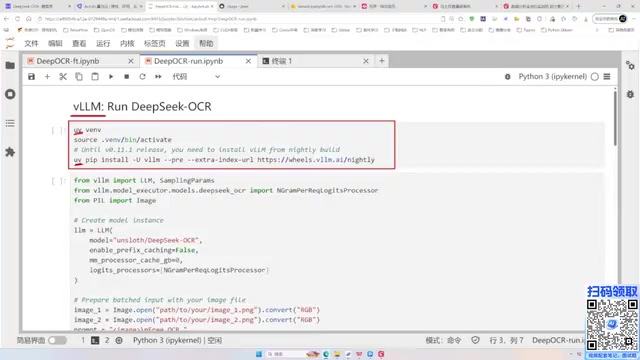
DeepSeek-OCR Deployment & Fine-Tuning in Practice: From vLLM Inference to Unsloth Fine-Tuning
Complete guide to DeepSeek-OCR from vLLM inference deployment and Unsloth model loading to fine-tuning, covering cloud server setup, GPU selection, and code examples — all on a single 4090 GPU.
Read more →

·3 min
Getting Started with AI Agent Development: A Learning Path from Zero to Deployment
A systematic guide to the complete learning path for AI Agent development—covering prompt engineering, RAG knowledge bases, LangChain & LangGraph, fine-tuning, and multi-agent collaboration.
Read more →

·3 min
DeepSeek-OCR Deployment and Fine-Tuning: A Complete Hands-On Guide
Master the full DeepSeek-OCR deployment and fine-tuning workflow: vLLM inference deployment, efficient Unsloth fine-tuning, dataset preprocessing, LoRA training, validation, and RAG vector database integration.
Read more →
Dive into LLMs: A Complete Guide to th…
·1 min
Dive into LLMs: A Complete Guide to the 44.8K-Star Hands-On LLM Tutorial
"Dive into LLMs" is a 44,830-star Chinese LLM tutorial on GitHub. Using Jupyter Notebooks, it covers Transformers, LoRA fine-tuning, RAG, and Prompt Engineering.
Read more →

·8 min
LangChain Crash Course: A Complete Roadmap from Zero to Agent Development
A systematic roadmap from LangChain and LangGraph to multi-agent development, covering RAG, Tool Calling, MCP, and more, helping developers break into AI app development.
Read more →

·6 min
Hands-On with Qwen 3.8 Max: How an Open-Source Model Closes In on Top-Tier Closed Models
Qwen 3.8 Max has 2.4 trillion parameters and will be open-sourced. In KingBench testing it scored 81.25%, ranking second, beating Claude Opus 4.8 and trailing only Fable 5. A deep dive into its performance across 8 tests.
Read more →

·3 min
The Three Core LLM Job Roles Explained: Entry Requirements and Career Roadmaps
A deep dive into the three core LLM job roles — Application Engineer, R&D Engineer, and Algorithm Engineer — covering academic requirements, salaries, and skill roadmaps.
Read more →

·2 min
Qwen3 Fine-Tuning in Practice: A Complete Guide to Local Deployment and Domain Training
A hands-on guide to LLM fine-tuning: from understanding model weights to local Qwen3 deployment, dataset preparation, and domain-specific training. Build a complete AI engineering skill set.
Read more →
The Guardian Angels Framework: How LLM…
·3 min
The Guardian Angels Framework: How LLM Personalization Can Achieve Both Efficiency and Data Security
The Guardian Angels framework shows how LLM personalization can achieve both productivity and data security through local deployment, differential privacy, and tiered permissions.
Read more →

·2 min
AI Large Model Learning Roadmap: A Complete Five-Stage Guide from Zero to Independent Deployment
A complete 5-stage AI large model learning roadmap — from Python basics and prompt engineering to RAG pipelines, Agent development, and private model deployment.
Read more →

·3 min
Complete Practical Guide to LLM Fine-Tuning: A Roadmap for Beginners
A practical LLM fine-tuning roadmap for beginners — covering when to fine-tune, LoRA/QLoRA selection, data prep, tools like Unsloth, and evaluation for Llama, Mistral, and Gemma.
Read more →

·3 min
The Complete LLM Learning Roadmap: From Beginner to Expert — Courses and Resources Recommended
Confused by scattered LLM resources and unclear learning paths? This guide maps a complete roadmap from basics to advanced, covering Karpathy, Stanford CS224N, DeepLearning.AI, Hugging Face, plus RAG, fine-tuning, and Agent deep dives.
Read more →

·2 min
GPT-5.6 Launch Triggers Industry Chain Reactions: The New Competition Landscape of Compute, Energy, and Open Source
GPT-5.6 raises frontier model expectations, Anthropic extends Fable 5; data center power bottlenecks emerge; open-source GLM5.2 rivals top closed models; AI review burden overlooked.
Read more →
·2 min
Master LLMs in 3 Months with Zero Background: A Complete Learning Roadmap from Beginner to Job-Ready
AI talent gap is widening fast. Learn LLMs from zero in 3 months: Python & Transformer basics → Agents & LLMs → fine-tuning & private deployment. Land your AI job.
Read more →

·2 min
AI Application Developer Skills Breakdown: Four Core Modules and a Clear Learning Roadmap
Calling an API isn't enough. This article breaks down the full AI application developer skill structure — Python, deep learning, fine-tuning, Agents, and enterprise projects — with a clear learning roadmap.
Read more →

·3 min
Expanding BERT Classification Categories: Three Incremental Fine-Tuning Strategies and Solutions to Catastrophic Forgetting
Expanding BERT classification categories? Compare three strategies—pre-declaring all classes, extending the classification head, and full retraining—plus solutions like EWC, data replay, and LoRA/Adapter to combat catastrophic forgetting.
Read more →

·3 min
How to Choose AI Courses: A Practical Guide to Avoiding Pitfalls and Leveling Up
How to find AI courses worth paying for amid the flood of beginner content. A guide to evaluating courses on Agentic workflows, RAG, fine-tuning, and more.
Read more →