#Loop Contract
293 related articles

·4 min
AI Weekly Recap: Four Major Vendors Cut Prices Together, Copilot's Paid Conversion Rate Just 4.5%
In one week, OpenAI, xAI, Google, and Microsoft all cut AI prices, driving near-frontier inference costs sharply lower. Meanwhile, Microsoft Copilot's paid conversion across 450M seats is under 4.5%, exposing the monetization challenge of general AI assistants.
Read more →

·2 min
Burning $200K Testing GPT-5.6: Where Are the Real Limits of Agent Capability?
A developer got early access to GPT-5.6 and ran extreme tests over 1.5 months across 67 projects, burning ~$200K in inference. Here's how it performed on code refactoring, React Native rewrites, GRUB boot repair, and more.
Read more →

·4 min
Is Job-Hopping Worth It During Layoff Season? A Full Breakdown of the Risks and Rewards of a $50K Raise
Are layoffs the new normal? Is a $50K raise worth leaving a stable job for? This article breaks down the real costs and benefits across salary math, stability value, and personal decision frameworks.
Read more →

·4 min
A Deep Dive into Claude Cookbooks: A Guide to the Official 47K-Star Hands-On Code Repository
Anthropic's open-source Claude Cookbooks project offers runnable Jupyter Notebook examples covering RAG, Tool Use, multimodal processing, and more—helping developers master Claude API best practices.
Read more →
·3 min
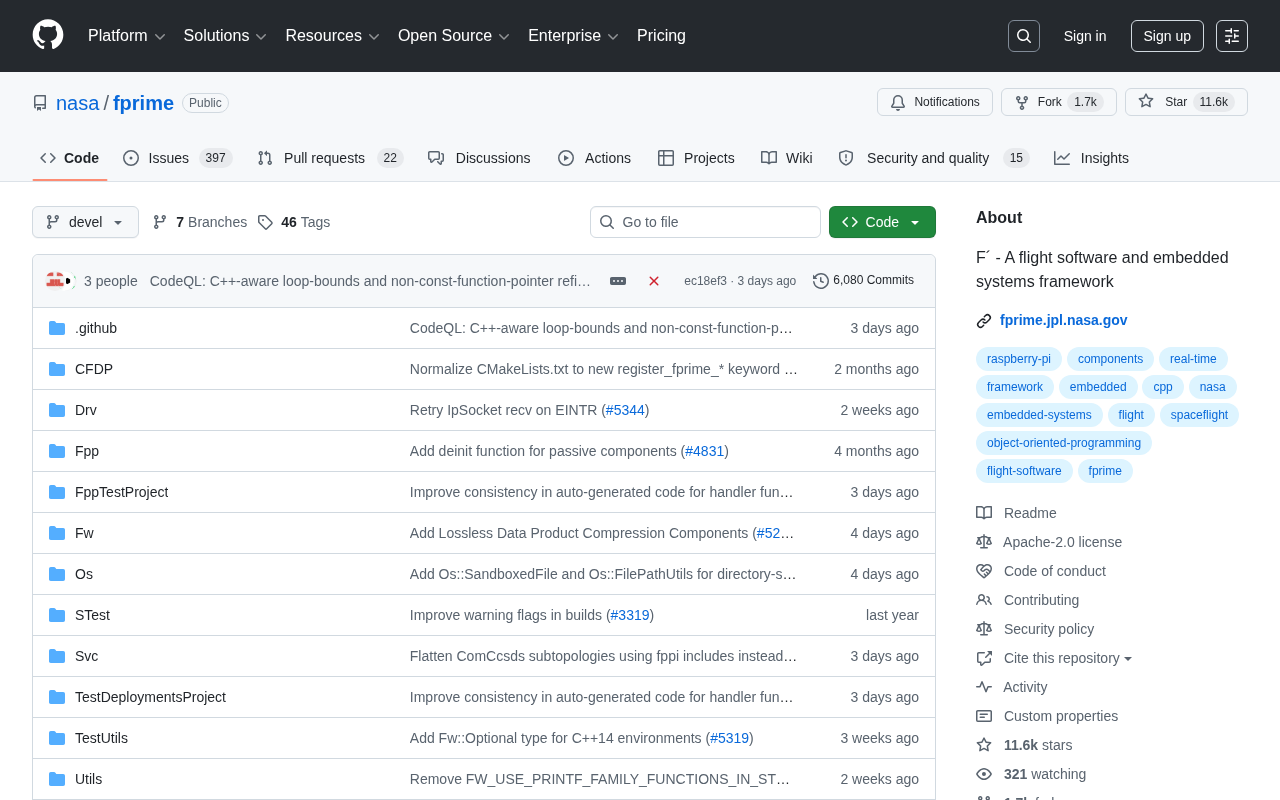
NASA Open-Sources the F´ Framework: A Space-Grade Toolkit for Flight Software and Embedded Systems Development
NASA's JPL open-sourced the F´ (F Prime) flight software framework: C++-based, component-driven, and validated in real space missions. Ideal for CubeSats, drones, and embedded systems, it has over 11,000 GitHub Stars.
Read more →
Reverse-Engineering Web Apps: A New Ap…
·3 min
Reverse-Engineering Web Apps: A New Approach to Breaking Through the API Barrier for AI Agents
Explore a new approach to AI Agent tool integration: reverse-engineering web apps to turn API-less pages into callable Agent tools, with analysis of MCP synergy and challenges.
Read more →
The Circular Financing Trap in Nvidia'…
·4 min
The Circular Financing Trap in Nvidia's Ecosystem: The Capital Undercurrents Behind the GPU Boom
An in-depth look at the circular financing model among Nvidia, CoreWeave, and Nebius—where suppliers double as investors, capital self-reinforces, and valuation bubbles and systemic risk lurk behind the AI infrastructure boom.
Read more →

·6 min
AI Data Centers Flood Into Rural America: A Complete Analysis of Compute Expansion and Community Battles
The generative AI boom is driving rapid data center expansion into rural America, drawn by cheap land, power, and water. But high water and energy use, unmet job promises, and noise pollution are sparking community resistance. A deep dive into siting logic and equitable solutions.
Read more →

·2 min
4-Step Roadmap to Becoming an AI Agent Engineer: From Zero to a $50K LLM Role
A proven 4-step roadmap to becoming an AI Agent engineer: stable LLM calls, tool use (RAG + Function Calling), production engineering, and resume optimization.
Read more →

·4 min
GPT-5.6 In-Depth Analysis: Model Architecture, Performance Benchmarks, and a Complete Guide to the Agentic Era
A comprehensive analysis of GPT-5.6: the Sol/Terra/Luna product-line positioning, MoE architecture, 1.5M token context, coding agent benchmarks, and the shift from Chatbot to Agent.
Read more →

·4 min
Baidu AI Automation System: Trigger Skill Chains with a Single Sentence, Say Goodbye to Manual Workflows
The Baidu AI Automation System uses departmentalized skill libraries and Agent-style orchestration to let managers trigger multi-skill workflows with one sentence—no tech background needed.
Read more →

·5 min
Gemini 3.5 Pro Delayed Again: Google's Compute Dilemma and the Mystery of a Full Rebuild
Gemini 3.5 Pro is delayed again, yet the community's reaction is surprisingly calm. This article dives deep into Google's compute cost pressures, the risks of a full architectural rebuild, and DeepMind's long-term strategy.
Read more →

·3 min
Multiple AI Agents Sharing a Codebase: Parallel Collaboration Conflicts and Practical Solutions
When multiple AI coding agents work on the same codebase simultaneously, how do you avoid interface conflicts and coordination chaos? A deep dive into Git worktree isolation, contract-first design, and intent declaration.
Read more →

·4 min
Getting Started with Coze: Build AI Agents from Scratch
Coze is ByteDance's low-code AI Bot platform for building AI agents without coding. Learn the differences between the domestic and international versions, core feature comparisons, and monetization potential.
Read more →

·2 min
ICE Agents at the Door: The Free Speech Crisis in the Age of AI Surveillance
ICE agents tracking online critic David Streever reveals how AI-automated surveillance links online speech to offline identity. An in-depth look at the chilling effect of tech surveillance on free speech and the privacy dilemma of the AI era.
Read more →

·4 min
100,000 Lines of Code in 7 Days: A Solo Developer's Hands-On Guide to AI-Assisted iOS Development
A solo developer iterated an iOS app to 100,000 lines of code in 7 days and shipped it. This article breaks down the core methodology: delegate the frontend to AI, control the backend by hand.
Read more →

·6 min
Andrew Ng × Anthropic: A Hands-On Claude Code Tutorial and Core Methodology
Andrew Ng partners with Anthropic to launch a hands-on Claude Code course, revealing its simple architecture, local security edge, and core context methodology across three cases: RAG chatbot, Jupyter analysis, and Figma-to-frontend.
Read more →

·5 min
Getting Started with LangChain: LLM Invocation, Agent Practice, and Environment Setup Guide
Starting from the three limitations of LLMs, this guide systematically explains LangChain's core positioning, environment setup, API key prep, model init, and the message system. Learn init_chat_model and AIMessage/HumanMessage/SystemMessage.
Read more →

·6 min
Zuckerberg Admits AI Progress Falls Short of Expectations: The Industry Truth Behind the Layoffs
Meta laid off 8,000 to bet on AI, yet Zuckerberg admits AI agents fell short of expectations. A look at the collective 'AI reflection' among OpenAI, Microsoft, and Google, plus research on AI's selective impact on jobs.
Read more →

·4 min
How Background AI Agents Can Automatically Maintain All Your Repositories on a Schedule
OpenInspect's Multi-Repo Automations lets AI coding agents maintain up to 10 repositories on a schedule simultaneously — isolated sessions, independent PRs, and fault-tolerant execution for security sweeps, dependency upgrades, and framework migrations.
Read more →