#Looping Engineering
83 related articles

·3 min
Getting Started with Codex: A Deep Dive Comparison of AI Coding Agents vs. Claude Code
A deep dive into AI coding agents like Codex and Claude Code — real-world comparisons, MCP protocol explained, and how these tools are transforming programming for developers and beginners alike.
Read more →
·6 min
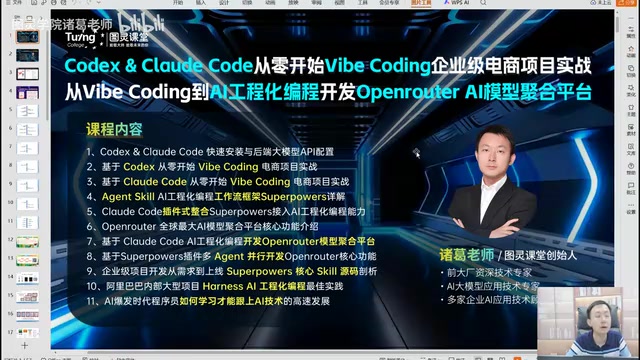
Understanding the Limits of Vibe Coding: A Practical Guide to AI Engineering-Grade Programming
An in-depth look at the difference between Vibe Coding and AI engineering-grade programming. Can AI replace programmers? From Claude Code and Codex to Cursor, revealing the real limits, enterprise pain points, and engineering solutions of AI coding tools.
Read more →

·8 min
Fable 5 Opens to All Paid Users: How AI Storytelling Tools Are Reshaping Content Production
Fable 5, an AI storytelling platform, opens to all paid users and sparks debate on Hacker News. We analyze AI creation tools' practicalization trend across product positioning, competition, and access strategy.
Read more →

·4 min
24 Hours, No AI, Zero to Rust: Building a Game from Scratch — A Full Account
A YouTuber spent 24 hours learning Rust from zero with no AI tools, mastering ownership, borrowing, and a game engine to build a complete Brick Breaker game. Full account of every challenge.
Read more →

·6 min
A Beginner's Guide to AI Agents: How Large Models Are Driving a New Computing Revolution
What is an AI Agent? This article systematically explains the core architecture of AI agents (LLM + Planning + Memory + Tools), how they differ from ChatGPT, their combination with robots, and why developers must master Agent development skills.
Read more →
·7 min
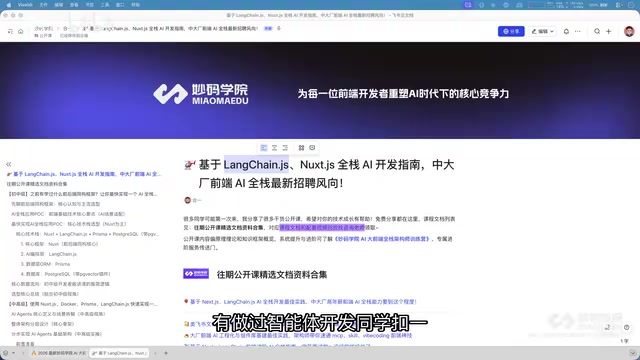
LangChain.js + Nuxt.js: An AI Full-Stack Advancement Path for Frontend Engineers
Frontend hiring now treats AI capabilities as a core assessment, covering RAG knowledge bases, AI Agent development, and LangChain.js engineering. Learn how LangChain.js + Nuxt.js helps frontend developers build memory- and retrieval-capable AI full-stack apps.
Read more →

·7 min
The Birth of Claude Code: Design Philosophy from Internal Tool to AI Programming Assistant
An in-depth look at Claude Code's development and design philosophy: why the CLI form, how the "minimal scaffolding" architecture works, and how it balances safety with autonomy in AI programming.
Read more →

·7 min
Agentic AI Development in Practice: Evaluation and Error Analysis Are the Real Competitive Edge
Cut through the Agentic AI hype to see the real value of agentic applications. Based on Andrew Ng's course, learn why Evals and error analysis—not framework choice—separate top developers.
Read more →

·2 min
Zhipu GLM-5.2 Launches: 1M Token Context + MIT Open Source, Perfectly Timed Against Claude Restrictions
Zhipu AI launches GLM-5.2 with a 1M token context window and MIT open-source license, timed to coincide with U.S. restrictions on Anthropic's Claude models.
Read more →

·7 min
Otari: A Comprehensive Look at the Open-Source LLM Control Plane Tool
An in-depth analysis of the open-source LLM control plane tool Otari—covering unified multi-model access, cost observability, and security compliance governance to help teams build manageable, production-grade AI infrastructure.
Read more →

·3 min
Loop Engineering: The New Paradigm for AI Self-Evolution
Loop Engineering by Anthropic is a new AI paradigm using four components—Mutator, Executor, Evaluator, Selector—to build self-iterating closed loops. Learn the architecture, use cases, and how to get started.
Read more →

·6 min
LangChain + MCP in Practice: A Pitfall-Avoidance Guide to LLM Selection and Local Deployment
DeepSeek R1 lacks Function Calling and JSON Output by default. Qwen3's programmable thinking modes make it the top open-source agent choice. Key LLM selection pitfalls and MCP protocol updates.
Read more →

·6 min
A 284B Model Running on a MacBook: The Real Breakthrough and Barriers of Local DeepSeek Inference
Redis creator runs 284B-parameter DeepSeek model on a MacBook Pro at 26 tokens/sec using a pure C engine, asymmetric quantization, and MoE architecture.
Read more →

·4 min
LangGraph.js Practical Guide: A Frontend Engineer's Path to AI Agent Development
A practical LangGraph.js guide for frontend engineers covering LangGraph vs LangChain comparison, workflow vs general-purpose agent types, and layered Agent architecture design.
Read more →

·4 min
The Four Stages of AI Engineering Evolution: From Prompt to Loop Engineering Explained
A systematic breakdown of the four stages of AI engineering: Prompt Engineering, Context Engineering, Runtime Environment Engineering, and Loop Engineering — with core logic, bottlenecks, and real-world use cases.
Read more →

·4 min
Loop Engineering Explained: Agent Loop Mechanisms and the New Paradigm of AI Agent Development
Deep dive into Loop Engineering: from Agent Loop principles and While loops to Graph structures, covering loop efficiency optimization and termination strategies for AI agent development.
Read more →

·3 min
AI Daily Brief: Codex Cross-Host Sessions, Claude Code Quota Reset, AlphaFold Lead Joins Anthropic
June 20 AI Brief: OpenAI Codex adds cross-host session handoff, Claude Code fixes 3% user quota bug, AlphaFold lead John Jumper leaves DeepMind for Anthropic, EU bets on 400B-param open-source model.
Read more →

·4 min
Loop Engineering from Beginner to Expert: A Complete Guide to Agent Loop Development
A deep dive into Loop Engineering covering Agent Loop workflows, code implementation (While loops and Graph patterns), and how it differs from Prompt Engineering.
Read more →

·4 min
Agent Harness: The Paradigm Leap from Prompt Engineering to Harness Engineering
Deep dive into Agent Harness: tracing the paradigm evolution from Prompt Engineering to Context Engineering to Harness Engineering, and how loop-based architectures solve context loss in AI coding agents.
Read more →

·3 min
Loopcraft Explained: Loop-Stacking Architecture Design in AI Agent Development
Deep dive into Loopcraft loop-stacking architecture for AI Agent development, covering retry, self-validation, and meta-learning loops to boost reliability.
Read more →