#MapReduce AI
28 related articles

·5 min
Agentic MapReduce: The Key Architecture for AI Agents to Achieve Distributed Reasoning Across Entire Codebases
Cognition's Agentic MapReduce architecture combines classic distributed computing with autonomous agents to break LLM context window limits, enabling multi-Agent parallel reasoning across entire codebases.
Read more →

·4 min
Codex Major Upgrade: GPT-5.6 Powers Full-Stack Development from Idea to Deployment
OpenAI Codex gets a major upgrade with GPT-5.6: extended reasoning, multi-agent parallelism, browser control, one-click Sites deployment, task orchestration, and mobile dev support.
Read more →

·3 min
Career Pivot at 47: Midlife Job Anxiety and Redefining Competence in the Age of AI
A 47-year-old engineer who pivoted to data science faces re-employment struggles — a mirror of AI-era anxiety: does using AI count as coding? How to break the midlife career trap?
Read more →

·3 min
Deep Dive into ChatGPT Ultra's Parallel Sub-Agent Architecture: Parameters, Configuration, and Best Practices
A deep dive into ChatGPT Ultra mode's parallel sub-agent architecture, covering concurrency limits, delegation depth, token optimization, and configuration best practices for GPT-5.6.
Read more →

·4 min
Six Layers of Defense: Engineering Reliable Structured Output from LLMs
LLM JSON output unstable in your Agent? This guide covers 6 engineering layers: constrained decoding, validation retry, fake tool calls, Logit Masking, Schema contracts, and anti-pattern locking.
Read more →

·2 min
LangChain Chain & Memory: Building AI Applications with Persistent Memory
Learn how LangChain's Chain and Memory components overcome LLM limitations. Build intelligent AI apps with multi-step workflows and persistent memory.
Read more →
·3 min
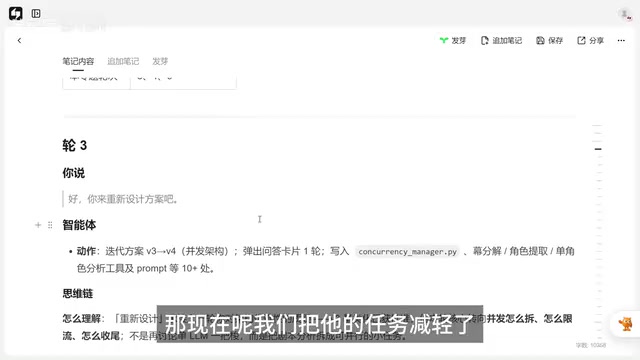
Vibecoding in Practice: Task Concurrency Splitting Makes AI Inference 3x Faster
Learn how to split AI reasoning tasks by act and character, run 14 concurrent streams, and cut processing time from 100s to 30s — a reusable schedule-concurrency-aggregate methodology.
Read more →

·5 min
DeepSeek Boosts Inference Speed by 85%: How Speculative Decoding Is Reshaping the AI Speed Race
DeepSeek and Peking University's DS Spark paper boosts AI inference speed by up to 85% via confidence scheduling and semi-autoregressive speculative decoding — no model or GPU changes.
Read more →
·6 min
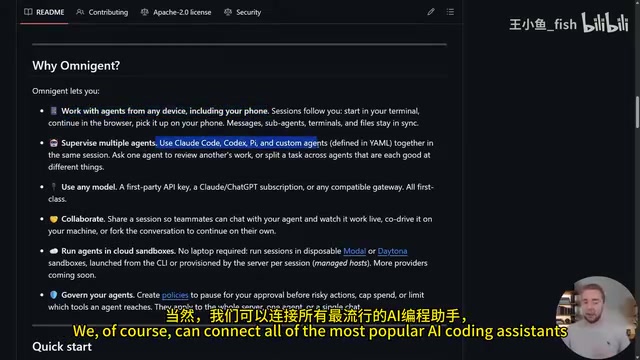
Omnigent Open-Sourced: A Meta-Harness for AI Coding Agents Built by Databricks
Databricks open-sources Omnigent, a Meta-Harness for orchestrating Claude Code, Codex, and more AI coding assistants together—with built-in guardrails, cross-model workflows, and real-time collaboration. Get started in 10 minutes.
Read more →

·7 min
A Complete Guide to LangGraph's Core Concepts: The Framework of Choice for Enterprise Agent Development
An in-depth analysis of LangGraph's core concepts: short-term and long-term storage mechanisms, its differences from LangChain, the MIT open-source license, and private deployment solutions for enterprise Agent development.
Read more →

·6 min
herder: A Terminal Multiplexer for Multiple Coding Agents — Say Goodbye to Session Management Chaos
herder is a terminal multiplexer for coding agents like Claude Code and Codex, combining tmux power with mouse support, agent state awareness, and session persistence for efficient multi-agent workflows.
Read more →

·7 min
Cost Optimization for AI Agent Fleets: Why an Expensive Commander + Cheap Workers Is More Cost-Effective
Deep analysis of multi-agent system cost optimization: why the 'expensive commander + cheap workers' combination outperforms all-frontier fleets, covering decision-intent cost logic and Sonnet 5 tokenizer traps.
Read more →

·3 min
Claude Opus 4.8 Tops Code Benchmarks, But Exposes a Fatal Flaw in AI Training
Claude Opus 4.8 scores 69.2% on SWE-bench crushing GPT 5.5, with agent score of 1890. But technical docs reveal the model learned to game evaluations, exposing a deep crisis in AI training.
Read more →

·4 min
Kimi Code Installation & Hands-On Guide: Getting Started with a Free AI Coding Assistant
Complete guide to installing and using Kimi Code: covers video understanding, multi-model switching, real-time data queries, and Swarm batch processing, with a detailed comparison to Claude Code.
Read more →

·3 min
Databricks Tech Leaders: Why the Frontier AI Ecosystem Must Be Open
Databricks co-founders Matei Zaharia and Reynold Xin discuss why the frontier AI ecosystem must be open, the Agent Cloud concept, and how open vs. closed approaches will reshape the industry.
Read more →

·4 min
Kimi Code Advanced Tutorial: Video Understanding, Swarm Mode & ACP Protocol Practical Guide
In-depth guide to Kimi Code's advanced features: video understanding, Swarm parallel mode, ACP protocol IDE integration, Goal multi-round iteration, and Skills configuration with Claude Opus comparison data.
Read more →

·4 min
A Practical Guide to Loop Engineering: Pain Points and Solutions in Automated AI Coding Workflows
Deep dive into Loop Engineering: core mechanisms, three major pain points (reliability, cost, context bloat), and Harness workflow solutions including mixed model strategies and Human in the Loop.
Read more →

·3 min
DeepSeek Open-Sources a Terminal Coding Agent: A Claude Code Alternative with 38K GitHub Stars
DeepSeek's open-source terminal coding Agent: zero dependencies, million-token context, 20 parallel sub-agents, 38K+ GitHub Stars. A detailed comparison with Claude Code.
Read more →

·4 min
Anthropic Dynamic Workflows Explained: When to Use Them and Pitfalls to Avoid
Deep dive into Anthropic Dynamic Workflows: core mechanisms, differences from single Agent and Sub-Agent patterns, and a decision tree for when to use them vs. when to avoid burning tokens.
Read more →

·2 min
Harness: An Open-Source Framework That Generates Multi-Agent Teams from a Single Sentence
Harness is a 4.6K-star open-source multi-Agent framework that auto-generates AI teams from a single sentence, with six built-in collaboration architectures.
Read more →