#MemGPT
32 related articles

·3 min
Second Brain Desktop: A Persistent Memory Store Across AI Tools
Second Brain desktop brings unified persistent memory across AI tools for Mac and Windows, featuring intelligent recall, auto-built knowledge graphs, and self-hosted data via Cloudflare.
Read more →

·7 min
Context Engineering: A Systematic Approach to Stop AI Agents from 'Talking Nonsense'
Context engineering is the core methodology for building efficient AI Agents, covering query enhancement, RAG retrieval, prompt design, memory management, and tool invocation. Master Write, Select, Compress, and Isolate to solve LLM hallucination at its root.
Read more →

·7 min
The Complete Guide to LLM Application Engineer Interviews: Six High-Frequency Topics in the Agent Domain
A focused guide to the core interview topics for LLM application engineers, covering agent architecture, Multi-Agent, Langfuse evaluation & tracing, security, and RAG optimization.
Read more →

·7 min
The Complete Guide to LLM Application Engineer Interviews: Six High-Frequency Agent Topics
A focused guide to core LLM application engineer interview topics, covering agent architecture, Multi-Agent, Langfuse evaluation, security, and RAG optimization.
Read more →
·2 min
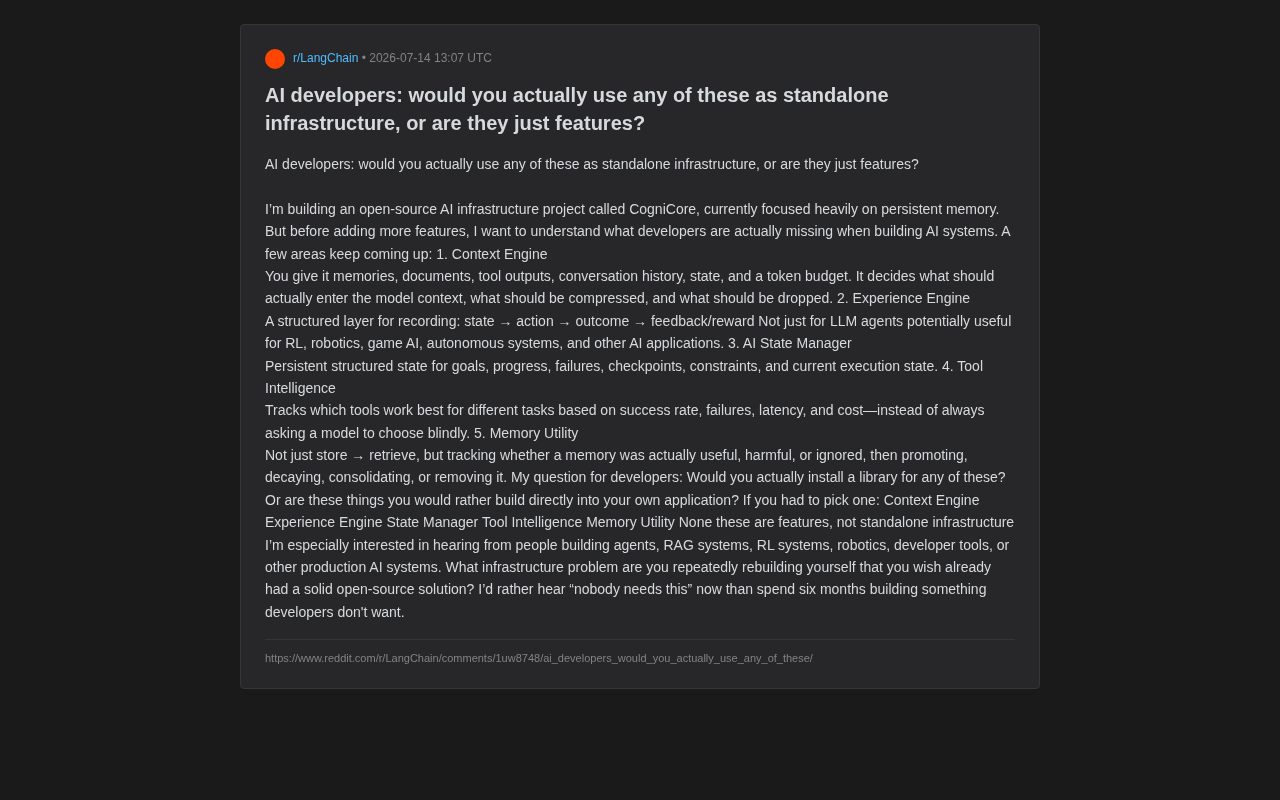
AI Infrastructure or App Feature? The Architecture Debate Sparked by CogniCore
CogniCore asks: should persistent memory, context engines, and state management be standalone AI infrastructure or in-app features? A deep dive into 5 key directions and the missing middleware of the agent era.
Read more →

·3 min
LightMem-Ego: The AI Memory Assistant That Remembers the Details of Your Daily Life
LightMem-Ego is an AI life assistant with long-term memory — tracking object locations, meetings, and life events over time. A deep dive into its technology and real-world challenges.
Read more →

·3 min
ASE Control Panel: How STATE_SYNC Tokens Enable AI State Persistence
A deep dive into ASE's core mechanism — the STATE_SYNC checkpoint token — and how it transforms stateless LLMs into stateful AI systems for complex multi-turn workflows.
Read more →
Continual Learning: The Overlooked Cor…
·3 min
Continual Learning: The Overlooked Core Bottleneck on the Road to AGI
Why is Continual Learning the biggest barrier to AGI? This deep dive covers catastrophic forgetting, real-world deployment challenges, and the Amodei vs. Dwarkesh debate on AGI pathways.
Read more →
Adaptive Recall: A Deep Dive into Pers…
·2 min
Adaptive Recall: A Deep Dive into Persistent Memory for AI Assistants via MCP
Adaptive Recall uses MCP (Model Context Protocol) to give AI assistants like Claude persistent memory across sessions, featuring vector storage, semantic retrieval, and adaptive forgetting.
Read more →
·6 min
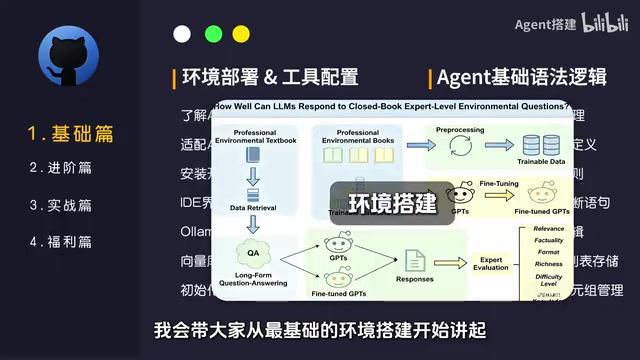
AI Agent Development Learning Path: Four Stages from Zero to Hands-On Projects
A systematic breakdown of the AI agent development learning path, covering four stages: fundamentals, RAG knowledge bases, tool use, multi-agent collaboration, and hands-on projects.
Read more →

·4 min
AI Agent Learning Roadmap: From Zero to Real-World Projects
A complete AI Agent learning roadmap covering agent principles, prompt engineering, RAG, multi-agent systems, and hands-on projects — from zero to real-world deployment.
Read more →

·7 min
Spec-Driven Development: Andrew Ng Teaches You to Master AI Coding Agents Efficiently
Andrew Ng partners with JetBrains on a new course systematically teaching Spec-Driven Development. By writing high-quality specs, developers can precisely control AI coding agents, eliminate context decay, and boost intent fidelity.
Read more →

·4 min
AI Agent: A Complete 6-Week Learning Roadmap from Beginner to Production
A complete 6-week AI Agent learning roadmap covering core architecture (planning/memory/tool use), the ReAct paradigm, multi-agent collaboration, RAG integration, and production deployment.
Read more →
·5 min
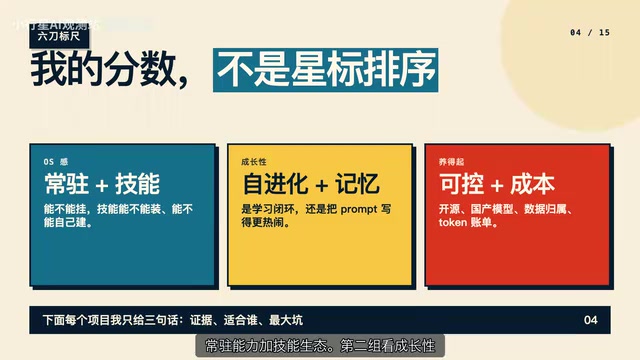
6 Self-Hosted AI Agents Compared: Which One Is a Truly Self-Evolving Digital Employee?
An open-source AI Agent with 380K stars ranks only third? This comparison of 6 self-hosted AI Agents scores them on persistence, self-evolution, and data control—revealing why Generic Agent won with just 3,000 lines of code.
Read more →

·5 min
OSWorld 2.0 Benchmark: Top AI Agent Achieves Only 20% Completion Rate — Long-Horizon Tasks Are the Achilles' Heel
OSWorld 2.0 benchmark tests 108 long-horizon computer tasks. Claude Opus tops at only 20.6% completion, exposing critical AI weaknesses in state tracking and error self-correction.
Read more →
·5 min
OSWorld 2.0 Benchmark: Top AI Agents Achieve Only 20% Completion Rate — Long-Horizon Tasks Are the Fatal Weakness
OSWorld 2.0 benchmark tests 108 long-horizon computer tasks (median 1.6 hrs for humans). Claude Opus tops out at 20.6% completion, exposing critical AI Agent weaknesses in state maintenance and self-correction.
Read more →
Why Does AI Take Such Bad Notes? A Dee…
·4 min
Why Does AI Take Such Bad Notes? A Deep Dive into the Limits and Trade-offs of LLM Memory
Why does Claude remember random junk? This deep dive explores how LLM memory systems work, their technical limits, privacy risks, and how to design AI that knows what to forget.
Read more →

·4 min
ctx: An Open-Source Tool for Searching Your Local AI Coding Assistant History
ctx is a local-first open-source tool that lets developers search and reuse conversation history from Claude Code, Cursor, and GitHub Copilot without uploading data to the cloud.
Read more →

·5 min
The Attention Bottleneck in AI Coding: Hands-On Agent Workflows from the Father of Crayfish
OpenClaw author Peter shares his thinking on AI coding: when compute is no longer the bottleneck, developer attention becomes the new ceiling. Learn three practical skills—Agent Transcript, Auto-Review, and the Crapbox sandbox.
Read more →

·7 min
Hermes Agent Deep Dive: An AI Agent Framework That Uses Fewer Tokens Than Open Cloud
Full comparison of Hermes Agent vs Open Cloud: lower token usage, 200+ model support, auto Skill encapsulation, WeChat/DingTalk integration. A cost-effective AI Agent alternative for long-term deployment.
Read more →