#Neural Expressive
109 related articles

·6 min
A Practical Guide to Removing the AI Flavor from Fiction: Three Techniques to Make Your Writing More Human
Why does AI-written fiction always have an "AI flavor"? This article breaks down its two root causes and offers three practical techniques—reduce atmospheric padding, drive emotion through events, and control action steps—to write more natural, human fiction.
Read more →

·7 min
Block-Sparse Featurizers: Opening the Black Box of Vision Model Neural Geometry
Block-sparse featurizers remap dense vision model activations into block-sparse representations, making the internal feature spaces of ViT, CNN, and other models readable and interpretable. This article explores their core principles, links to mechanistic interpretability, and applications.
Read more →

·7 min
Metacognitive Feedback: Using Reinforcement Learning to Help LLMs Accurately Express Uncertainty
LLMs are often overconfident and prone to hallucination. How can AI learn to say "I'm not sure"? This article explains the reinforcement learning approach with metacognitive feedback and how calibrating confidence boosts LLM trustworthiness.
Read more →

·6 min
GPT-5.6 Three-Model Family Launch: A Complete Breakdown of Sol/Terra/Luna Capabilities and the Government Restriction Incident
OpenAI officially launches the GPT-5.6 family, including the Sol flagship, Terra balanced, and Luna lightweight models. Coding capabilities set a new industry benchmark, generating a Minecraft clone in 90 minutes—while OpenAI publicly opposes U.S. government release restrictions.
Read more →
Google Drops Two New Models: 4-Second …
·4 min
Google Drops Two New Models: 4-Second Image Generation + Real-Time Video Creation Explained
Google launches Imagen 3 Nano (Flash) for 4-second text-to-image generation and Veo 3 Flash for conversational video editing — now available via Gemini API and Google AI Studio.
Read more →
·7 min
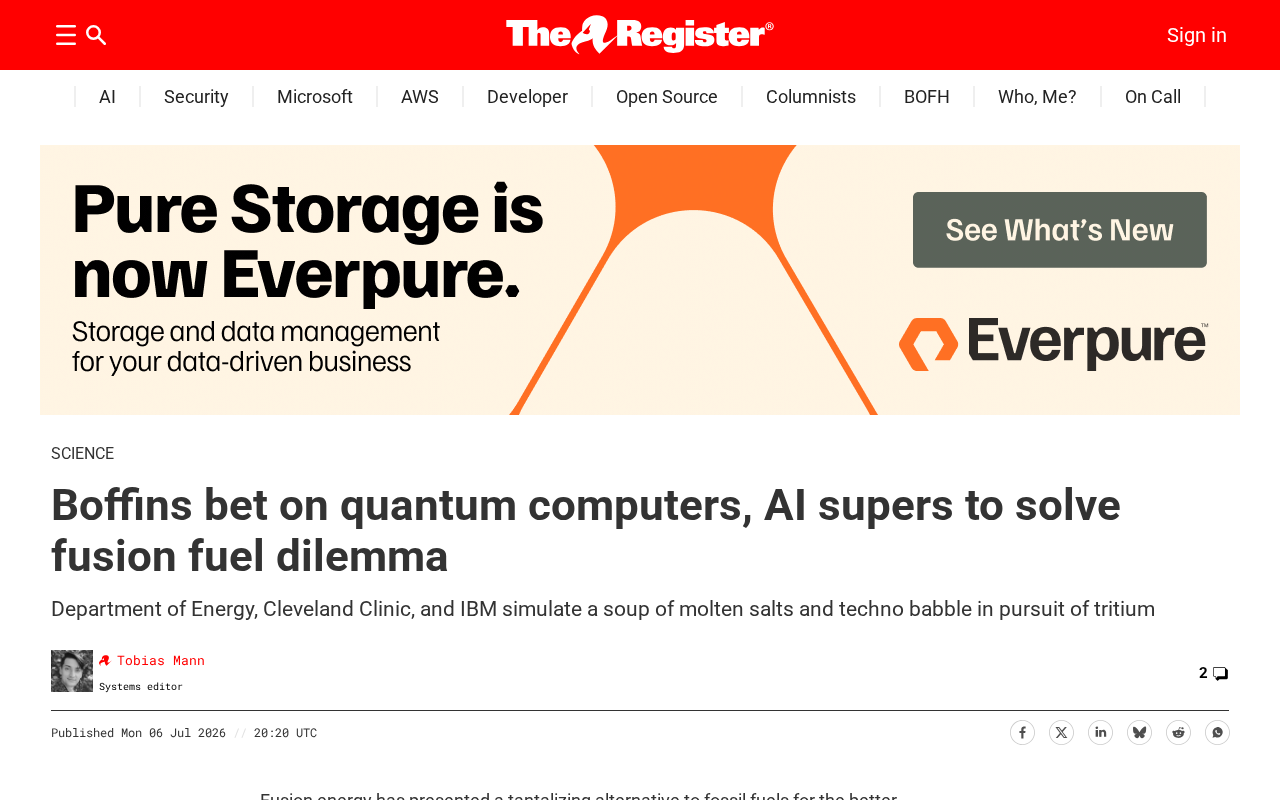
How Quantum Computing + AI Supercomputing Could Crack Fusion's Fuel Dilemma
One of the biggest bottlenecks to fusion commercialization is the tritium fuel breeding and cycling problem. This article explores how quantum computing and AI supercomputers can jointly tackle fusion's fuel challenge.
Read more →

·4 min
Ternlight: A 7MB Browser-Side Embedding Model for Server-Free Semantic Search
Ternlight is a 7MB WebAssembly-based browser-side text embedding model requiring no server or GPU. Explore its tech, use cases, and tradeoffs for private, offline semantic search.
Read more →

·7 min
Dispersion Loss: A Key Technique for Solving Embedding Condensation in Small Language Models
Embedding condensation is a hidden bottleneck in small language model training. Dispersion Loss combats this by enforcing representation spread during training at zero inference cost.
Read more →

·5 min
Defending the Right to Run Local AI: A Battle for Privacy, Freedom, and Digital Sovereignty
Local AI faces a triple threat from tightening regulation, hardware lock-downs, and commercial pressure. A deep analysis of why running open-source LLMs on your own device is a digital right worth defending.
Read more →

·4 min
Why Large Language Models Are Starting to 'Invent Words': The Nature of LLM Language Boundaries
Top LLMs are pushing beyond existing human vocabulary, producing neologisms and expressive distortion. This article analyzes the tension between LLM high-dimensional semantic spaces and natural language symbol systems.
Read more →
Vespa at 80: The Timeless Design Philo…
·4 min
Vespa at 80: The Timeless Design Philosophy Behind a Scooter
Born from postwar ruins in 1946, Vespa's 80-year story proves that user-driven design, brand DNA consistency, and emotional product thinking are the true keys to timeless competitiveness.
Read more →
·5 min
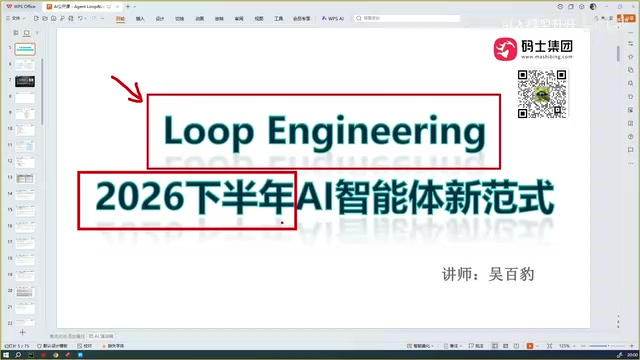
Loop Engineering: A Comprehensive Guide to AI Agent Loop Design
A deep dive into Loop Engineering for AI Agents — what loop feedback mechanisms are, how they differ from Harness Engineering, and a complete guide from principles to production implementation.
Read more →

·6 min
Vibecoding in Practice: Architecture Trade-offs and Implementation of a Dual-Engine TTS Router
Alibaba Cloud vs Volcano Engine TTS: why "I want both" is the mature engineering decision. Dual-engine routing design, priority trap debugging, and vibecoding-powered implementation.
Read more →

·6 min
14x Speedup: How Manticore Rebuilt the ONNX Embedding Inference Path
Manticore Search restructured its ONNX inference path to achieve 14x faster text embeddings. Deep dive into batching, session reuse, zero-copy memory, and thread tuning for vector search systems.
Read more →

·3 min
Liang Wenfeng and DeepSeek: How an Idealist Is Disrupting Global AI with Algorithmic Efficiency
Why did DeepSeek go open-source? How does a 300-person team beat tech giants? A deep dive into Liang Wenfeng's logic: flat org, algorithmic efficiency, and open-source disruption.
Read more →

·7 min
Getting Started with LangGraph Multi-Agent Development: Architecture Analysis and Three Practical Case Studies
Learn LangGraph multi-agent development covering Supervisor and Collaboration architectures, with three hands-on projects: code assistant, prompt assistant, and WebRTC digital human.
Read more →

·7 min
Building an AI Agent from Scratch: Implementing Core Conversational Agent Features in Python
Learn AI Agent development from scratch. This tutorial covers LLMs and prompts, then builds a conversational agent in Python using the DeepSeek API with multi-turn dialogue and system prompts.
Read more →
Developer's TTS API Selection Guide: O…
·3 min
Developer's TTS API Selection Guide: OpenAI vs. ElevenLabs vs. Grok vs. Cartesia
Deep comparison of TTS APIs: OpenAI, ElevenLabs, xAI Grok, and Cartesia — covering audio quality, latency, pricing, voice cloning policies, and AI Gateway architecture to help developers find the right fit.
Read more →

·3 min
Free Access to Top AI Models? The Hidden Security Risks Behind Aggregator Sites
Exposing the truth behind viral free AI aggregator sites: fake model versions, privacy risks, and data security threats. Learn how to safely use ChatGPT, Claude, Gemini, and other AI models.
Read more →

·2 min
Vibe Coding in Practice: Creating Particle Effects and Retro Camera Filters with Zero Code
A hands-on Vibe Coding walkthrough using Qwen 3.7 Max and CoderWork to build gesture-controlled 3D particle systems and retro camera filters with zero code.
Read more →