#Neural Expressive
110 related articles

·2 min
Symbolic AI and Neural Networks: A Systematic Learning Path and Core Mathematical Tools
A deep dive into symbolic vs. neural AI paradigms — exploring type theory, category theory, and algebraic geometry as mathematical bridges toward neuro-symbolic integration.
Read more →

·3 min
iOS 27 In-Depth Review: Five Major New Features Tested and Analyzed
iOS 27 deep dive: AI photo Extend & Spatial Reframe, a rebuilt Siri with personal data access, 30%+ system-wide speed gains, and long-overdue quality-of-life fixes — all tested and explained.
Read more →

·7 min
GPT Live Full-Duplex Voice: How AI Learns to Listen and Master Conversational Rhythm
OpenAI's GPT Live introduces full-duplex voice architecture supporting simultaneous listen-and-speak, real-time translation, and separated foreground/background reasoning. A deep dive into its tech, use cases, and safety boundaries.
Read more →
xAI Launches Grok Flagship Voice: AI V…
·2 min
xAI Launches Grok Flagship Voice: AI Voice Interaction Enters the Era of Human-Like Conversation
xAI launches Flagship Voices for Grok, upgrading naturalness, voice diversity, and low-latency response. A deep dive into the tech highlights and xAI's ecosystem strategy.
Read more →
Guided Generative Models: A New Approa…
·2 min
Guided Generative Models: A New Approach to Estimating Extreme Event Probabilities
Guided generative models use guidance sampling to extend generative AI into rare event probability estimation — covering financial risk, climate prediction, and engineering reliability.
Read more →
Naive Art in the Age of AI: How Gina G…
·2 min
Naive Art in the Age of AI: How Gina Gallery Defines Authentic Creation
Why is Gina Gallery of International Naive Art drawing attention in tech circles? Exploring Naive Art's core traits, its contrast with AI-generated art, and niche curation in the digital age.
Read more →
From Love to Disappointment: The Deepe…
·3 min
From Love to Disappointment: The Deeper Reasons Behind Claude's Declining User Experience
Why did a veteran user go from loving Claude to feeling disappointed? A deep dive into over-alignment, style drift, and how model upgrades can protect longtime users.
Read more →

·3 min
Building a Real-Time AI Tutor for 5-Year-Olds: Technical Challenges and the Educational Balance
Exploring the core challenges of building real-time AI tutors for preschoolers: low-latency voice interaction, children's ASR, content safety guardrails, and AI as a guide rather than an answer machine.
Read more →

·4 min
No MLP or Attention Required: How Point-Attractor Dynamics Learn Word Embeddings
A minimalist dynamical system experiment: without MLP, Transformer, or attention layers, point-attractor dynamics driven purely by co-occurrence pressure learns semantic similarity on SimLex-999.
Read more →

·3 min
AI-Generated D&D Fantasy Character Portraits: A New Creative Tool for Tabletop Gamers
AI image generation is transforming how D&D and tabletop gamers create characters. From character consistency to atmospheric detail, new diffusion models make stunning fantasy portraits accessible.
Read more →
·4 min
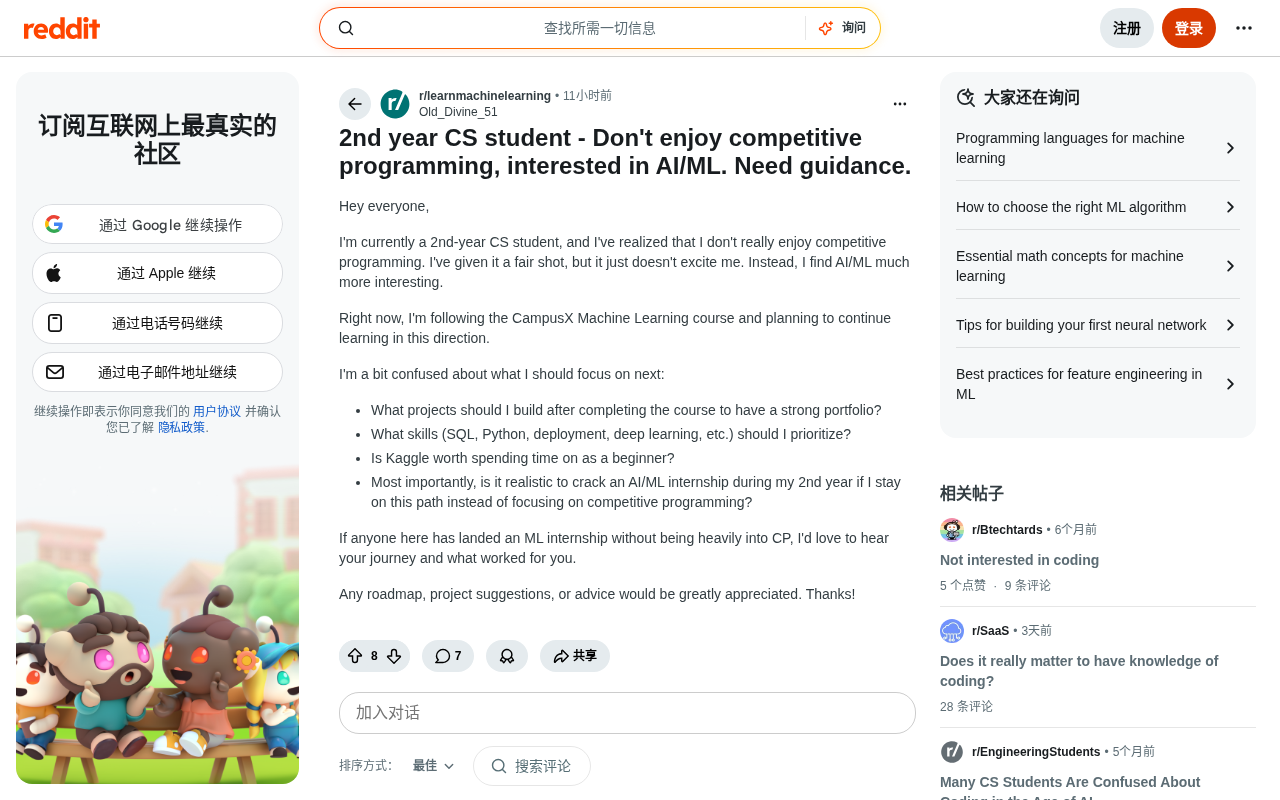
No Competitive Programming Required: How CS Students Can Pivot to AI/ML and Land Internships
How can CS students who dislike competitive programming systematically pivot to AI/ML? This guide covers skill priorities (Python/SQL/ML/deployment), portfolio strategy, Kaggle tips, and real paths to landing AI/ML internships.
Read more →

·4 min
Complete Guide to Gesture Control on Huawei Sound X5: From Waving to Switch Songs to Whole-Home Automation
The Huawei Sound X5 is more than a Bluetooth speaker! Learn how to activate wave detection via the Smart Life App for contactless song switching, volume control, AC control, and whole-home automation.
Read more →

·6 min
Andrew Ng × Anthropic: A Hands-On Claude Code Tutorial and Core Methodology
Andrew Ng partners with Anthropic to launch a hands-on Claude Code course, revealing its simple architecture, local security edge, and core context methodology across three cases: RAG chatbot, Jupyter analysis, and Figma-to-frontend.
Read more →

·6 min
Is AI Really Smart? The Future Directions and Capability Boundaries of Next-Generation Artificial Intelligence
Are large language models truly intelligent? This article analyzes core AI limitations — pattern matching, hallucinations, reasoning deficits — and explores next-gen directions like inference-time compute, neuro-symbolic AI, and embodied intelligence.
Read more →

·5 min
Essential Math for AI/ML Research: Should Undergrads Choose the Specialist Sequence or the Major Track?
Aiming for AI/ML research? How should you pick undergrad math courses? This article breaks down linear algebra, probability & statistics, and optimization, weighing the specialist sequence vs. the Major track.
Read more →

·3 min
Huawei Pangu 2.0-Flash Benchmark Review: #1 in Instruction Following, Last in Engineering Code
Huawei OpenPangu 2.0 Flash review: 92B MoE open-source model tops instruction following at 95.9, excels in math & Agent tasks, but scores last on SWE-Bench engineering code at 63.1.
Read more →

·6 min
7 Anima Model Combinations Tested: The Optimal Config Guide for Anime Image Generation
A Reddit user's rigorous controlled experiment testing all 7 Anima combos—base, aesthetic, turbo LoRA, and turbo baked. Key takeaway: choose aesthetic first, add Turbo LoRA for anime-girl style. Includes prompt structures and ComfyUI configs.
Read more →

·4 min
FTPO: A Training-Level Solution to AI Repetition Loops
FTPO (Final Token Preference Optimization) tackles AI "Doom Loops" at the training level rather than patching them at inference time — exploring its principles, value for small/quantized models, and open challenges.
Read more →
·6 min
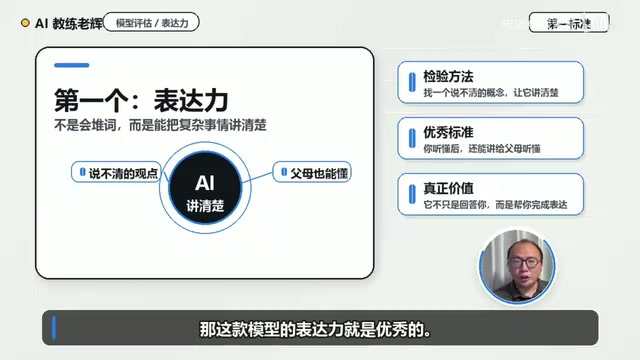
Forget Benchmark Scores! Four Practical Standards to Judge an LLM's Real Capability
High benchmark scores don't mean an LLM is actually useful. This article shares four field-tested standards—expressiveness, insight, cognitive depth, and problem-solving—to help you find the AI that truly fits you.
Read more →

·6 min
Why Can't AI Understand British Political Farce? The Cultural Comprehension Dilemma of Algorithms
A political news story about British satirical candidate 'Count Binface' sparked debate in the tech community: why does AI struggle to understand sarcasm, contrast humor, and cultural context? An in-depth analysis of LLM limitations.
Read more →