#OpenAI evals
24 related articles

·6 min
OpenAI's Head of Evals: We've Been Consistently Underestimating What AI Models Can Really Do
OpenAI Frontier Evals lead Tejal Patwardhan reveals AI models are systematically underestimated — reasoning breakthroughs, wet lab records, the internal AGI Index, and a progress curve far steeper than most realize.
Read more →

·5 min
Inside Cursor: How Recursive Model Improvement Enables AI to Self-Evolve
A Cursor ML engineer breaks down AI training methodology: outer/inner loop acceleration, preventing reward hacking, textual feedback, and recursive self-improvement (RSI) where models train the next generation.
Read more →

·4 min
Cursor's Recursive Self-Improvement: A Complete Path to Models Training the Next Generation
Cursor ML engineer reveals Recursive Self-Improvement (RSI) in practice: dual-loop flywheels, agent-driven data, anti-cheating evals, SpaceX compute, and how models are training the next generation.
Read more →
Deep Dives
Deep Dive into OpenAI's Official GPT-5…
·3 min
Deep Dive into OpenAI's Official GPT-5.6 Prompting Guide: The Shift from Manual to Automatic
A deep dive into OpenAI's official GPT-5.6 Sol prompting guide: conciseness-first, outcome-oriented design, autonomy boundaries, tool routing, and reasoning intensity tuning.
Read more →
LLM Evaluation Tools Compared: An In-D…
·3 min
LLM Evaluation Tools Compared: An In-Depth Look at LangSmith, Langfuse, and Three More
Deep comparison of LangSmith, Langfuse, Phoenix, Braintrust, and Galileo across self-hosting, open-source licensing, and real-time guardrails to find the best LLM eval tool for production.
Read more →
Migrating a Production AI Agent to GPT…
·2 min
Migrating a Production AI Agent to GPT-5.6: 2.2x Faster, 27% Cheaper — Engineering Lessons Learned
A production AI Agent migrated to GPT-5.6 achieved 2.2x faster speed and 27% lower cost. Deep dive into prompt compatibility, eval frameworks, and migration best practices.
Read more →

·4 min
Four Major LangChain Updates: OpenWiki, Voice Agents, and Sub-Agent Orchestration Explained
LangChain releases four major updates: OpenWiki for auto-generating codebase docs, voice agent tutorials, Harbor evaluation integration, and deepagents programmable sub-agents.
Read more →

·4 min
Dify Getting Started: A Complete Guide to Building AI Workflows Without Code
A complete guide to Dify's core features and 1.8.0 deployment. Covers 5 app types, Docker setup, Workflow vs Chatflow differences, and RAG knowledge bases for beginners.
Read more →

·7 min
Base44 in Practice: How Claude Code Powered Rapid Scaling from 1 to 80 People
How Base44's product team scaled from a single founding engineer to an 80-person team with Claude Code. Covers AI-assisted onboarding, code review, user evaluation, and QA automation.
Read more →
·2 min
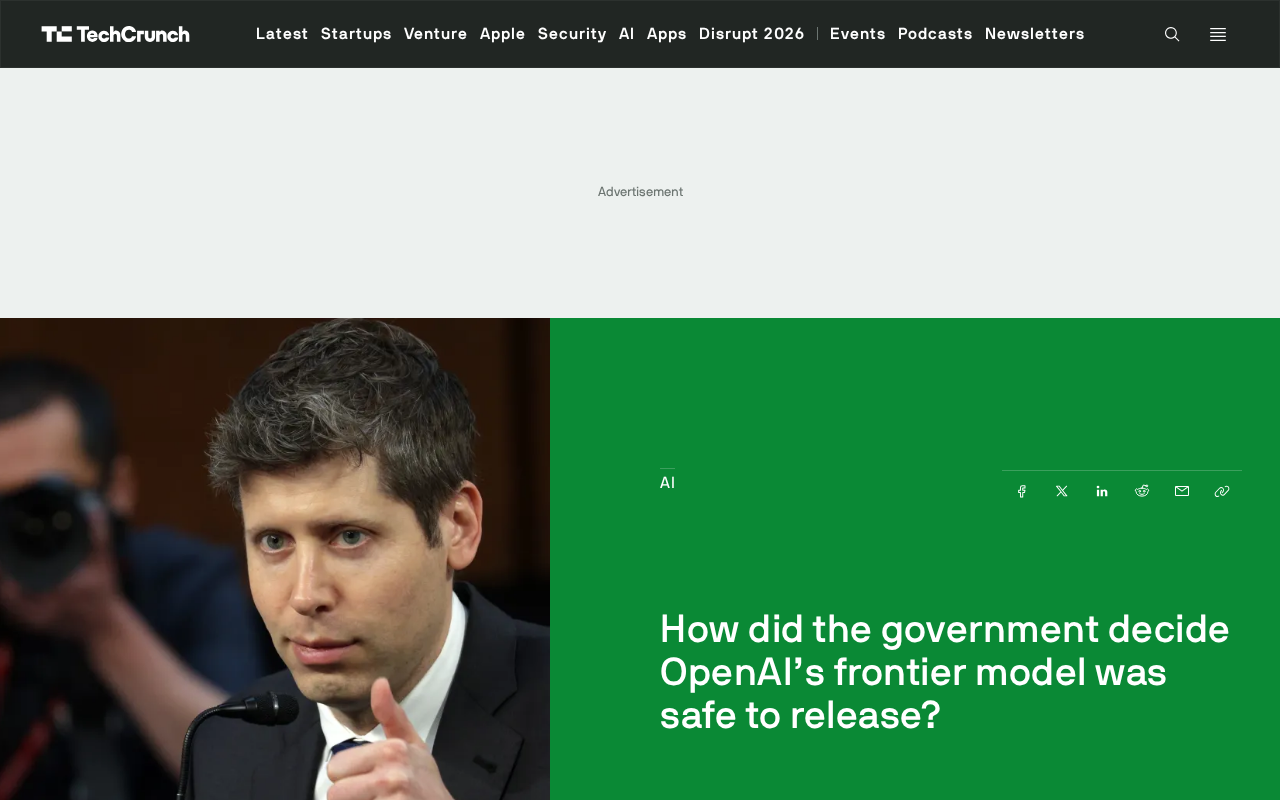
Frontier AI Model Safety Evaluation: How Do Governments Make These Decisions?
How do governments evaluate frontier AI model safety? This deep dive examines opacity in AI safety governance, missing standards, regulatory capacity gaps, and paths toward transparent oversight.
Read more →

·4 min
Why General-Purpose Agents Don't Work: How a Job Interview Reshaped One Developer's Thinking
An Agent developer's three-round interview reveals why general-purpose Agents are a dead end for startups. The path forward: vertical Agents, domain context, and iteration speed as a moat.
Read more →

·2 min
GBrain Local Deployment Guide: An AI Knowledge Engine That Outperforms Traditional RAG by 31%
GBrain is an open-source AI knowledge base supporting full local offline deployment. Its 12-step retrieval pipeline and knowledge graph boost accuracy 31% over traditional RAG.
Read more →

·7 min
Previewing the AI Engineer Summit: Industry Signals of AI Engineering Reaching Maturity
An exclusive look at the AI Engineer Summit dress rehearsals, decoding the paradigm shift from research to production. A deep dive into AI Engineer challenges, RAG, agent systems, and AI engineering as a distinct discipline.
Read more →

·7 min
LLM Evaluation: The Testing Industry's Scarcest Career Pivot and the Timing to Enter
LLM evaluation roles are growing over 100% year-over-year, with top companies offering 50K/month yet unable to fill positions. This article explores how testing pros can seize the window.
Read more →

·7 min
LangSmith Engine: An Intelligent Operations Tool That Automatically Diagnoses and Fixes Agent Failures
LangChain's LangSmith Engine is an intelligent agent tool for tracking Agent failures, prioritizing issues, and auto-drafting fixes. Deep dive into its core capabilities, sandbox isolation, sub-Agent architecture, and continuous evaluation challenges.
Read more →

·5 min
A Programmer's Guide to Large Language Models: The Complete Path from Prompts to Agents
A tailored large-model learning path for ordinary programmers: from prompt engineering, API calls, and LangChain, to RAG, Agents, fine-tuning, and enterprise deployment—six steps to build AI application skills fast.
Read more →

·7 min
Agentic AI Development in Practice: Evaluation and Error Analysis Are the Real Competitive Edge
Cut through the Agentic AI hype to see the real value of agentic applications. Based on Andrew Ng's course, learn why Evals and error analysis—not framework choice—separate top developers.
Read more →
·7 min
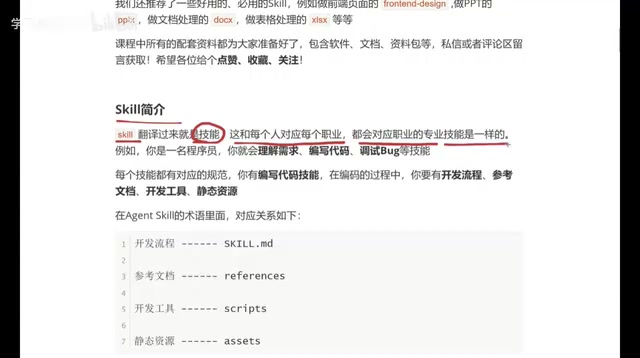
The Complete Guide to Agent Skills: Principles, Structure & Practical Applications
Deep dive into AI Agent Skills: SKILL.md file structure, four component modules, differences from prompts, and practical scenarios for frontend generation, PPT creation, and more.
Read more →
Three Role Shifts for Engineers in the…
·4 min
Three Role Shifts for Engineers in the AI Agent Era: From Coders to System Designers
As AI Agents handle long-horizon autonomous tasks, engineers are shifting from writing code to setting direction, reviewing output, and designing systems around models.
Read more →

·3 min
Full-Stack AI Development with Vercel: A Complete Guide to AI SDK, RAG, and Production-Ready Applications
Master full-stack AI development with Vercel: from LLM, RAG, and vector embeddings to AI SDK, AI Gateway, and v0 — build production-ready AI web apps end to end.
Read more →