#Parquet format
18 related articles
LTAP Architecture Deep Dive: Storing P…
·3 min
LTAP Architecture Deep Dive: Storing Postgres Data in Parquet Format on S3
A deep dive into LTAP architecture: storing Postgres data in Parquet columnar format on S3 for compute-storage separation, lower costs, and unified transactional and analytical workloads.
Read more →

·3 min
DuckLake Time Travel: Version Rollback and Snapshot Queries for a Lightweight Data Lake
Explore DuckLake's time travel feature for lightweight data lakes—how snapshot-based version rollback enables data auditing, error recovery, and historical analysis, compared with Iceberg and Delta Lake.
Read more →

·3 min
DuckLake Time Travel: Version Rollback and Snapshot Queries for a Lightweight Data Lake
Explore DuckLake's time travel feature for lightweight data lake version rollback and snapshot queries, with comparisons to Iceberg and Delta Lake.
Read more →
·3 min
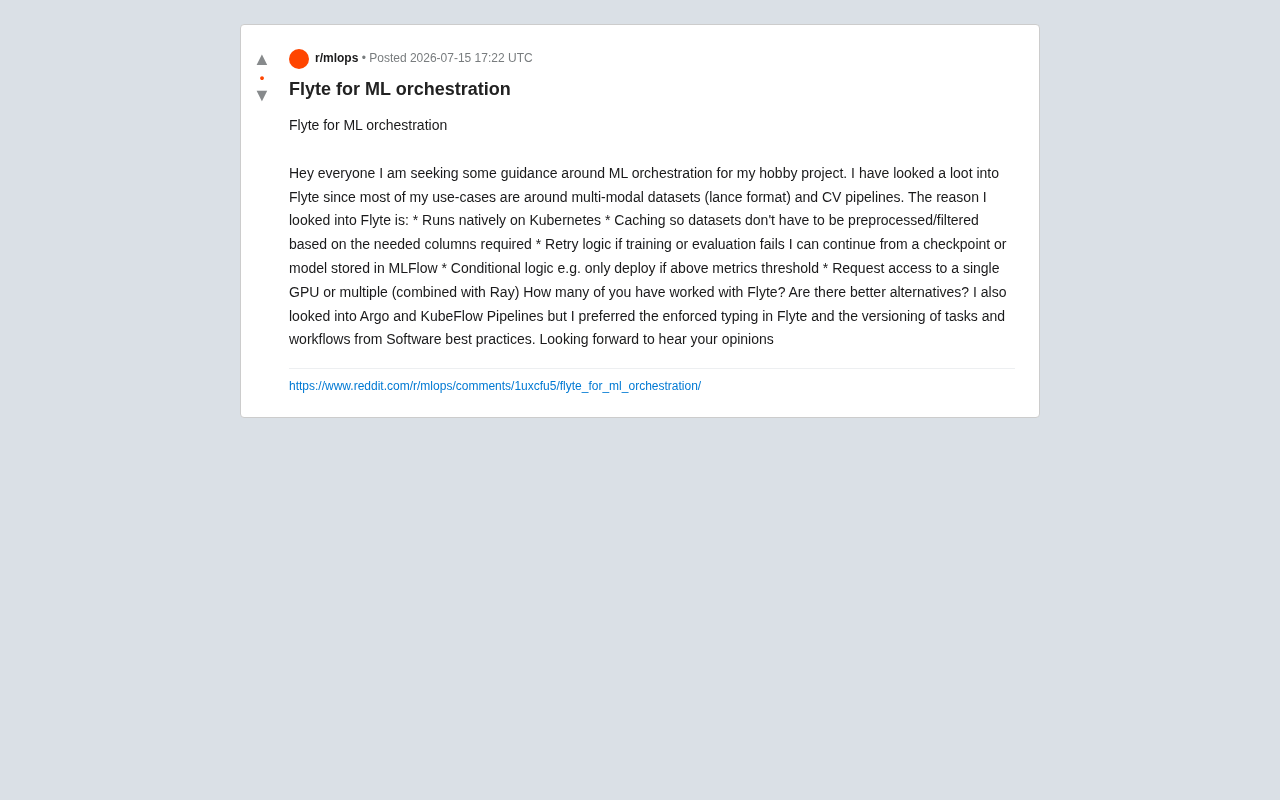
Flyte Deep Dive: A Practical Guide to Choosing Your ML Workflow Orchestration Tool
Deep dive into Flyte's core capabilities: cloud-native GPU scheduling, intelligent caching, checkpoint recovery, and conditional deployment — plus a full comparison with Argo and KubeFlow Pipelines.
Read more →

·3 min
Snowflake ML StandardScaler Error: 'does not index into the dataset' — A Complete Troubleshooting Guide
Fix Snowflake ML StandardScaler's 'does not index into the dataset' error. Learn why Snowflake's identifier case-folding causes column name mismatches and how to resolve them in 3 steps.
Read more →

·3 min
Decoding Databricks' AI Strategy: The Omnigents Orchestration Platform and LTAP Unified Storage Architecture
An in-depth look at the AI strategy of Databricks co-founders Matei Zaharia and Reynold Xin: the open-source Agent platform Omnigents, the unified storage architecture LTAP, and how Dream Engine reshapes data and intelligence.
Read more →

·3 min
Getting Started with Pandas: How to Choose Tutorials and Efficient Practice Resources
Struggling to pick a Pandas tutorial? This article breaks down the logic for choosing new vs. old versions, recommends hands-on resources like Kaggle and GitHub, and offers a 'tutorial + practice + projects' method to master data processing.
Read more →

·5 min
5 Things You Must Do Before Deploying AI Agents to Production (With a Banking POC Case Study)
Over 60% of AI Agent projects die between demo and production. This article breaks down Databricks lead Sandy's five-pillar methodology and a bank POC case study to help you avoid the most common deployment pitfalls.
Read more →

·7 min
The Five Pillars of Production-Grade AI Agents: A Battle-Tested Guide from Demo to Deployment
Databricks tech lead Sandy shares a five-pillar framework for production-grade AI Agents—evaluation, observability, data foundation, orchestration, and governance—with a £85K retail banking failure case to bridge the demo-to-production gap.
Read more →

·7 min
Complete Guide to Training Small Models on Kaggle's Free Compute: GPU Quotas and Practical Tips
In-depth guide to Kaggle's free-tier compute: P100/T4 GPU with 30 hours/week quota, 12-hour sessions, suitable models like CNN and BERT fine-tuning, plus tips like mixed precision and checkpointing to start deep learning at zero cost.
Read more →

·6 min
Deploying Enterprise AI Agents to Production: The Five Pillars from Demo to Launch
A Databricks expert breaks down the complete methodology for taking AI Agents from demo to production, covering the five pillars of evaluation, observability, data foundation, multi-Agent orchestration, and AI governance, with a real eight-week banking chatbot POC case.
Read more →

·7 min
Geosql: A Vertical Skill Pack That Teaches AI Geospatial Data Analysis
Geosql is a geospatial SQL skill pack designed for AI coding assistants like Claude and Codex, enabling LLMs to accurately generate PostGIS queries and handle coordinate transformations and spatial analysis.
Read more →

·7 min
Learning Python Web Scraping from Scratch: How It Works, the Full Workflow, and Legal Boundaries
A must-read intro to Python web scraping: from HTTP requests and HTML parsing to data storage, systematically explaining how crawlers work and their full workflow, while clarifying legal boundaries like the robots protocol and privacy protection.
Read more →

·3 min
WASM for Data Processing: Can Browsers Really Handle Big Data?
Can WASM really handle big data? This deep dive covers DuckDB-WASM's in-browser SQL capabilities, edge data processing architectures, and where WebAssembly fits in modern data engineering.
Read more →
 Product Reviews
·3 min
6 Developer Tools Roundup: AI Coding Cost Tracking, Agent Virtual File Systems, and More
Roundup of 6 developer tools: CodeBurn for AI coding token cost tracking, Mirage virtual file system for Agents, Boring SSH tunnel manager, PeerTrace file tree renderer, DataTab font-based data visualization, and Flu TypeScript Agent framework.
Read more →
 Product Reviews
·2 min
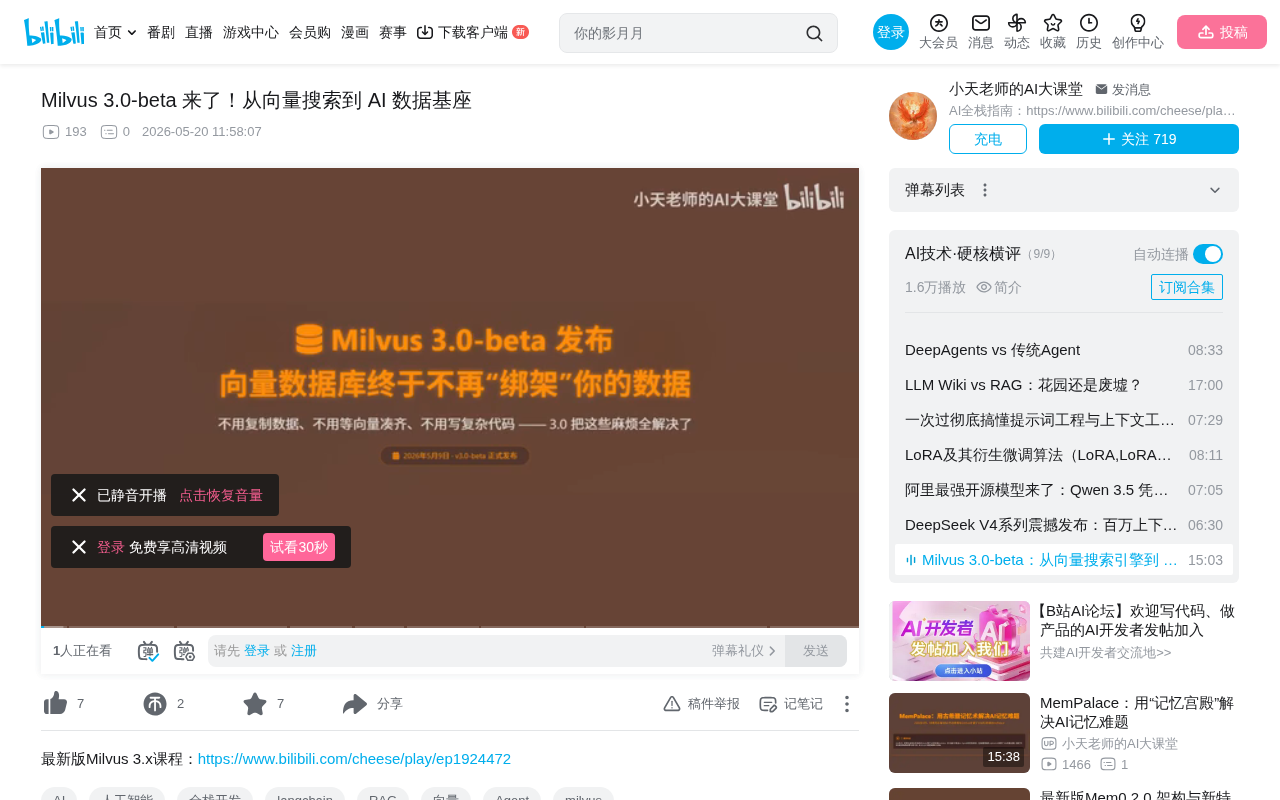
Milvus 3.0-beta Deep Dive: Ten Core Features and the Complete Architecture Overhaul
Deep dive into Milvus 3.0-beta's ten core features: External Collection zero-copy queries, Snapshot read-write isolation, Order By aggregation, entity-level TTL, Storage V3 engine, and more.
Read more →
 Industry Insights
·3 min
Deep Dive into LangChain's Full-Lifecycle Toolchain for Agent Development
LangChain unveils a full-lifecycle toolchain for Agent development at Interrupt, covering Deep Agents 0.6, SmithDB, Context Hub, LLM Gateway, and LangSmith Engine.
Read more →
 Product Reviews
·3 min
Datus-agent: An AI-Native CLI Tool Reshaping Data Engineering with Context Engineering
Deep dive into Datus-agent, an open-source AI-native CLI SQL client that brings Context Engineering to data engineering with natural language queries and modern data stack support.
Read more →