#Planning with Files
1127 related articles

·3 min
What Kind of GUI Do AI Agents Need? The Evolution from Chat Boxes to Task Consoles
Exploring GUI design for AI Agents: why chat boxes fall short, and how ideal agent interfaces need task visualization, human-in-the-loop intervention, state presentation, and multi-agent orchestration.
Read more →

·3 min
Dual Optical Drive M-Disc Cold Storage Build Guide: The Ultimate Data Archival Solution
Guide to building a dual BDXL M-Disc cold storage system for data archival, covering parallel burning, verification workflows, Pioneer BDR vs LG drive selection, and 3-2-1 backup strategy.
Read more →

·3 min
Dual-Drive M-Disc Cold Storage Build Guide: The Ultimate Data Archival Solution
Guide to building a dual BDXL M-Disc cold storage system for data archival, covering parallel burning, verification workflows, Pioneer BDR vs LG WH16NS40, and 3-2-1 backup strategy.
Read more →

·3 min
DuckLake Time Travel: Version Rollback and Snapshot Queries for a Lightweight Data Lake
Explore DuckLake's time travel feature for lightweight data lake version rollback and snapshot queries, with comparisons to Iceberg and Delta Lake.
Read more →

·3 min
DANE/TLSA Record Mismatch Causing Silent Email Loss: From Packet Capture Troubleshooting to Root Cause Resolution
A real-world case study of silent email loss caused by DANE/TLSA record mismatch. From empty logs to tcpdump packet capture revealing TLS handshake failures, with TLSA update procedures and automation strategies.
Read more →

·3 min
Bridging TODO and Calendar: A Complete Guide to CalDAV Task Synchronization
Explore how to sync VSCode .TODO files to calendar apps via CalDAV. Covers iCalendar format conversion, Radicale bridging, Nextcloud Tasks, and more solutions for developer task management.
Read more →

·3 min
Bridging TODO and Calendar: A Complete Guide to CalDAV Task Synchronization
Explore how to sync VSCode .TODO files to calendar apps via CalDAV. Covers iCalendar format conversion, Radicale bridging, Nextcloud Tasks, and more solutions for developer task management.
Read more →

·2 min
Supapool: Creating Isolated Databases for AI Coding Assistants in 400 Milliseconds
Supapool uses pool prewarming to create isolated Supabase database instances in 400ms for AI coding assistants like Claude, Cursor, and Devin—a prime example of AI-native infrastructure.
Read more →
·2 min
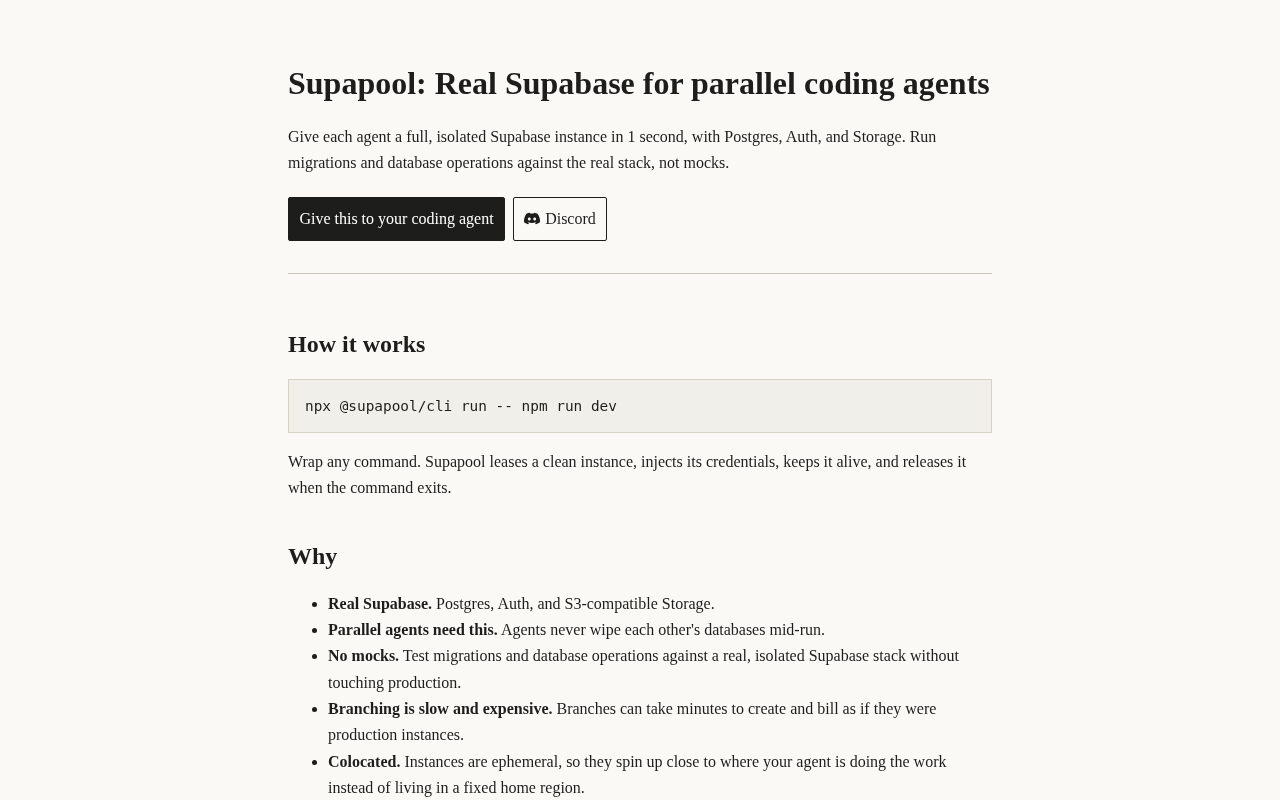
Supapool: Creating Isolated Databases for AI Coding Agents in 400 Milliseconds
Supapool uses pool prewarming to create isolated Supabase database instances in 400ms for AI coding agents like Claude, Cursor, and Devin, solving the database isolation challenge.
Read more →

·3 min
AI Toolkit for Law Students: An Efficiency Guide from Reading & Research to Note Management
Practical AI efficiency tools for law students covering document reading (NotebookLM, ChatPDF), note systems (Obsidian, Notion), time management (Reclaim.ai), and email processing with workflow principles.
Read more →

·3 min
AI Toolkit for Law Students: An Efficiency Guide from Reading & Research to Note Management
Practical AI efficiency tools for law students covering document reading (NotebookLM, ChatPDF), note systems (Obsidian, Notion), time management (Reclaim.ai), and email processing, plus workflow principles.
Read more →

·3 min
The Economic Value of Refactoring: The Hidden Cost Ledger Behind Technical Debt
An economics-driven analysis of refactoring ROI: how technical debt's compound interest slows delivery, how to calculate refactoring returns, and why incremental refactoring beats full rewrites.
Read more →

·3 min
The Economic Value of Refactoring: The Hidden Cost Behind Technical Debt
An economic analysis of code refactoring ROI: how technical debt's compound interest slows delivery, how to calculate refactoring returns, and why incremental refactoring beats full rewrites.
Read more →

·2 min
Gemini Spark Goes Global: A Deep Dive into Google's 24/7 Background AI Agent
Gemini Spark is now available globally for Pro/Ultra users with 24/7 background operation. This deep dive covers its core features, use cases, and impact on the AI agent industry.
Read more →

·4 min
Liminal: A Shared Team Second Brain Workspace for Humans and AI Agents
Liminal is a shared workspace designed for human-AI Agent collaboration, auto-rendering Markdown and HTML into visual interfaces with real-time sync and team collaboration.
Read more →

·4 min
G.I.A.ac: An AI Architect That Generates Working Apps from a Single Sentence
G.I.A.ac (General Intelligence Architect) is an AI architect tool that generates runnable apps from a single sentence. Deep dive into its positioning, competitive landscape, target users, and core challenges.
Read more →

·5 min
Phantom: A Voice AI Agent Hidden in the Mac Notch, Redefining Desktop AI Interaction
Phantom is a macOS-native voice-first AI agent residing in the MacBook notch, offering context-aware voice commands that complete tasks within any app without switching windows.
Read more →

·2 min
AppUFO: A Developer Tool That Localizes Xcode Projects in Minutes
AppUFO is a localization tool built for iOS/macOS developers that integrates directly with Xcode projects, enabling multi-language translation in minutes. This review covers its core features, target users, and efficiency gains over traditional workflows.
Read more →

·3 min
OpenComputer: Deploy Managed AI Agents with a Single Sentence — A Minimalist Launch Solution for Developers
OpenComputer is an AI agent managed deployment platform that gives you a live agent URL from a single description. This article analyzes its workflow design, market positioning, and security/cost considerations.
Read more →

·3 min
OpenWorker: A Free, Open-Source Local AI Agent That Keeps Your Data at Home
OpenWorker is a free, open-source desktop AI agent that runs locally, supports bring-your-own-model, and keeps your data private. Learn about its local-first design philosophy and key differentiators.
Read more →