#Redis principles
104 related articles

·2 min
Dify Getting Started Guide: Build Enterprise-Grade AI Apps with Zero Code
Dify is a Chinese open-source AI app platform supporting chatbots, Agents, and workflows. This guide covers Dify 1.8.0 Docker deployment, enterprise use cases, and how to build your first AI app.
Read more →

·6 min
Dify Self-Hosted Deployment in Practice: Building an Enterprise-Grade AI Application Platform from Scratch
A complete guide to self-hosting Dify, the open-source AI platform: environment setup, Docker Compose deployment, LLM integration, and app building. Runs on just 2 cores and 4GB RAM.
Read more →
GitHub and UNDP: How Open Source Gover…
·3 min
GitHub and UNDP: How Open Source Governance Is Driving Ghana's Digital Transformation
GitHub and UNDP partner in Ghana to advance open source governance, tackling vendor lock-in, sustainability, and transparency challenges in developing-country digital transformation.
Read more →

·3 min
The Complete Guide to Building Dify Workflows: A Hands-On Guide to No-Code AI Applications
Complete guide to Dify's five app types, Docker deployment for v1.8.0, and workflow building. Compare Dify vs Coze and learn to build enterprise AI apps with no code.
Read more →

·3 min
Java AI Framework Comparison: A Selection Guide for Spring AI, LangChain4J, and More
In-depth comparison of four Java AI frameworks — Spring AI, LangChain4J, DJL, and JBot AI — covering features, use cases, and ecosystem compatibility to guide your selection.
Read more →

·3 min
Python Webhook Callbacks in Practice: Ditch Polling for Efficient Async Communication
Build a complete Python Flask project comparing polling vs. Webhook async communication. Learn to implement callback endpoints for payment notifications and production-grade event-driven architectures.
Read more →

·2 min
VLC Creator Founds Kyber: Reimagining Robot Remote Control Infrastructure with Streaming Technology
VLC creator Jean-Baptiste Kempf launches Kyber, bringing 20+ years of streaming expertise to build low-latency, real-time remote control infrastructure for robotics and teleoperation.
Read more →

·4 min
Deep Dive into a Cursor Discount Renewal Plugin: Is 65%-Off Pay-Per-Use Legit?
Deep analysis of a third-party plugin claiming 65%-off Cursor Pro renewal. We break down its account scheduling architecture, pay-per-use model, and assess compliance risks, data security, and value for developers.
Read more →

·4 min
Spring AI vs LangChain4j: How to Choose a Java AI Framework
In-depth comparison of Spring AI and LangChain4j — two major Java AI frameworks — covering core features, completeness, ecosystem support, and usability to help Java developers make the right choice.
Read more →

·2 min
Building Connect 4 in Pure CSS: Rethinking CSS as a Programming Language
A developer built a complete Connect 4 game using only CSS — no JavaScript. This article explores the Checkbox Hack, selector combinations, and other core techniques, examining the computational boundaries of CSS.
Read more →

·3 min
AI Can't Kill Old-School Programming: Why Fundamentals Are Still a Developer's Moat
Vibe Coding is trending, but can it replace solid fundamentals? A deep analysis of why core principles, systems thinking, and knowledge frameworks remain a developer's moat in the AI era.
Read more →

·2 min
Java Backend Interview Prep Roadmap: A 6-Week Sprint Guide Integrating AI Agent Development
A systematic 6-week Java backend interview prep roadmap covering JVM internals, Spring Boot, Redis, microservices, plus Spring AI, LangChain4j, and RAG for AI Agent development.
Read more →
·3 min
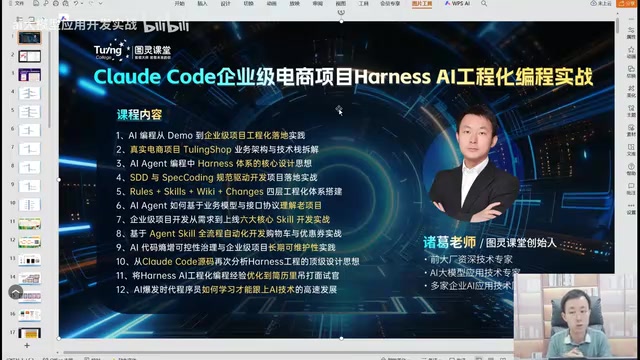
Harness AI Engineering Programming: A Detailed Methodology for Enterprise-Level Project Development
Deep dive into Harness AI Engineering Programming methodology, covering SDD, Skill development patterns, and core practices for enterprise-level AI-assisted development.
Read more →

·3 min
Java Developer's Guide to AI Application Development: Career Path, Skills, and Hands-On Strategy
A practical guide for Java developers transitioning to AI app development. Includes a 45-day learning plan covering Spring AI, RAG, Agent skills, plus resume and interview strategies.
Read more →

·4 min
AI Agent Global Variable Pool & Memory Mechanisms: A Practical Guide to Workflow Node Data Passing
Deep dive into global variable pool design for AI Agent development, covering three memory types, variable scoping, node execution architecture, and placeholder variable replacement workflows.
Read more →

·2 min
A Beginner's Guide to Vibe Coding: Build Software with Natural Language, No Coding Required
Vibe Coding lets anyone build software without coding skills. Learn what it is, how to get started, and how to use natural language and AI to go from idea to app.
Read more →
 Tutorials
·2 min
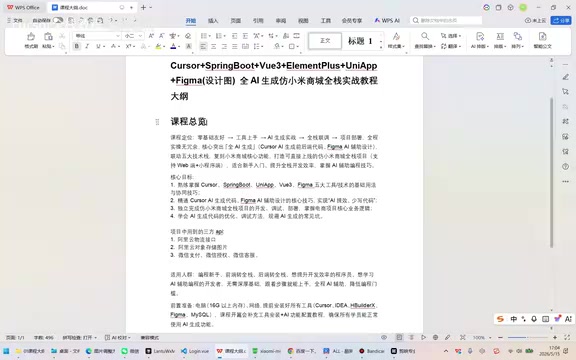
Cursor AI Fully Auto-Generates a Xiaomi Store Clone: Deep Dive into a Full-Stack Practical Course
Deep dive into a full-stack course using Cursor AI and Figma AI to auto-generate a Xiaomi Store clone with Spring Boot, Vue3, and UniApp for web and WeChat Mini Programs.
Read more →
 Tutorials
·2 min
Cursor AI Fully Auto-Generates a Xiaomi Store Clone: Deep Dive into a Full-Stack Practical Course
Deep dive into a full-stack course using Cursor AI and Figma AI to auto-generate a Xiaomi Store clone with Spring Boot, Vue3, and UniApp for Web and WeChat Mini Program.
Read more →
 Tutorials
·3 min
Complete Guide to Building AI Agent Projects with WindSurf: Practical Tips & Techniques
Complete practical guide to building AI Agent Frameworks with WindSurf, covering technology selection, component generation, code refactoring, debugging, and deployment tips.
Read more →
 Product Reviews
·3 min
6 Developer Tools Roundup: AI Coding Cost Tracking, Agent Virtual File Systems, and More
Roundup of 6 developer tools: CodeBurn for AI coding token cost tracking, Mirage virtual file system for Agents, Boring SSH tunnel manager, PeerTrace file tree renderer, DataTab font-based data visualization, and Flu TypeScript Agent framework.
Read more →