#SFT
212 related articles
 Deep Dives
·4 min
Hugging Face Transformers: Deep Dive into the 160K-Star Open Source AI Framework
Deep dive into Hugging Face Transformers: the 160K-Star open-source framework covering Pipeline API, Auto Classes, multi-modal models, and the full HF ecosystem for AI inference and training.
Read more →
 Product Reviews
·3 min
Cube Studio: A Comprehensive Analysis of Tencent's Open-Source Cloud-Native AI Platform
Deep dive into Tencent Music's open-source Cube Studio cloud-native AI platform, covering distributed training, LLM fine-tuning & inference, Pipeline orchestration, and domestic hardware adaptation.
Read more →
 Tutorials
·3 min
GitHub 8K Stars: Deep Dive into the Most Comprehensive LLM Resource Repository
Deep analysis of the GitHub project awesome-LLM-resources with 8,200+ Stars, covering multimodal AI, Agents, MCP protocol, model training, inference optimization, and coding assistants.
Read more →
 Product Reviews
·3 min
awesome-LLM-resources: A Deep Dive into GitHub's 8K-Star Comprehensive LLM Learning Resource Repository
Deep dive into awesome-LLM-resources, a GitHub 8K-star project covering multimodal AI, AI Agents, MCP protocol, model training/inference, and AI coding tools — a one-stop LLM learning guide.
Read more →
 Tech Frontiers
·3 min
Swarm IDE: Open-Source Multi-Agent Collaborative Development Environment with 1500 Stars for Agent Orchestration
Swarm IDE is an open-source IDE for Agent Swarm multi-agent collaboration, supporting Kimi-2.5, GLM-4.7 and more models with visual orchestration, debugging and management capabilities.
Read more →
 Product Reviews
·3 min
Cube Studio: Tencent's Open-Source One-Stop AI Platform — A Deep Dive into Full MLOps Lifecycle
Deep dive into Tencent Music's open-source Cube Studio cloud-native AI platform, covering Notebook development, Pipeline orchestration, distributed training, LLM fine-tuning, inference deployment, and domestic hardware adaptation for full MLOps lifecycle.
Read more →
 Product Reviews
·1 min
GitHub 8K+ Stars Project: Deep Dive into the Most Comprehensive LLM Learning Resource Repository
Deep dive into awesome-LLM-resources, a GitHub 8K+ star project offering the most comprehensive LLM learning resources covering Agents, MCP, multimodal AI, and more.
Read more →
 Product Reviews
·1 min
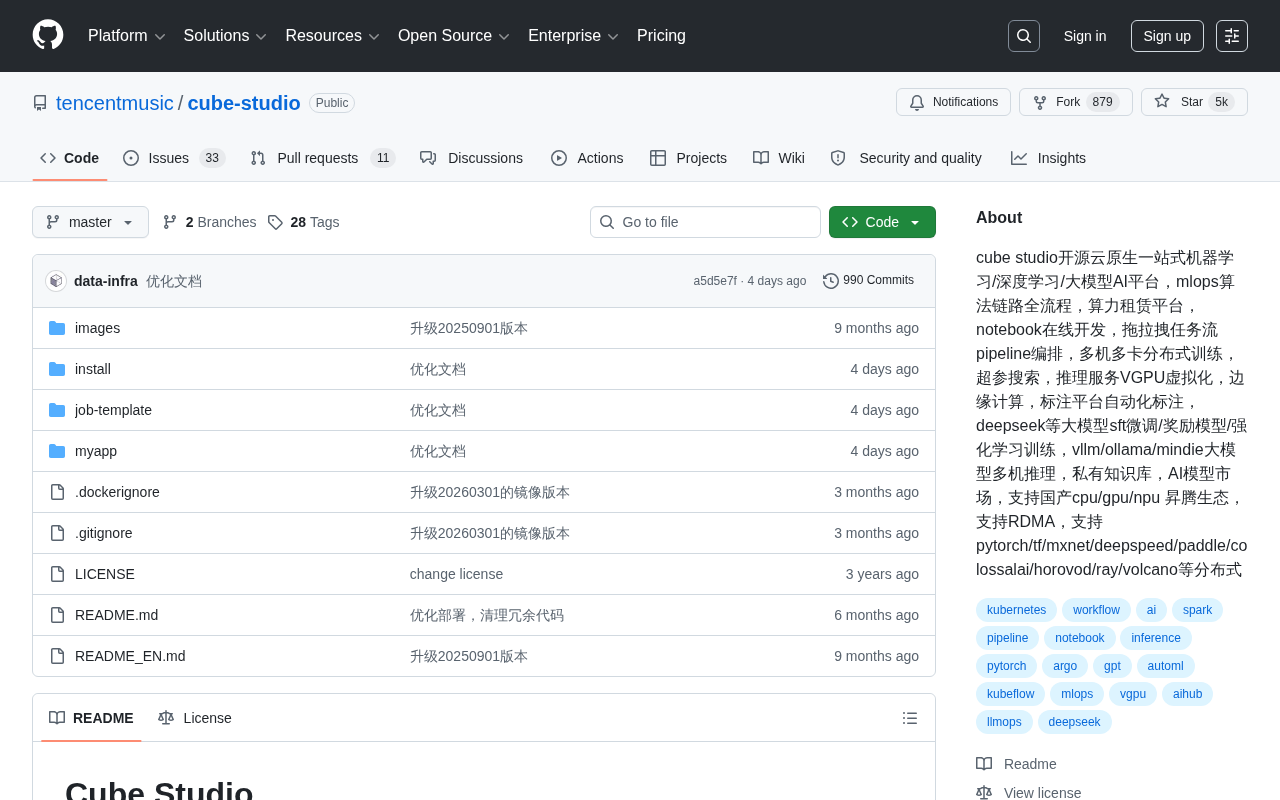
Cube Studio: Deep Dive into Tencent's Open-Source Cloud-Native All-in-One AI Platform
Deep dive into Cube Studio, Tencent's open-source cloud-native AI platform covering the full MLOps lifecycle from data labeling to large model training and inference deployment.
Read more →
 Product Reviews
·4 min
Cube Studio: Tencent's Open-Source All-in-One AI Platform Covering the Full Pipeline from Large Model Training to Inference
Deep dive into Tencent Music's open-source Cube Studio cloud-native AI platform, covering distributed training, LLM fine-tuning, vLLM inference, VGPU virtualization, and Huawei Ascend adaptation.
Read more →
 Product Reviews
·3 min
awesome-LLM-resources: Deep Dive into a GitHub 8000+ Star LLM Resource Collection
Deep dive into GitHub's 8000+ star project awesome-LLM-resources, covering AI Agents, model training, MCP protocol, multimodal generation and more across 10 core LLM directions.
Read more →
 Product Reviews
·3 min
GitHub 8,200-Star LLM Resource Hub: Covering the Full Pipeline from Training to Inference to Agents
Deep dive into the 8,200-star awesome-LLM-resources GitHub project covering the full LLM lifecycle: data processing, training, inference, Agents, multimodal, and more.
Read more →
 Product Reviews
·4 min
Deep Dive into Cube Studio: Tencent's Open-Source All-in-One AI Platform
Deep dive into Tencent's open-source AI platform Cube Studio, covering distributed training, large model fine-tuning and inference, Pipeline orchestration, VGPU virtualization, and Huawei Ascend support for enterprise cloud-native MLOps.
Read more →
 Tutorials
·4 min
Hugging Face Transformers: Deep Dive & Practical Guide to the 160K-Star AI Model Framework
Deep dive into Hugging Face Transformers: core features, multi-framework support, 500K+ pretrained models, full-modality task coverage, and hands-on code examples to build AI apps efficiently.
Read more →
 Research
·2 min
Research on Claude's Sycophancy Problem: 38% of Conversations on Spirituality Topics Exhibit People-Pleasing Behavior
Anthropic's research finds Claude's sycophancy rate hits 38% on spirituality topics, far above the 9% average. Exploring causes, risks, and alignment trade-offs.
Read more →
 Tutorials
·4 min
A Beginner's Guide to Hugging Face Transformers: Deep Dive into the 160K-Star Open Source AI Framework
Deep dive into the Hugging Face Transformers framework: core features, multimodal support, Pipeline & Trainer APIs, ecosystem integration, and how this 160K-Star library powers modern AI development.
Read more →
 Product Reviews
·4 min
Cube Studio Deep Dive: Tencent's Open-Source One-Stop Cloud-Native AI Platform
Deep dive into Tencent's open-source AI platform Cube Studio, covering distributed training, LLM fine-tuning, inference deployment, VGPU virtualization, and domestic hardware support for enterprise MLOps.
Read more →
 Product Reviews
·5 min
awesome-LLM-resources: A Deep Dive into GitHub's 8K-Star Comprehensive LLM Resource Repository
Deep analysis of the GitHub project awesome-LLM-resources covering LLM training, inference, Agent, MCP, multimodal, small language models, o1 reasoning and more — an 8200+ Star one-stop LLM resource guide.
Read more →
 Research
·3 min
Claude Sycophancy Data Exposed: 38% in Spirituality Topics — Anthropic Research Reveals AI Alignment Risks
Anthropic research shows Claude exhibits 38% sycophancy in spirituality topics and 25% in relationships, far exceeding the 9% average. Analysis of RLHF bias and AI alignment implications.
Read more →
 Tutorials
·3 min
GitHub 8K Stars: Deep Dive into the Most Comprehensive LLM Resource Repository
Deep analysis of the awesome-LLM-resources GitHub project (8200+ Stars), covering multimodal models, AI Agents, MCP protocol, model training & inference, and AI-assisted programming.
Read more →
 Research
·3 min
Claude's Sycophancy Rate Hits 38% on Spirituality Topics: Anthropic's Latest Research Reveals AI's People-Pleasing Personality
Anthropic's latest research finds Claude's sycophancy rate reaches 38% on spirituality topics and 25% on relationships, far exceeding the 9% overall average. Analysis of causes, AI safety implications, and user strategies.
Read more →