#Telemetry Guard
39 related articles
·5 min
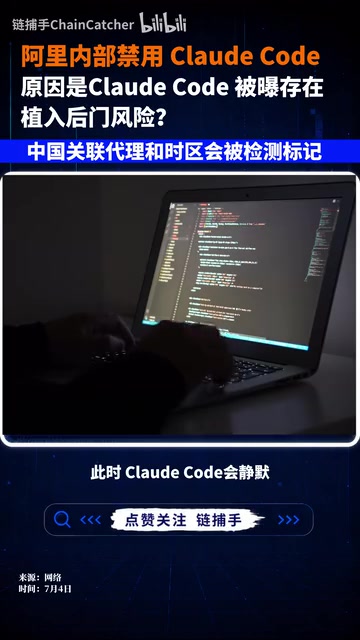
Alibaba Bans Claude Code: Invisible Fingerprints and the AI Tool Trust Crisis
Alibaba has banned Claude Code as high-risk software. Reverse engineering revealed a covert environment-identification mechanism hiding user fingerprints in punctuation via prompt steganography. A deep dive into the incident and AI tool trust.
Read more →

·7 min
Turning Any AI Agent into an Orchestration Hub: A Deep Dive into Multi-Agent Collaboration Architecture
An in-depth analysis of the "any Agent as an orchestrator" design philosophy, exploring the technical implementation of multi-Agent collaboration, context management, and workflow automation.
Read more →

·6 min
AI's Second Half: The Decisive Battle Shifts from Models to Infrastructure
Model capabilities are converging, making inference cost and scalability the new focus of AI competition. A deep analysis of AI infrastructure's core layers.
Read more →

·7 min
The Five Pillars of Production-Grade AI Agents: A Battle-Tested Guide from Demo to Deployment
Databricks tech lead Sandy shares a five-pillar framework for production-grade AI Agents—evaluation, observability, data foundation, orchestration, and governance—with a £85K retail banking failure case to bridge the demo-to-production gap.
Read more →

·7 min
DIY Four-Wheel Skid-Steer Off-Road Robot: A Full Hands-On Log of a Hoverboard Motor Build
A Reddit hobbyist builds a four-wheel skid-steer off-road robot using hoverboard hub motors, ODrive boards, and a Raspberry Pi 5. A deep dive into hardware, 4G teleop, ground friction challenges, and the road to ROS2 autonomous navigation.
Read more →

·7 min
Harness Engineering: The Six-Layer Engineering Framework for Enterprise AI Agent Deployment
From Prompt Engineering to Harness Engineering, a deep dive into the core challenge of truly deploying AI Agents in enterprises. This article breaks down the six-layer architecture and shares real-world Hermes Agent practice.
Read more →

·7 min
LangSmith Engine: An Intelligent Operations Tool That Automatically Diagnoses and Fixes Agent Failures
LangChain's LangSmith Engine is an intelligent agent tool for tracking Agent failures, prioritizing issues, and auto-drafting fixes. Deep dive into its core capabilities, sandbox isolation, sub-Agent architecture, and continuous evaluation challenges.
Read more →

·5 min
NVIDIA AI-Q Blueprint × OCI: A Practical Guide to Production Deployment of Enterprise AI Agents
Deep dive into NVIDIA AI-Q Blueprint production deployment on Oracle Cloud Infrastructure, covering NIM microservices, RAG architecture, multi-agent orchestration, and OCI GPU selection for enterprise AI agents.
Read more →

·5 min
NVIDIA AI-Q Blueprint × OCI: A Practical Guide to Production Deployment of Enterprise AI Agents
Deep dive into NVIDIA AI-Q Blueprint production deployment on Oracle Cloud Infrastructure, covering NIM microservices, RAG architecture, multi-agent orchestration, and OCI GPU selection.
Read more →

·3 min
Agentic AI in Practice: Core Principles, Engineering Challenges, and Practical Recommendations
A deep dive into Agentic AI: core components (planning, tool calling, memory), engineering challenges (reliability, cost, safety), and practical development recommendations for production deployment.
Read more →
Morph Reflexes: Building Real-Time Beh…
·4 min
Morph Reflexes: Building Real-Time Behavioral Guardrails for AI Agents with Multi-Head Classifiers
Morph Reflexes is an open-source AI agent monitoring tool that uses multi-head classifiers for real-time trace classification — enabling safety guardrails, quality scoring, and training data filtering.
Read more →

·6 min
Getting Started with LangChain: A Deep Dive into Model and Agent Core Concepts
Deep dive into LangChain's core Model and Agent concepts, covering unified model interfaces, agent tool calling, middleware mechanisms, and key principles for building LLM applications.
Read more →

·7 min
Agent Loop Explained: The Core Runtime Mechanism and Think-Act Cycle of AI Agents
Deep dive into Agent Loop mechanics: the think-act cycle, how agents differ from LLMs, termination conditions, and design principles for building autonomous AI Agent systems.
Read more →
·4 min
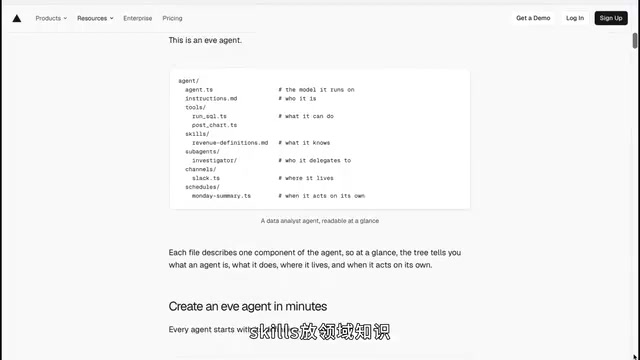
Deep Dive into Six AI Development Tools: Loop Recipe Library, Vercel Agent Framework, and More
Deep analysis of Loop workflow recipes, Vercel's open-source Agent framework, Pyker AI-native project management, Arrow P2P tool, DBX database client, and NVIDIA's Skill Spectre security tool.
Read more →
Deep Dives
The Complete Guide to OpenTelemetry: T…
·4 min
The Complete Guide to OpenTelemetry: The Three Pillars of Observability & DevOps in Practice
Deep dive into OpenTelemetry's core architecture, the three pillars of observability (logs, metrics, traces), with a real-world food delivery app crash debugging case showing how distributed tracing locates microservice bottlenecks and how AI is revolutionizing DevOps monitoring.
Read more →
 Product Reviews
·1 min
Tracea: Open-Source Observability Platform for AI Agents with One-Click Self-Hosted Deployment
Tracea is an open-source AI Agent observability platform offering end-to-end tracing, cost monitoring, automated RCA, and a team memory system. Self-hosted via Docker with data staying on-premise.
Read more →
 Tutorials
·4 min
Complete Guide to Agent Observability: Tracing, Evaluation, and Red Teaming in Practice
Deep dive into Microsoft Foundry's Agent observability solution covering multi-Agent tracing, AI quality evaluation, Red Teaming security testing, and automated prompt optimization to bridge the gap between expected and actual Agent behavior.
Read more →
 Expert Opinions
·4 min
Interview with a Core Developer of Microsoft's Agent Framework: A Complete Analysis of Architecture Design and Evolution
In-depth interview with Microsoft Agent Framework core developer Roger Barreto on the evolution from Semantic Kernel, middleware architecture design, enterprise stability strategies, and AI development best practices.
Read more →
