#Temporal durable execution
20 related articles

·2 min
Finyuus: A Deep Dive into the Code-First AI Workflow Governance Language
Deep dive into Finyuus, an open-source code-first AI workflow governance language built on Temporal with agent orchestration, Guards, human approvals, and Langfuse observability.
Read more →

·3 min
Graph Engineering: The Core Paradigm and Design Patterns for AI Agent Orchestration
Deep dive into how graph engineering uses state machines and directed graphs to constrain AI agent behavior, covering reflection, routing, human-in-the-loop, and parallel execution patterns.
Read more →

·3 min
Graph Engineering: The Core Paradigm and Design Patterns for AI Agent Orchestration
Explore how graph engineering uses state machines and directed graph structures to constrain AI agent behavior, covering reflection, routing, human-in-the-loop, and parallel execution patterns.
Read more →

·3 min
Supabase in Production: A Deep Dive into Cron and Queue Reliability Issues
Deep analysis of Supabase pg_cron and pgmq reliability issues in production, including task loss, execution uncertainty, and observability gaps, with practical architecture optimization advice.
Read more →

·3 min
Supabase in Production: A Deep Dive into Cron and Queue Reliability Issues
Deep analysis of Supabase production reliability issues with pg_cron and pgmq, covering task loss, execution uncertainty, and observability gaps, with practical architecture optimization advice.
Read more →

·4 min
Infrastructure Architecture for Agent Applications: Four Core Patterns Explained
A deep dive into infrastructure architecture patterns for production-grade Agent applications, covering state persistence, sandbox isolation, LLM observability, and cost control.
Read more →

·4 min
Infrastructure Architecture for Agent Applications: Four Core Patterns Explained
Deep dive into infrastructure architecture patterns for production-grade Agent applications, covering state persistence, sandbox isolation, LLM observability, and cost control.
Read more →
·4 min
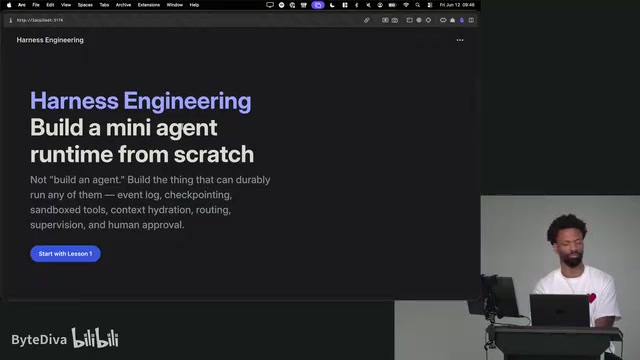
Harness Engineering: The Core Infrastructure for Taking AI Agents from Demo to Production
Deep dive into Harness Engineering: why AI Agents need memory management, durable execution, guardrails & approvals to go from demo to production.
Read more →

·4 min
Harness Engineering: The Core Infrastructure for Taking AI Agents from Demo to Production
Deep dive into Harness Engineering: why AI Agents need memory management, durable execution, guardrails & approvals to reach production. Based on Scott Moss's workshop.
Read more →

·3 min
Programmer to AI Engineer: You're Already 80% There — Here Are the 6 Skills You're Missing
Programmers transitioning to AI engineering aren't starting from scratch. Learn the 6 core skills — LLM APIs, RAG, prompt engineering, LLMOps — needed to make the leap.
Read more →

·7 min
ManagedAgents.sh: A Deep Dive into the Model-Agnostic Open-Source Managed Agent Platform
ManagedAgents.sh is a model-agnostic managed agent platform from OpenComputer, supporting Claude, Pi, and Codex runtimes with Slack and GitHub integration.
Read more →

·7 min
The Prompt is the Platform: How AI Agents Deeply Participate in System Design and Specification
Resonate's founder proposes "The Prompt is the Platform": as AI agents generate production-grade implementations from abstract specs, engineers' value shifts to specification. A deep dive into deterministic simulation and forbidden-fruit debugging.
Read more →

·4 min
AI Agents in Action: A Complete Breakdown of Automated Vendor Onboarding
Why does vendor onboarding always drag on? The real bottleneck isn't the tasks — it's the waiting between them. Learn how AI agents automate cross-department workflows across procurement, legal, finance, and IT.
Read more →
·5 min
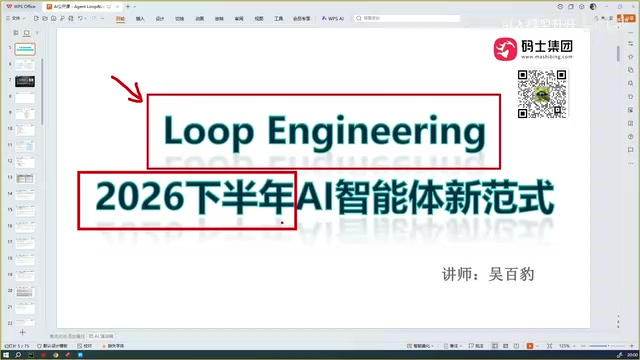
Loop Engineering: A Comprehensive Guide to AI Agent Loop Design
A deep dive into Loop Engineering for AI Agents — what loop feedback mechanisms are, how they differ from Harness Engineering, and a complete guide from principles to production implementation.
Read more →

·7 min
AI Agent Memory Layer Comparison: Mem0, Zep, Letta, and Cloudflare — Four Major Solutions Evaluated
In-depth comparison of four AI agent memory layer solutions: Mem0's extract-retrieve approach, Zep's temporal knowledge graphs, Letta's self-editing memory, and Cloudflare Durable Objects as infrastructure primitives.
Read more →
·3 min
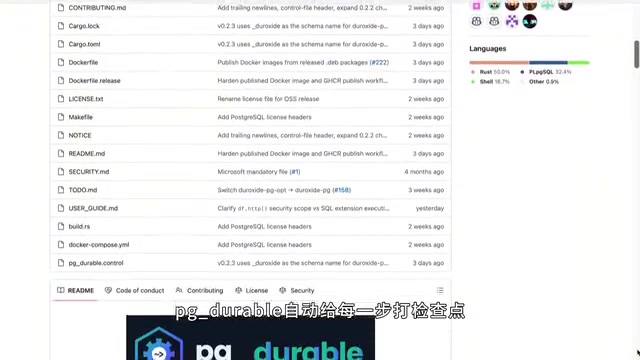
Semantic Code Diff, In-Database Workflows & Mac-Native Containers: Open Source Projects Worth Watching This Week
This week's roundup covers five open source projects: SAM semantic code diff boosting AI Agent accuracy 2.3x, Microsoft's PG Durable for PostgreSQL workflows, Apple Container, Mattermost, and Extend UI.
Read more →
 Industry Insights
·2 min
Cloud AI Agent Architecture Design: Far More Than Moving Local Agents to a Server
Building cloud AI Agents requires entirely new architectural thinking. This article analyzes three core infrastructure components—durable execution platforms, execution frameworks, and dev environment tools—to help teams avoid common pitfalls when migrating from local to cloud.
Read more →
 Product Reviews
·3 min
Illospace: A Full-Stack Collaborative Space Where Humans and AI Agents Share One Brain
Illospace is an open-source collaborative workspace where AI Agents and team members share memory and a Team Brain, with built-in databases, cron jobs, and canvas-based UI.
Read more →
 Deep Dives
·2 min
AI Agent Conversation History Management: From Message Lists to Event-Driven Architecture
Traditional user-assistant alternating chat history can't meet complex AI Agent needs. This article explores modeling Agent interactions as event sequences, revealing Agents as workflow engines.
Read more →
 Tutorials
·1 min
LangGraph 1.0.5 Tutorial: Master AI Agent Orchestration & Multi-Agent Systems in Six Lessons
Complete guide to LangGraph 1.0.5 tutorial series covering durable execution, memory management, Human in the Loop, streaming, time travel, and multi-agent collaboration.
Read more →