#Unreal Engine AI agent
53 related articles

·5 min
UE5.8 + Claude Code: A Complete Guide to AI Agents Directly Controlling Unreal Engine
UE5.8's official MCP plugin enables Claude Code and other AI Agents to directly control Blueprints, PCG graphs, materials, and level design. Complete setup and testing guide included.
Read more →

·2 min
Unreal Engine 5.8 MCP Server Setup Tutorial: AI Agent-Driven Game Development in Practice
A detailed guide to configuring Unreal Engine 5.8's built-in MCP server for AI agent-driven game development, covering DeepSeek API setup, plugin activation, and natural language scene building.
Read more →
·3 min
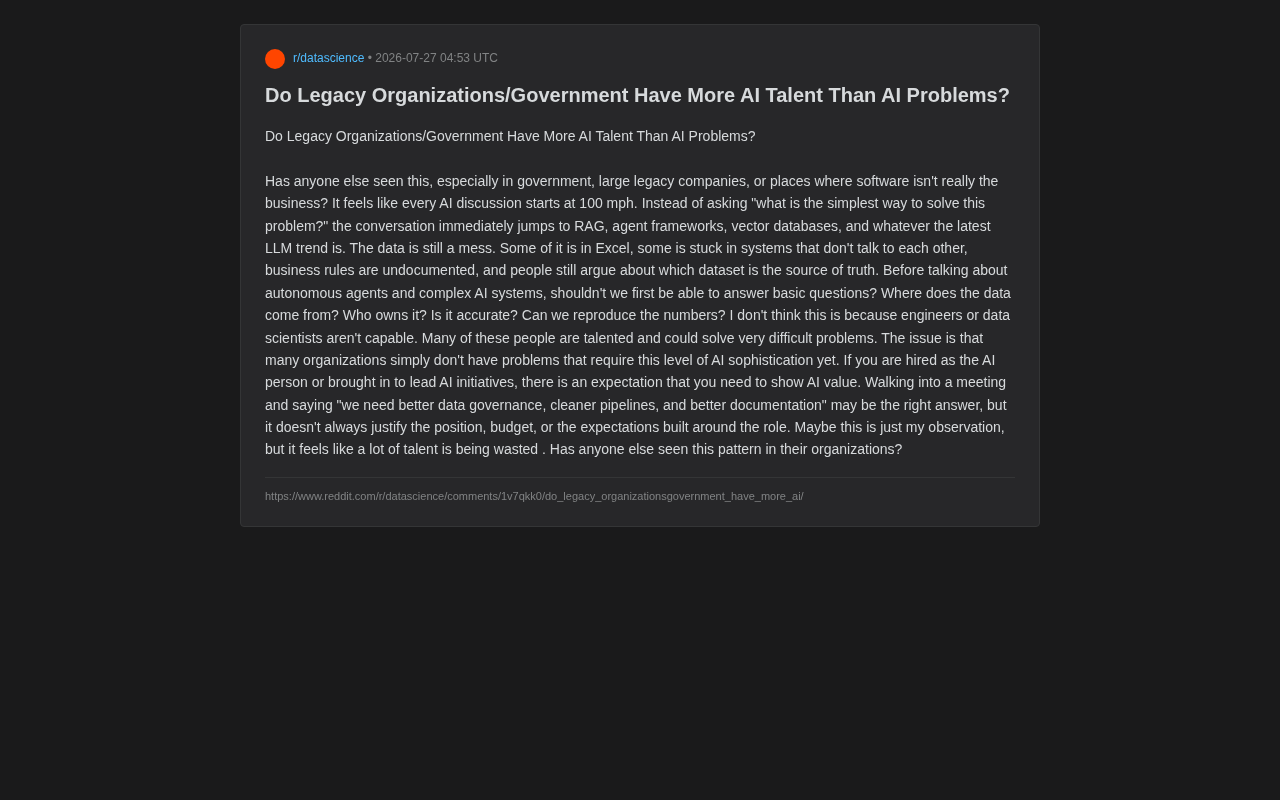
AI Talent Surplus with No Problems to Solve? The Structural Mismatch in Enterprise AI Adoption
Companies race to hire AI talent, but do traditional organizations have enough AI problems to solve? This article examines the structural mismatch in enterprise AI adoption and offers pragmatic strategy advice.
Read more →
·4 min
Hands-On Skill Writing and Agent Testing: A Guide to AI Testing Transformation
An in-depth look at AI testing challenges. Learn to write reusable Skill packs and master Agent testing and LLM evaluation—covering the SKILL.md six-dimensional rule, skill-creator, EvalScope, and dataset selection.
Read more →

·5 min
The DeepSeek Investor Q&A with Liang Wenfeng: Decoding Restrained Pricing and the AGI Roadmap
Decoding DeepSeek's Liang Wenfeng 4-hour investor Q&A: 10-month-payback restrained pricing, why open source doesn't hurt revenue, the Agent-continual learning-self-iteration AGI roadmap, plus domestic chips, talent, and your moat.
Read more →

·2 min
Can One Skill Transform All Skills? The Boundary Debate Between Dify Workflows and Agents
A recursive technical proposition: Can we build a "meta-Skill" that auto-transforms any Skill into a Dify workflow? This article dissects the boundary between deterministic orchestration and autonomous Agent decisions.
Read more →

·4 min
Making $3,000/Month Freelancing with Codex? A Rational Look at AI Coding Side Hustles
Can AI coding tools really earn you $3K/month with zero experience? We break down the marketing hype around Codex freelancing, examine the 4-week roadmap, and reveal what AI-assisted coding can realistically offer.
Read more →

·6 min
Hands-On with Panel AI On-Premises Deployment: One-Click Enterprise Adoption and Unified Compute Cluster Scheduling
In-depth review of Panel AI v1.1.1: second-level installation, no-public-IP networking, batch compute cluster management. Learn how enterprise AI on-premises deployment barriers are dramatically lowered.
Read more →

·3 min
Grok 4.5 Review: A Full Breakdown of Elon Musk's Most Powerful AI Coding Model
xAI releases Grok 4.5, ranking #1 on SWE Marathon and outperforming Claude Opus. Explore benchmark scores, Agent capabilities, free access, and CLI installation.
Read more →

·3 min
How to Monetize AI Automation Skills: A Practical Path from Tools to Business Results
Learned Claude, n8n, or Coze but unsure how to monetize? This article breaks down the core logic of AI automation monetization: prove business value with data, build case studies, and develop a credible personal brand.
Read more →

·4 min
Getting Started with AI Test Development: Core Principles and Underlying Logic of Large Language Models
New to AI test development? This article breaks down the differences between machine learning and traditional programming, the origins of AI hallucinations, and the core principles of NLP/NLU/NLG to help test engineers build a solid AI knowledge framework.
Read more →

·2 min
Building 3D Aerial Combat Game AFTERBURN Solo with Claude Code: A Full Development Diary
An indie developer built low-poly aerial combat game AFTERBURN using Claude Code, covering flight controls, dogfight AI, weapon systems, and cinematic replay. A real look at AI-assisted game development.
Read more →
Loving LLMs, Hating the Hype: How Engi…
·2 min
Loving LLMs, Hating the Hype: How Engineers Rationally Evaluate Large Language Models
Engineers love LLMs for real productivity gains but hate the hype around AGI narratives, glossed-over hallucinations, and valuation bubbles. Here's how to find the rational balance.
Read more →
·6 min
Hands-On With Hermes Agent's Eight Major Updates: A Complete Guide to AI Automation and Self-Evolution
The Hermes Agent gets a major upgrade with eight new features: native iMessage, parallel background sub-agents, Unreal Engine MCP support, a self-evolving Skill Hub, and more. A hands-on breakdown of the core changes and their real impact on personal AI automation workflows.
Read more →

·3 min
The Progress and Bottlenecks of AI-Generated Video: Stunning Lighting, Questionable Logic
An AI-generated rainy-night walk video sparked debate on Reddit: stunning wet-surface reflections and color temperature contrast, yet flawed logic like pedestrians on roadways. This article unpacks the true state of AI video generation.
Read more →
·2 min
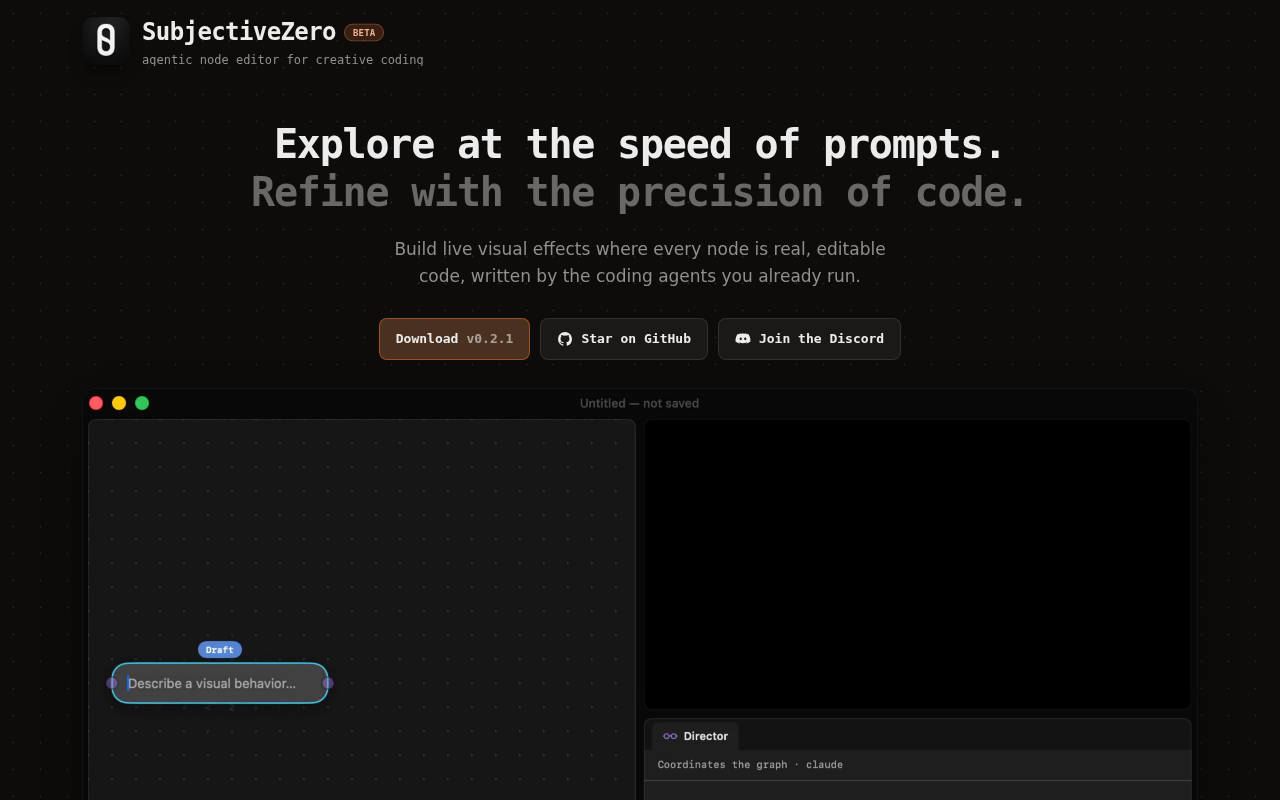
SubjectiveZero: A New Creative Coding Paradigm with AI Agents and Node Editors
SubjectiveZero is an open-source agentic node editor for creative coding, merging AI agents with visual node programming. Explore its technical vision and value for digital artists.
Read more →

·5 min
MemoryOps AI: Building a Governable, Auditable Memory Layer for AI Assistants
MemoryOps AI is an open-source governed memory runtime that gives AI assistants policy-before-storage validation, context admission, and deletion-proof lineage—solving compliance, multi-tenancy, and deletion verification challenges in LLM memory systems.
Read more →

·6 min
AI-Generated Sci-Fi Scenery: A Visual Revolution and the Democratization of Imagination
Explore how AI image generation makes sci-fi aesthetics concrete—from futuristic architecture to alien landscapes, AI is bringing dream-crafting within reach. Analyzing the tech evolution, cultural resonance, and democratization of concept design behind Reddit's trending works.
Read more →

·3 min
Vibe-Trading: The Rise and Practice of Open-Source AI Trading Agents
HKUDS's open-source Vibe-Trading gained nearly 1,000 GitHub stars in a day. This deep dive covers its LLM+Tool Calling architecture, core modules, and the risks of AI-driven trading agents.
Read more →

·6 min
MIRA: An Analysis of a Multiplayer Interactive World Model Built on Rocket League
MIRA is an interactive world model project for the multiplayer competitive game Rocket League, exploring how neural networks simulate multi-agent interaction and complex physics. An in-depth look at its significance, challenges, and prospects.
Read more →