#Via 1.0
183 related articles
·2 min
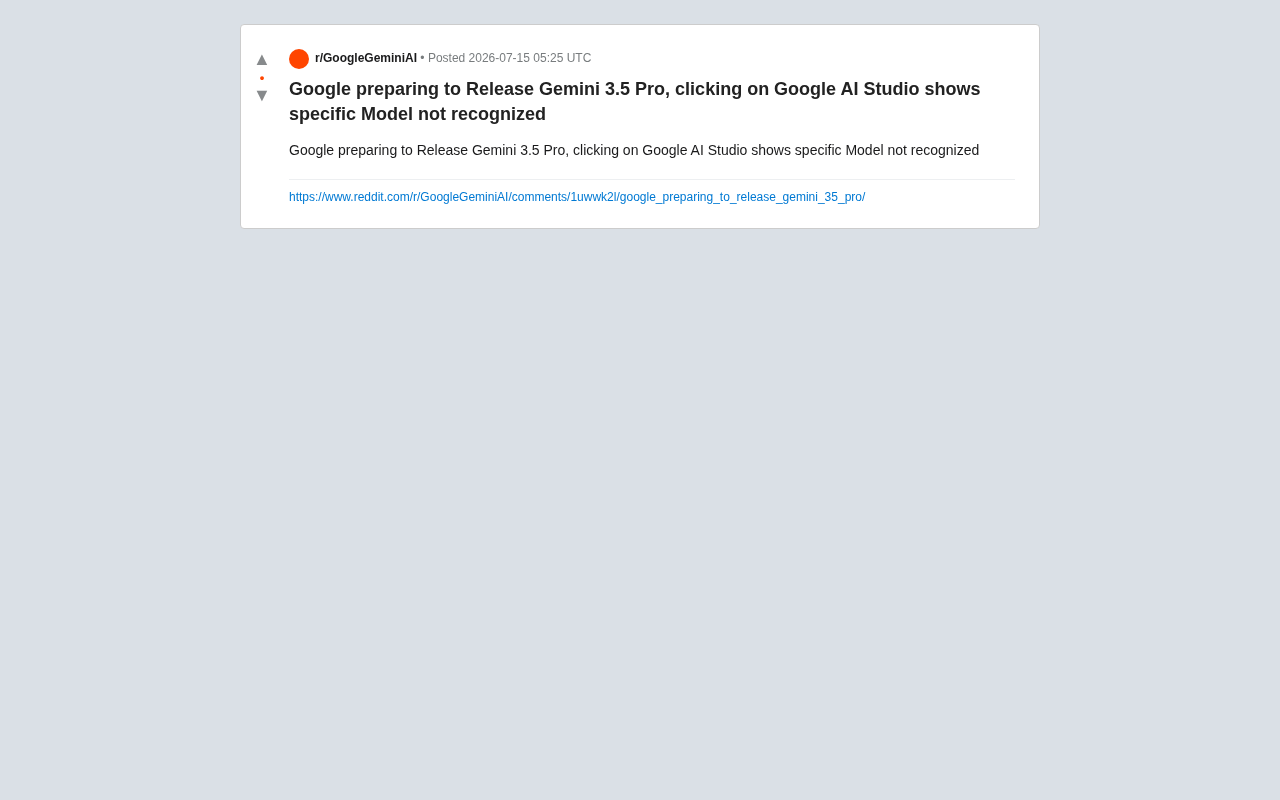
Gemini 3.5 Pro Spotted in Google AI Studio — Is a New Flagship Model Coming?
A Reddit user spotted "Gemini 3.5 Pro" listed as unrecognized in Google AI Studio. We break down the technical signals, naming logic, and strategic implications.
Read more →

·3 min
Zero-Code Research: Using AI Agents to Run Complete Machine Learning Experiments
No coding required: use AI agents like Codex and Claude Code to complete full ML experiments via natural language. A real case study with a heart disease dataset.
Read more →

·7 min
OpenAI Loses Over $100 Billion a Year: How the AI Cost Paradox Is Devouring Tech Giants
Leaked financials show OpenAI's -122% operating margin — losing money on every sale. MIT research reveals 95% of enterprise AI investments yield zero returns. A deep dive into the AI cost paradox.
Read more →
·2 min
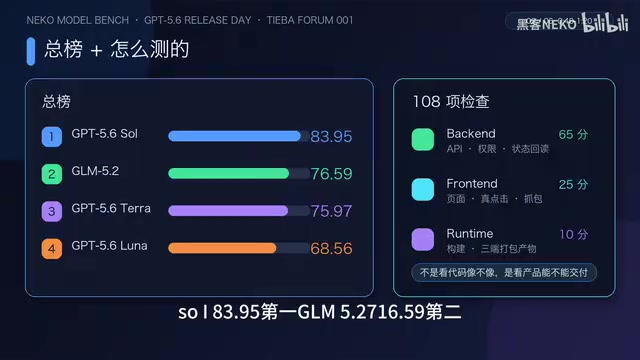
GPT 5.6 Three-Version Benchmark: What Makes Sol, Terra, and Luna Worth the Price Difference?
GPT 5.6's Sol, Terra, and Luna tested across 108 engineering checks. Backend scores tie between Sol and Terra — the real gap is in frontend and packaging delivery.
Read more →

·2 min
Spring AI in Action: A Complete Guide to LLM Integration for Java Developers
Spring AI is Java's answer to LangChain — offering unified multi-model APIs, structured output, RAG, Tool Calling, and MCP protocol support for enterprise LLM development.
Read more →

·2 min
ExLlamaV3 v1.0.0 Official Release: Faster Inference, Lossless KV Quantization, and Streamlined Dependencies
ExLlamaV3 v1.0.0 releases with lossless KV cache quantization via kernel fusion, removal of flash-attention-2/xformers, major GEMM/GEMV gains, and broader tensor parallelism support.
Read more →

·2 min
Helium-Powered Soft Floating Robot: An Airborne Indoor Companion Is Here
Floating Companion is a soft helium robot with flapping fins for quiet, safe indoor movement. It follows users, sends reminders, and offers emotional companionship.
Read more →

·4 min
LangChain in Practice: Mastering the Four Core Modules of the Agent Ecosystem
A deep dive into LangChain's four core modules: LangChain components, LangGraph orchestration, Deep Agents, and LangSmith. Build your first Agent from scratch.
Read more →

·3 min
AgentScope 2.0 Deep Dive: Six Core Upgrades for Production-Grade Multi-Agent Development
AgentScope 2.0 by Alibaba's Tongyi Lab delivers six major upgrades: typed event streaming, dangerous instruction interception, human-in-the-loop, concurrent execution, workspace system, and agent-as-a-service for production-grade multi-agent development.
Read more →
·3 min
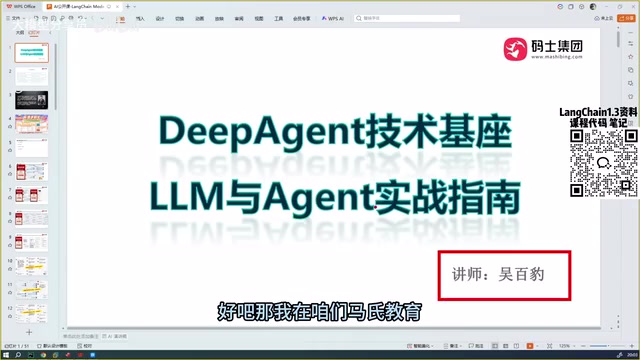
LangChain 1.3 in Practice: A Complete Learning Path from LLMs to Agent Development
A comprehensive guide to LangChain 1.3 — covering the full learning path from Models to Agent development, including Harness architecture, LangGraph, memory management, HITL, and Guardrails.
Read more →
·3 min
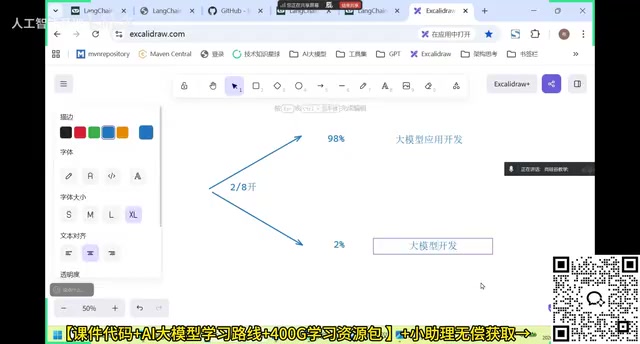
LangChain Practical Guide: From RAG Applications to Intelligent Agent Development
A comprehensive guide to LangChain: core concepts, RAG applications, Agent development, version selection (0.3/1.0), and career opportunities for Java/Python developers entering LLM development.
Read more →

·3 min
Ornith 1.0 9B Model Local Test: Tower Defense Game Exposes Small Model Coding Limitations
Hands-on test of Ornith 1.0 9B open model on a 16GB M4 Mac mini. A tower defense game task reveals the precision limits of small-parameter models vs 35B.
Read more →

·2 min
Open-Source 3D Generation Models Tested: Can Trellis 2 Challenge Paid Products?
A deep comparison of open-source Trellis 2, Hunyuan 2.1, UltraShape vs. paid Tripo 3.1 and Hi3D — covering geometry, texture, and complex details to help you decide.
Read more →

·3 min
LangChain 1.3 in Practice: A Complete Technical Guide from LLMs to DeepAgent
An in-depth analysis of the core knowledge system of LangChain 1.3, covering the Harness architecture philosophy, DeepAgent positioning, LangGraph fundamentals, Agent memory, and human-in-the-loop.
Read more →

·4 min
From Enter to First Token: Decrypting the Full LLM Inference Pipeline (Autoregression, KV Cache & Decoding Strategies)
From pressing Enter to the first character appearing, what happens inside an LLM? This article breaks down autoregressive generation, KV cache acceleration, and decoding strategies like temperature, Top-k, and Top-p.
Read more →

·4 min
GPT-5.6 In-Depth Analysis: Model Architecture, Performance Benchmarks, and a Complete Guide to the Agentic Era
A comprehensive analysis of GPT-5.6: the Sol/Terra/Luna product-line positioning, MoE architecture, 1.5M token context, coding agent benchmarks, and the shift from Chatbot to Agent.
Read more →

·4 min
Learn ML Free at Public Libraries: A Complete Guide to O'Reilly Tech Book Resources
Getting O'Reilly machine learning books free at public libraries? It's no myth. This article reveals hidden tech learning resources at libraries, including online platform subscriptions and digital database access, helping self-learners build AI knowledge at zero cost.
Read more →

·4 min
Gemini Omni Hands-On: A Deep Dive into Google's Omni-Modal Video Generation Capabilities
An in-depth hands-on review of Google's Gemini Omni omni-modal AI model, covering video generation workflows, prompting tips, visual quality, and comparisons with Sora and other competitors.
Read more →

·3 min
Benchmarking LLMs on Smartphones: A Deep Dive into the MELTing Point Benchmark
The MELTing Point paper is the first to evaluate mobile LLM performance in real user scenarios, covering iPhone, Samsung, Pixel and more, testing TinyLlama, Mistral-7B and others—revealing GPU inference gains, 47°C heat warnings, and prefill-decode disaggregation.
Read more →

·4 min
Running Out of Codex Quota? An In-Depth Review of HeyRoute's GPT-5.5 Integration
Codex quota running out too fast, or API costs too high? HeyRoute offers a low-cost AI coding relay via GPT-5.5, with ~1.08s first response and 99.95% success rate. This in-depth review covers its selling points, pricing, and caveats.
Read more →