#Web Containers
267 related articles

·3 min
20W Home Server: Unraid Self-Hosting and Usenet Streaming in Practice
A six-year Unraid user shares a 20W ultra-low-power home server using Intel N100, hot/cold data separation, and NZBDAV Usenet streaming to replace 30TB of local hard drives.
Read more →

·2 min
Deep Dive into Chatwoot: The Best Open-Source Alternative to Intercom
Deep dive into Chatwoot, a 34K-star open-source customer service platform on GitHub. Covers omni-channel support, self-hosted deployment, and AI integration as an alternative to Intercom and Zendesk.
Read more →

·3 min
Fix for Immich Crashes Caused by Proxmox's Default kvm64 CPU Type
Proxmox's default kvm64 CPU type only exposes x86-64-v1 instructions, causing Immich's ML container to crash when NumPy's baseline isn't met. Learn the root cause and one-command fix.
Read more →

·3 min
Goodbye ZimaOS: A Guide to Choosing Your Next Home NAS System
Migrating from ZimaOS? This guide compares Debian+Docker, TrueNAS SCALE, and Proxmox VE, analyzing pros and cons for home server users seeking their next step.
Read more →

·3 min
Goodbye ZimaOS: A Guide to Choosing Your Next Home NAS System
Migrating from ZimaOS? This guide compares Debian+Docker, TrueNAS SCALE, and Proxmox VE, analyzing pros and cons for home server users seeking their next step.
Read more →

·3 min
Self-Hosted Ticketing Systems: Turning Family Tech Support into a Streamlined Service
Explore how to manage family IT support with a self-hosted ticketing system. Compares osTicket, Zammad, FreeScout and more, with Docker deployment tips and UX advice.
Read more →

·3 min
Self-Hosted Notes & Task Management: A Minimalist Open-Source Approach with Memos + Vikunja
Looking for simple self-hosted notes and task management? This article recommends Vikunja and Memos as lightweight open-source alternatives to Nextcloud and Obsidian.
Read more →

·3 min
Self-Hosted Notes & Task Management: A Minimalist Open-Source Approach with Memos + Vikunja
Looking for simple self-hosted notes and task management? This guide recommends Vikunja and Memos as lightweight open-source alternatives to bloated tools like Nextcloud and Obsidian.
Read more →

·3 min
DANE/TLSA Record Mismatch Causing Silent Email Loss: From Packet Capture Troubleshooting to Root Cause Resolution
A real-world case study of silent email loss caused by DANE/TLSA record mismatch. From empty logs to tcpdump packet capture revealing TLS handshake failures, with TLSA update procedures and automation strategies.
Read more →

·3 min
Skip Lidarr for Single Track Downloads: A Self-Hosted Music Download Container Guide
Lidarr only downloads full albums? This guide covers containerized solutions like spotDL and yt-dlp for single-track downloads and multi-language music needs.
Read more →
·2 min
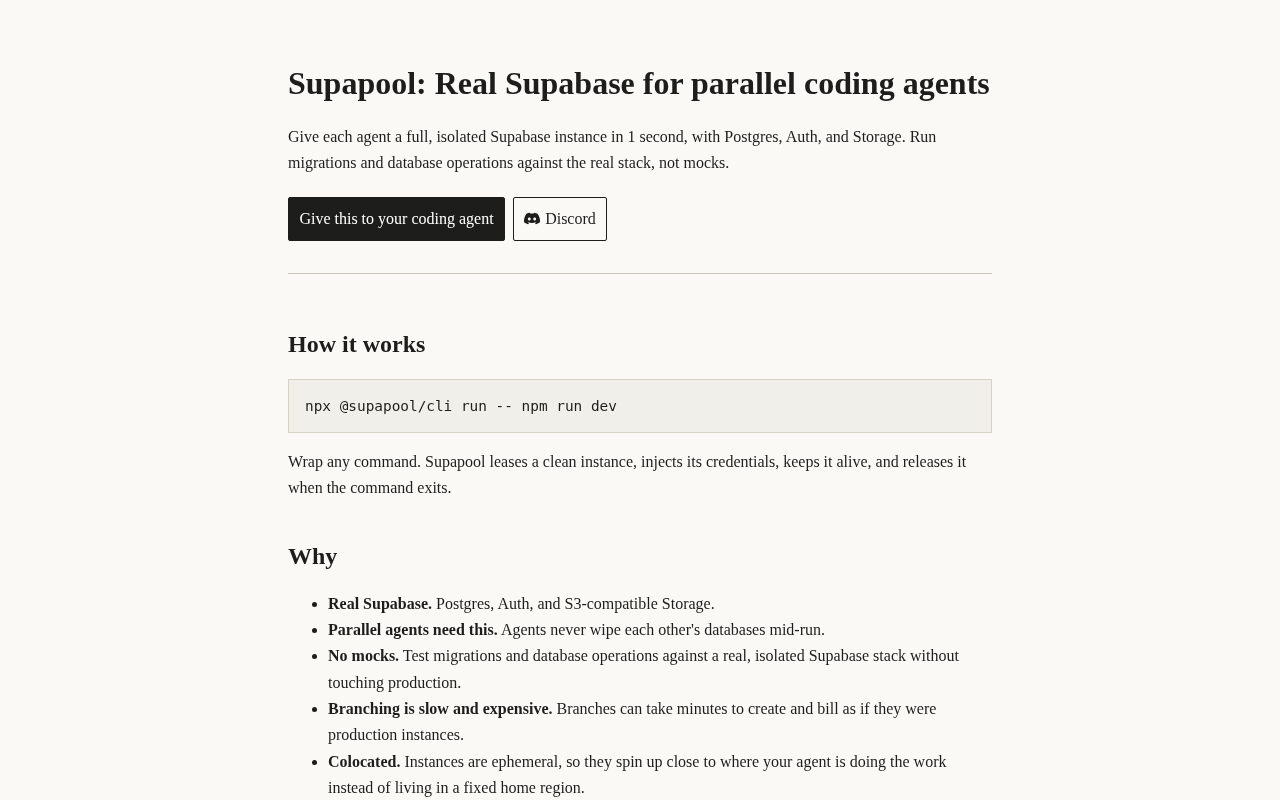
Supapool: Creating Isolated Databases for AI Coding Agents in 400 Milliseconds
Supapool uses pool prewarming to create isolated Supabase database instances in 400ms for AI coding agents like Claude, Cursor, and Devin, solving the database isolation challenge.
Read more →

·2 min
Supapool: Creating Isolated Databases for AI Coding Assistants in 400 Milliseconds
Supapool uses pool prewarming to create isolated Supabase database instances in 400ms for AI coding assistants like Claude, Cursor, and Devin—a prime example of AI-native infrastructure.
Read more →

·6 min
Securely Exposing Self-Hosted Services via VPS: Architecture & Practical Guide
Learn how to securely expose self-hosted services via VPS using WireGuard tunnels, Pangolin, and reverse proxies — enabling client-free access to Plex, Immich, and more while hiding your home IP.
Read more →

·5 min
Home Network Device Isolation: A Complete Guide to Safely Exposing Self-Hosted Services to the Internet
Learn how to safely expose self-hosted services to the internet using DMZ, VLAN isolation, and VM approaches while protecting your home network from attacks.
Read more →

·3 min
tinbase: A Local Supabase Alternative That Runs as a Single Process
tinbase compresses Supabase's 12 Docker containers into a single process with real Postgres 17, Auth, Storage, and Realtime, supporting RLS and direct supabase-js calls—even runs in a browser.
Read more →

·3 min
Baileys: A Deep Dive into the Open-Source WhatsApp Automation API That Requires No Browser
Deep dive into Baileys, a WebSocket-based WhatsApp Web API requiring no browser. Supports multi-device, chatbots, and group automation with low resource usage.
Read more →

·3 min
Agent-Manager: Unified Management of Multiple AI Coding Assistants with Tmux
Agent-Manager is an open-source Tmux-based TUI for managing multiple AI coding agents like Claude Code, Codex, and OpenCode in a unified terminal interface with quick switching and session persistence.
Read more →

·3 min
Agent-Manager: Unified Management of Multiple AI Coding Assistants with Tmux
Agent-Manager is an open-source Tmux-based terminal tool for managing multiple AI coding agents like Claude Code, Codex, and OpenCode in a unified interface with quick switching and session persistence.
Read more →

·3 min
Cynative Open-Source AI Cloud Security Tool: Audit Cloud Infrastructure with Natural Language
Cynative is an open-source AI cloud security auditing tool that lets you query AWS, GCP, Azure, and Kubernetes infrastructure using natural language. Its read-only architecture ensures zero risk to production environments.
Read more →

·3 min
Cynative Open-Source AI Cloud Security Tool: Audit Cloud Infrastructure with Natural Language
Cynative is an open-source AI cloud security tool that lets you audit AWS, GCP, Azure, and Kubernetes infrastructure using natural language. Its read-only architecture ensures production environments stay safe.
Read more →