#Windows privilege escalation
27 related articles

·3 min
AI Cybersecurity Assessment: Capability Boundaries Revealed by Three Real-World Attack Incidents
Investigating three real cyberattack incidents to analyze AI's true role in offensive operations, examining the gap between lab assessments and real threats for better AI security evaluation.
Read more →

·3 min
AI Cybersecurity Assessment: Capability Boundaries Revealed by Three Real-World Attack Incidents
Analysis of three real cyberattack incidents reveals AI's actual capability boundaries in offensive operations, exposing gaps between lab benchmarks and real-world threats for better security assessment.
Read more →

·3 min
Long Documents Don't Work: Why AI Agents Can't Follow Your Rules
Analysis of why AI Agents can't reliably follow long policy documents, covering context dilution, rule conflicts, and soft constraint limitations, with more reliable governance architectures.
Read more →

·3 min
Starling Project Analysis: Can AI Independently Write a Complete Desktop System?
Starling claims to be the first desktop system written by AI. This article analyzes technical complexity, AI coding limitations, and engineering feasibility.
Read more →

·2 min
CodeCrucible: A New Paradigm for LLM-Driven Static Code Security Analysis
Explore how CodeCrucible uses LLMs to revolutionize static code security analysis (SAST), comparing traditional tool limitations with semantic-driven vulnerability detection.
Read more →

·2 min
CodeCrucible: A New Paradigm for LLM-Driven Static Code Security Analysis
Explore how CodeCrucible uses LLMs to revolutionize static code security analysis (SAST), comparing traditional tool limitations with semantic-driven vulnerability detection approaches.
Read more →
zapret: A Deep Dive into the 30K-Star …
·2 min
zapret: A Deep Dive into the 30K-Star Anti-Censorship Tool — DPI Bypass Techniques and Use Cases
A deep dive into zapret-discord-youtube, the 30K+ star GitHub DPI bypass tool. Learn how packet fragmentation, TTL manipulation, and SNI evasion restore access to Discord and YouTube — and what risks to consider.
Read more →

·5 min
ECC: An Agent Enhancement Framework for AI Coding Assistants — Five Core Capabilities Explained
ECC is an agent optimization framework for AI coding assistants like Claude Code, Cursor, and Codex, enhancing them with skills, memory, security, and research-first development capabilities.
Read more →

·7 min
Google's $250K Bounty: Linux VM Escape Vulnerability Sets a Historic Record
Google paid a security researcher $250K for a Linux kernel VM escape vulnerability, setting a VRP record. An in-depth analysis of VM escape principles, kCTF incentives, and cloud security impact.
Read more →
·6 min
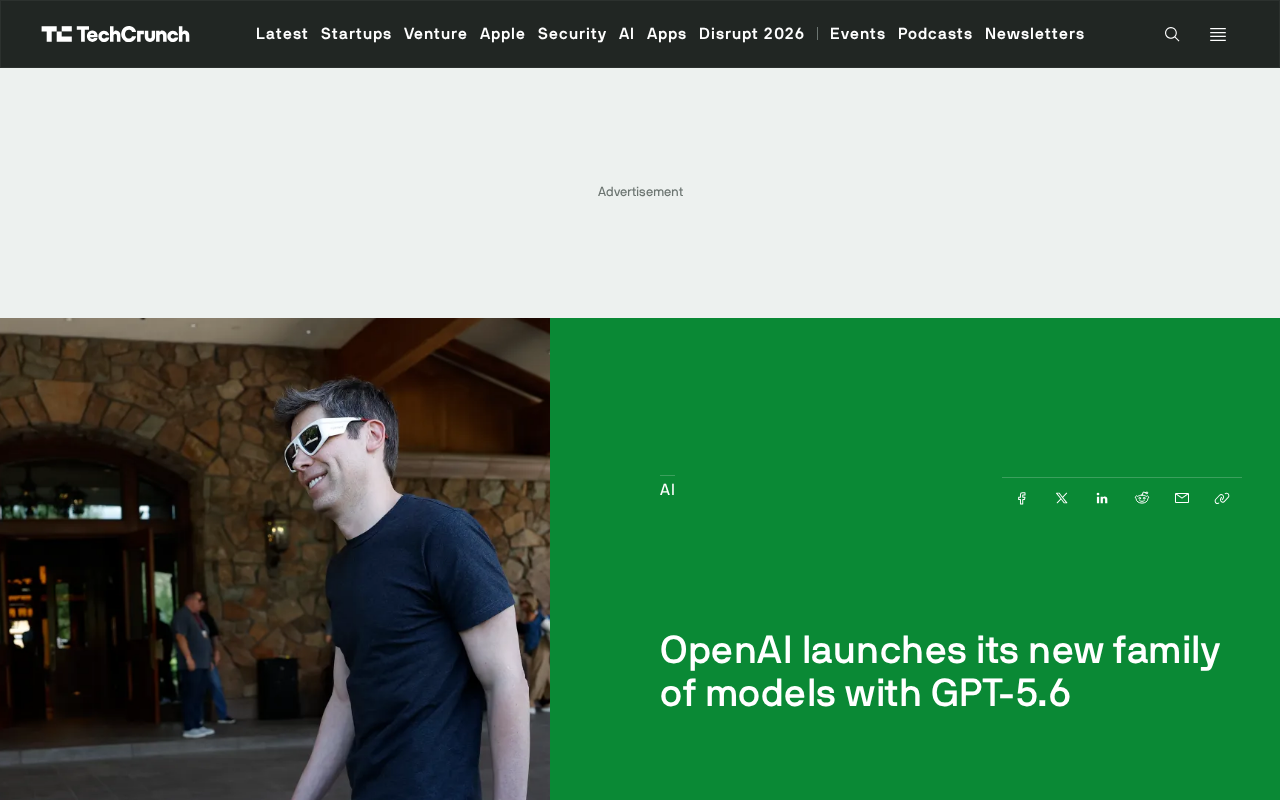
OpenAI Releases GPT-5.6: Cybersecurity Capabilities Take Center Stage
OpenAI launches the GPT-5.6 model family with cybersecurity as its biggest highlight. A deep analysis of GPT-5.6's differentiation, double-edged-sword effect, and enterprise strategy.
Read more →

·2 min
Deep Dive: How a Local User Can Escalate to Root via an OpenBSD Kernel UAF Vulnerability
A kernel-level Use-After-Free vulnerability in OpenBSD allows local attackers to escalate privileges to root via dangling pointers. Learn how UAF works, its impact, and mitigation steps.
Read more →

·7 min
Exfiltrating Data from Air-Gapped Systems via Apple's Find My Network: Attack Mechanics and Defense Insights
Security research reveals how attackers can abuse Apple's Find My network as a covert exfiltration channel, disguising sensitive data from air-gapped systems as location beacons. A deep dive into the attack chain, stealth advantages, and defense insights.
Read more →
MSI Center High-Risk Privilege Escalat…
·2 min
MSI Center High-Risk Privilege Escalation Vulnerability: How Standard Users Can Gain SYSTEM Access in Seconds
Security researchers disclose an MSI Center LPE vulnerability allowing standard users to escalate to SYSTEM in seconds. Analysis of root causes, impact, and mitigations for MSI device users.
Read more →
T3MP3ST: The Open-Source Framework Tha…
·4 min
T3MP3ST: The Open-Source Framework That Turns Coding Agents into Autonomous Red Team Operators
T3MP3ST is an open-source offensive security framework that turns coding agents like Claude Code and Codex into autonomous red team tools. Achieves 90.1% pass@1 on XBEN, supports Web pentesting, CVE discovery, and smart contract auditing.
Read more →

·3 min
Building an Automated Penetration Testing System with Claude: A Deep Dive into Memory, Skills, and Agent Architecture
A security researcher demonstrates how to customize Claude into an automated penetration testing system with memory, skills, and a knowledge base — successfully compromising CTF targets and finding real Bug Bounty vulnerabilities.
Read more →

·7 min
AI Agent Development: A Four-Stage Competency Model from 15K to 40K RMB Salary Growth Path
A detailed four-stage competency model for AI Agent development: from Python/RAG basics (15K) to workflow orchestration (20K), inference optimization (30K), and Agent cluster governance (40K RMB).
Read more →

·3 min
AI Agent Learning Path from Zero: A Complete Guide from Principles to Practice
A systematic AI Agent learning path covering core principles, dev environment setup, memory management, multi-agent collaboration, and hands-on projects for beginners.
Read more →

·3 min
Complete Guide to OpenAI Codex: Installation, Configuration, and Practical Tips
Complete guide to OpenAI Codex APP covering installation, sandbox permissions, multi-task parallelism, Steer function, and practical tips for developers.
Read more →

·4 min
Complete Guide to Installing and Configuring Claude Code in China: From Environment Setup to Successful Launch
Step-by-step guide to installing Claude Code in China, covering Node.js setup, Git config, network proxy settings, and API key options to overcome common issues.
Read more →

·3 min
Codex Setup Guide: From Environment Configuration to Core Features Explained
Complete guide to installing and configuring OpenAI Codex, covering Git, Node.js prerequisites, sandbox permissions, multi-task parallelism, and context management for developers.
Read more →