#agent engineering
3593 related articles

·3 min
AI Agent Architecture Decoded: An Engineering Guide from Conversations to Automation
A deep dive into the four-layer engineering design of AI Agents: planning, memory, tool use, API cost optimization, MCP protocol integration, and Skill encapsulation.
Read more →

·3 min
Agentic AI in Practice: Core Principles, Engineering Challenges, and Practical Recommendations
A deep dive into Agentic AI: core components (planning, tool calling, memory), engineering challenges (reliability, cost, safety), and practical development recommendations for production deployment.
Read more →
·5 min
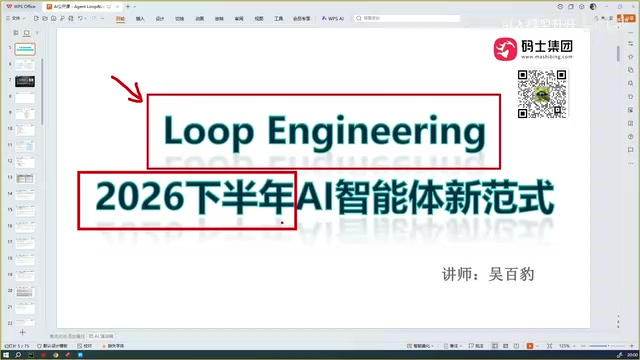
Loop Engineering: A Comprehensive Guide to AI Agent Loop Design
A deep dive into Loop Engineering for AI Agents — what loop feedback mechanisms are, how they differ from Harness Engineering, and a complete guide from principles to production implementation.
Read more →

·3 min
Harness Engineering in Practice: A Guide to Enterprise-Grade Multi-Agent System Architecture
A deep dive into Harness Engineering architecture: building an AI procurement assistant on ERP systems, covering multi-agent orchestration, MCP protocol, ASGI deployment, and sandbox isolation.
Read more →

·6 min
The New Normal of AI Programming: How Autonomous Agent Development Is Reshaping Software Engineering
AI Agent autonomous programming is evolving from niche experiments to the industry default. This article analyzes the three stages of AI-assisted programming, its impact on developer skills, process restructuring, and key challenges.
Read more →

·2 min
Harness Engineering Architecture Explained: An Essential Skill for AI Agent Developer Roles
Harness Engineering is becoming a must-have skill for AI agent developer roles. Learn the architecture, how top agent products use it, and how to practice with LangChain DeepAgents.
Read more →

·4 min
LLM Job Interviews: Multi-Agent and Harness Engineering Are Now Must-Know Topics
Deep analysis of LLM job interview essentials: Multi-Agent architecture, Harness engineering, Agent Loop, sandbox isolation, and memory management with career transition tips.
Read more →

·3 min
Loop Engineering Explained: An Engineering Approach to Making AI Coding Agents Run Autonomously in Loops
A deep dive into Loop Engineering and the Rhythmic framework: how closed-loop systems replace repetitive prompting to enable autonomous AI coding agents with state management and budget control.
Read more →

·2 min
Getting Started with Loop Engineering: Making AI Agents Run Workflows Autonomously
A deep dive into Loop Engineering: core concepts and hands-on setup including Codebase Harness, shared file systems, triggers, and Loop Contracts to make AI agents run autonomously.
Read more →

·4 min
Loop Engineering Explained: Agent Loop Mechanisms and the New Paradigm of AI Agent Development
Deep dive into Loop Engineering: from Agent Loop principles and While loops to Graph structures, covering loop efficiency optimization and termination strategies for AI agent development.
Read more →

·3 min
Agent Harness: A New AI Agent Paradigm from Prompt Engineering to Execution Environment Orchestration
Deep dive into Agent Harness Engineering: how loop execution and context isolation overcome the bottlenecks of prompt and context engineering in modern AI coding agents like Cursor.
Read more →

·4 min
Loop Engineering from Beginner to Expert: A Complete Guide to Agent Loop Development
A deep dive into Loop Engineering covering Agent Loop workflows, code implementation (While loops and Graph patterns), and how it differs from Prompt Engineering.
Read more →

·4 min
Agent Harness: The Paradigm Leap from Prompt Engineering to Harness Engineering
Deep dive into Agent Harness: tracing the paradigm evolution from Prompt Engineering to Context Engineering to Harness Engineering, and how loop-based architectures solve context loss in AI coding agents.
Read more →

·4 min
Harness Engineering in Practice: Taming AI Agents with Hermes Agent
Deep dive into Harness Engineering: using the open-source Hermes Agent framework's four-layer memory system and Skill evolution to build controllable, evolvable AI agents.
Read more →

·2 min
Struggling to Deploy AI Agents? Engineering Is the Key to Going from Demo to Product
57% of projects have deployed AI Agents, but 40% will be killed. This article analyzes the engineering methodology for taking AI Agents from Demo to enterprise product, covering the full process from requirements to deployment.
Read more →

·2 min
Replit's AI Loops Workflow Explained: Multi-Agent Collaboration Replaces Prompt Engineering
Deep dive into Replit's AI Loops workflow: how orchestrators, parallel agents, and Computer Use Verifiers build automated closed-loop systems through multi-agent collaboration.
Read more →

·4 min
The Complete AI Agent Engineering Tech Stack: A Practical Guide to 100x Development Efficiency
Deep dive into the AI agent engineering stack: from Cursor framework, model selection to context engineering and automated review loops — a complete workflow guide to achieving 100x development efficiency.
Read more →
Loop Engineering: The Paradigm Shift f…
·3 min
Loop Engineering: The Paradigm Shift from Prompt Engineering to Automated Programming Agents
Deep dive into Loop Engineering's five core components including worktree isolation, skill files, and sub-agent separation. Explore why loop design is harder than prompt engineering.
Read more →

·2 min
Skill and MCP: The Two Pillars of Agent Engineering Architecture
Deep dive into how Skill and MCP collaborate in Agent engineering. Skills handle business logic loops while MCP provides standardized connectivity, forming the core of modern four-layer Agent architecture.
Read more →

·2 min
Skill and MCP: The Two Pillars of Agent Engineering Architecture
Deep dive into how Skill and MCP work together in Agent engineering. Skill handles business logic; MCP provides standardized connections. Together they form the core of modern Agent architecture.
Read more →