#agent engineering
2818 related articles

·2 min
Building a Slack-Native Coding Agent: Architecture Design and Engineering Methodology
A deep dive into embedding a coding agent in Slack: core architecture, permission design, async task handling, and RAG context management for AI-powered dev workflows.
Read more →
Assess Your Engineering Team's AI Agen…
·3 min
Assess Your Engineering Team's AI Agent Maturity in 5 Minutes: A Tiered Framework and Key Dimensions
How to quickly gauge your engineering team's AI Agent adoption level? This article breaks down a four-tier AI maturity framework covering tool adoption, workflow integration, governance, and measurement.
Read more →
Deep Dives
Deep Dive into AI Agent Skill Design: …
·3 min
Deep Dive into AI Agent Skill Design: Engineering Practices from Anthropic and Perplexity
A deep dive into Skill design philosophy from Anthropic's Claude Code team and Perplexity's Agent team, covering the Tax Test, Gotchas Flywheel, progressive disclosure, and Eval-First practices for building high-quality AI Agent skill systems.
Read more →
Migrating a Production AI Agent to GPT…
·2 min
Migrating a Production AI Agent to GPT-5.6: 2.2x Faster, 27% Cheaper — Engineering Lessons Learned
A production AI Agent migrated to GPT-5.6 achieved 2.2x faster speed and 27% lower cost. Deep dive into prompt compatibility, eval frameworks, and migration best practices.
Read more →
·1 min
Agentic Coding in Practice: Test Feedback Loops, LLM Benchmarks, and an Engineering Adoption Guide
An in-depth look at agentic coding: how test-driven loops enable AI self-correction, the real limits of LLM benchmarks, and key engineering lessons on context management and human-AI collaboration.
Read more →

·3 min
LangChain V1.3 Hands-On Tutorial: A Complete Breakdown of RAG, Multi-Agents, and Engineering Mindset
An in-depth look at LangChain V1.3's core philosophy: from RAG to multi-agent workflows. Master LangGraph, Chain, and DeepAgent, learn token control and Human-in-the-loop, and become a true master of AI app development.
Read more →
Reverse-Engineering Web Apps: A New Ap…
·3 min
Reverse-Engineering Web Apps: A New Approach to Breaking Through the API Barrier for AI Agents
Explore a new approach to AI Agent tool integration: reverse-engineering web apps to turn API-less pages into callable Agent tools, with analysis of MCP synergy and challenges.
Read more →

·4 min
A Complete Breakdown of the Engineering Challenges Behind RAG and Agent Interview Questions
Resume full of RAG and Agent but keep failing interviews? The issue is you only run demos and can't explain production engineering challenges. This article breaks down data cleaning, hybrid retrieval, hallucination protection, and agent loop breakers.
Read more →

·6 min
A Deep Dive into AI Agent Harnesses: The Core Engineering Behind Agent Frameworks
What is an AI Agent's harness? This article systematically dissects the core components of agent frameworks: context management, tool use, control loops, and caching strategies—revealing why the same model performs so differently across harnesses.
Read more →

·4 min
Why Do AI Agents Crash the Moment They Go Live? A Practical Guide to Harness Engineering for Runtime
A deep dive into the Claude Code source code, systematically analyzing the five-layer Harness Engineering architecture: environment, tool, control, memory, and evaluation. Build a stable runtime system for production AI Agents.
Read more →

·2 min
AI Agents for SGLang Kernel Optimization: Real-World Performance Gains and Engineering Methodology
SGLang's team converted expert knowledge into agent skills, achieving 71.4% throughput gains, TTFT reduced from 456ms to 168ms. A deep dive into agent-assisted kernel optimization methodology.
Read more →

·2 min
Agent Skills: Bringing Production-Grade Engineering Capabilities to AI Coding Agents
Google engineer Addy Osmani's open-source project agent-skills (76k+ GitHub stars) injects production-grade engineering skills into AI coding agents, covering performance, security, and code quality.
Read more →

·5 min
From Prompts to Harness Engineering: The Evolution of AI Agent Development Paradigms
Why has AI engineering methodology evolved from prompts to context engineering and now Harness engineering? This article examines three paradigms, key bottlenecks, and the Agent = Model + Harness formula.
Read more →

·6 min
Rust AI Agent System Prompt Engineering in Practice: A Seven-Dimensional Design Guide
An in-depth analysis of the four core roles of AI Agent system prompts and the four-step tool-calling method, covering behavioral boundaries, autonomous execution principles, and trigger pattern design—helping Rust developers build high-quality agents.
Read more →

·4 min
Harness Engineering: The Third Phase of AI Coding and a Practical Guide to agents.md
A deep dive into Harness Engineering — the third phase of AI coding. Based on research across 2,853 GitHub repos, explore agents.md, Skills, MCP, and eight configuration mechanisms to control your AI coding assistant.
Read more →

·7 min
Harness Engineering: The Six-Layer Engineering Framework for Enterprise AI Agent Deployment
From Prompt Engineering to Harness Engineering, a deep dive into the core challenge of truly deploying AI Agents in enterprises. This article breaks down the six-layer architecture and shares real-world Hermes Agent practice.
Read more →

·4 min
6-Week Agent Engineering Roadmap: From Beginner to Enterprise Deployment
A structured 6-week roadmap for enterprise Agent deployment covering LangChain, LangGraph, MCP, and RAG — from planning and memory to multi-agent collaboration and production deployment.
Read more →

·3 min
AI Agent Architecture Decoded: An Engineering Guide from Conversations to Automation
A deep dive into the four-layer engineering design of AI Agents: planning, memory, tool use, API cost optimization, MCP protocol integration, and Skill encapsulation.
Read more →

·3 min
Agentic AI in Practice: Core Principles, Engineering Challenges, and Practical Recommendations
A deep dive into Agentic AI: core components (planning, tool calling, memory), engineering challenges (reliability, cost, safety), and practical development recommendations for production deployment.
Read more →
·5 min
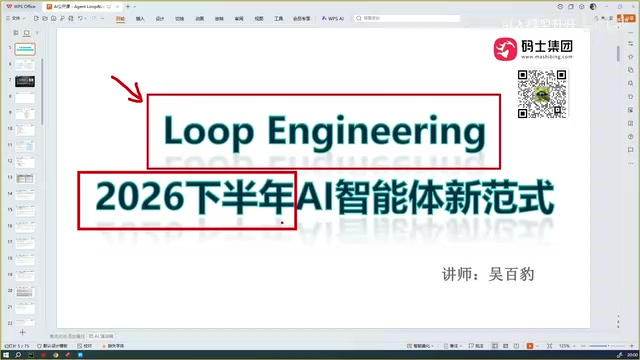
Loop Engineering: A Comprehensive Guide to AI Agent Loop Design
A deep dive into Loop Engineering for AI Agents — what loop feedback mechanisms are, how they differ from Harness Engineering, and a complete guide from principles to production implementation.
Read more →