#agentic AI enterprise
356 related articles

·2 min
Meta Launches Muse Spark 1.1: Targeting Enterprise AI Coding and Agentic Automation
Meta launches Muse Spark 1.1, an AI coding assistant targeting enterprise agentic workloads, automated bug fixing, and large-scale code migration to compete with GitHub Copilot, Cursor, and Claude Code.
Read more →

·2 min
The Hidden Gap in AI Agent Finance: Why Verifiability Determines Success or Failure
AI agent finance focuses too much on capabilities while ignoring verifiability — the critical infrastructure. Cryptographic proof of execution records is the prerequisite for scaling agentic finance.
Read more →

·2 min
MemoryCustodian: A Repo-Native Persistent Memory Store for Coding AIs
MemoryCustodian is an open-source tool that stores AI memory as Markdown files in your code repo, solving cross-session amnesia for Claude Code, Codex, and other coding assistants.
Read more →

·4 min
Banquish: A Mac Productivity Tool That Pins Live Web Fragments onto a Canvas
Banquish is a Mac app that clips live web fragments onto a free-form canvas, eliminating tab-switching hell. Combined with AI Agent automation, it creates personalized information dashboards.
Read more →

·1 min
HarnessRouter: One API to Access the World's Top AI Agents
HarnessRouter provides a unified API to access top AI agents worldwide, encapsulating sandbox isolation, task orchestration, fault-tolerant retries, and cost control for production deployment.
Read more →

·2 min
Google Releases Three New Gemini Models: Faster, Cheaper, and More Specialized
Google launches Gemini 3.6 Flash, 3.5 Flash-Lite, and 3.5 Flash Cyber—three new models targeting quality-cost balance, extreme affordability, and cybersecurity specialization for AI Agent use cases.
Read more →
·4 min
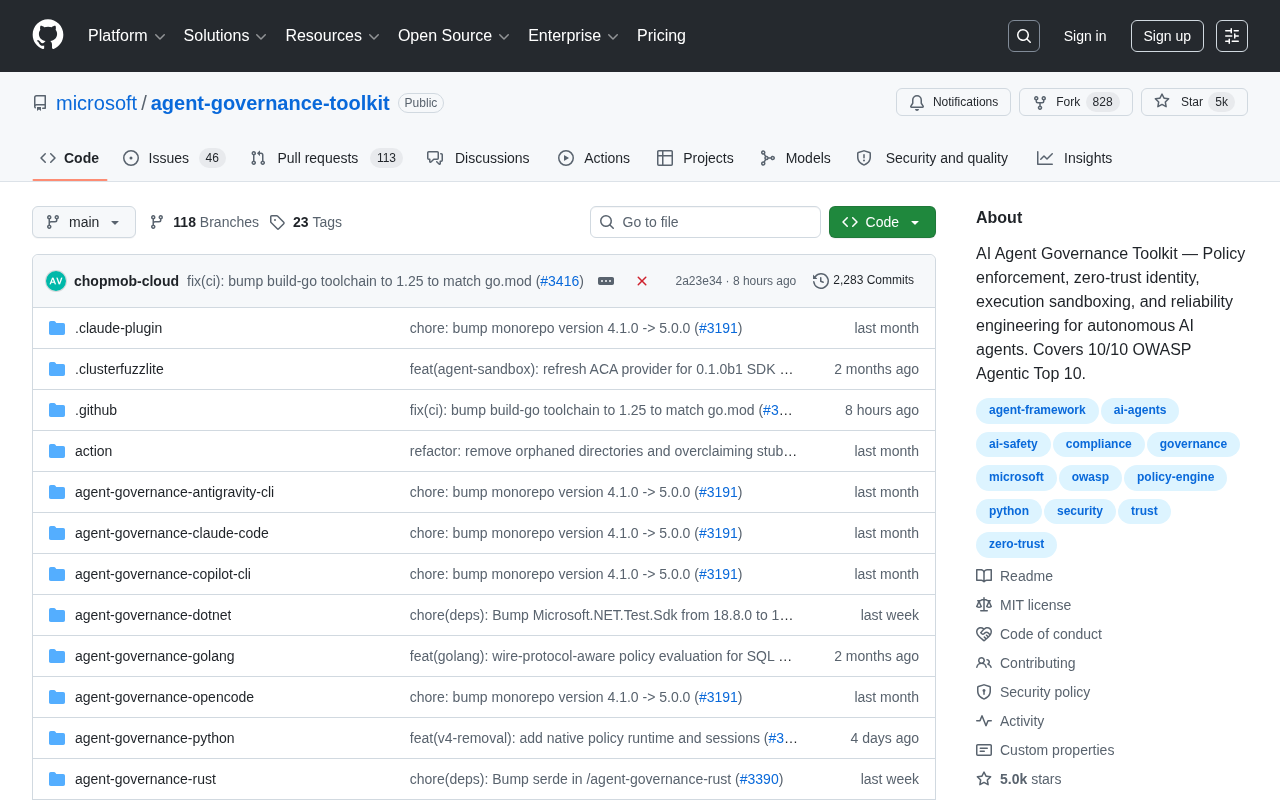
Microsoft Open-Sources AI Agent Governance Toolkit: Comprehensive Coverage of OWASP Top 10 Risks
Microsoft open-sources agent-governance-toolkit covering all OWASP Agentic Top 10 risks through policy enforcement, zero-trust identity, execution sandboxing, and reliability engineering for production AI Agent deployment.
Read more →

·3 min
GitHub Daily · July 28: From Claude Code Skill-ification to AI Agent Governance, the Toolchain Matures
GitHub Trending July 28: Microsoft's agent-governance-toolkit covers OWASP Agentic Top 10, book-to-skill gains 366 stars showing Claude Code skill ecosystem potential, plus browser-based 3D and GIS tools.
Read more →

·2 min
Three Major Updates to Gemini API Managed Agents: Free Tier, Cost Controls, and Scheduled Triggers
Google Gemini API Managed Agents launches three key updates: Free Tier for universal access, Cost Controls for budget safety, and Scheduled Triggers for automated execution.
Read more →

·3 min
Kimi K3 Reaches 2.5T Parameters, MiniMax M3 Pro Brewing Simultaneously: China's LLM Arms Race Escalates
Kimi K3 adopts new architecture with 2.5T parameters and 1M token context. MiniMax M3 Pro targets 2.7-3T. OpenAI surpasses 7M users, HY-OCR 1.5 achieves SOTA, Amap launches world model.
Read more →
·3 min
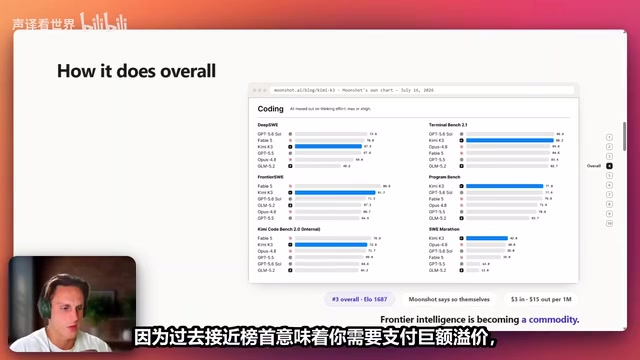
Kimi K3 Hands-On Tutorial: Claude Code Sub-Agent Configuration & GPT-5.6 Comparison Test
Complete guide to configuring Kimi K3 as a Claude Code sub-agent, including API setup, YFlow workflow building, and head-to-head comparison with GPT-5.6 and Claude Fable 5.
Read more →

·3 min
Kimi K3 Deep Dive: How a 3 Trillion Parameter Open-Weight Model Reaches the Frontier
Deep dive into Kimi K3: the largest open-weight model at 3 trillion parameters, surpassing Opus-level models in Agentic coding with 896-expert MoE architecture, 1M token context, at Sonnet pricing.
Read more →

·3 min
Anthropic Opus 5 Real-World Testing: Outperforms Competitors at Half the Price
Anthropic Opus 5 hands-on review: first to break 30% on ARC-AGI, near Fable 5 agentic coding at half the price. Benchmarks, token costs, and GPT-5.6 comparison.
Read more →

·3 min
Anthropic Opus 5 Real-World Testing: Outperforms Competitors at Half the Price
Anthropic Opus 5 hands-on review: first to break 30% on ARC-AGI, near Fable 5 in agentic coding at half the price. Benchmarks, token costs, and GPT-5.6 comparison.
Read more →

·3 min
How AI Agents Are Reshaping Enterprise Work: From Task Automation to Organizational Restructuring
Explore how AI agents are redefining enterprise work—from applied AI partnerships and multi-agent collaboration to structural workflow redesign and organizational transformation.
Read more →

·4 min
Opus 5 Real-World Testing: Cheaper Yet Stronger — Why It's Now My Default Coding Model
In-depth testing of Claude Opus 5's coding abilities vs Fable 5 and 5.6 Sol. Why Opus 5 outperforms pricier models at half the token cost, plus selection guide and distillation explained.
Read more →

·3 min
Cursor Alternatives Compared: A Guide to 5 AI Coding Tools
Compare 5 Cursor alternatives — from GitHub Copilot and Windsurf to open-source Cline and Continue — covering model freedom, workflow integration, cost, and privacy.
Read more →

·3 min
GitHub Agentic Workflows in Practice: Automating Cross-Repository Documentation Updates
Learn how GitHub Agentic Workflows automate cross-repo documentation updates. See the Aspire team's AI-driven approach: event triggers, smart drafting, and SME review to keep docs in sync with code.
Read more →

·4 min
Frontend Engineer Driven to Homelab by AI: From React Specialist to Full-Stack Self-Rescue
A 7-year frontend engineer, fearing AI-driven job loss, builds a homelab to learn Docker, databases, and networking. A pragmatic roadmap for developers building breadth in the AI era.
Read more →

·3 min
Build RAG and AI Agent Projects at Zero Cost: A Practical Guide to Open-Source Tools
Build high-quality AI projects on a budget. Learn how to use Ollama, Groq, Chroma, and other free open-source tools to build RAG systems and multi-Agent workflows from scratch.
Read more →