#async await
105 related articles

·5 min
Halo: A Real-Time Anti-Deepfake Tool That Detects AI Face-Swapping in Video Calls
Halo is a local real-time deepfake detection tool that identifies AI-synthesized faces during Zoom, Teams, and Google Meet video calls to prevent face-swapping fraud.
Read more →

·3 min
What Kind of GUI Do AI Agents Need? The Evolution from Chat Boxes to Task Consoles
Exploring GUI design for AI Agents: why chat boxes fall short, and how ideal agent interfaces need task visualization, human-in-the-loop intervention, state presentation, and multi-agent orchestration.
Read more →

·2 min
Gemini Spark Goes Global: A Deep Dive into Google's 24/7 Background AI Agent
Gemini Spark (24/7 Agent) is now available globally for Pro and Ultra users without VPN. Learn about its background operation, key features, limitations, and Google's AI agent strategy.
Read more →

·2 min
Memmy Agent: Cross-Platform AI Memory Sharing Tool, A Local-First Personal Memory Hub
Memmy Agent is a local-first open-source AI memory hub enabling cross-platform memory sharing across Claude Code, Codex, and more. Free 2M tokens included.
Read more →

·2 min
Memmy Agent: A Cross-Platform AI Memory Sharing Tool and Local-First Personal Memory Hub
Memmy Agent is a local-first, open-source AI memory hub enabling cross-platform memory sharing across Claude Code, Codex, and more. Free 2M token tier included.
Read more →

·3 min
Building a Streaming LLM Backend in Go: Deep Dive into the SDK and React Frontend Library
Deep dive into an open-source Go SDK for building streaming LLM backends, covering streaming responses, tool-calling architecture, and companion React library for end-to-end integration.
Read more →

·3 min
tinbase: A Local Supabase Alternative That Runs as a Single Process
tinbase compresses Supabase's 12 Docker containers into a single process with real Postgres 17, Auth, Storage, and Realtime, supporting RLS and direct supabase-js calls—even runs in a browser.
Read more →

·3 min
HeyZoku: Command Multiple AI Coding Agents to Work Together Using Your Voice
HeyZoku is a Mac voice-first agentic dev environment that runs 10 coding agents simultaneously. Command Claude, Codex, and Cursor by name with on-device voice recognition and one-time pricing.
Read more →

·3 min
HeyZoku: Command Multiple AI Coding Agents to Work Together Using Your Voice
HeyZoku is a Mac voice-first agentic dev environment that runs 10 coding agents simultaneously. Command Claude, Codex, and Cursor by name with on-device voice recognition and one-time pricing.
Read more →

·3 min
Can Claude Opus 5 Refactor 25-Year-Old Legacy Code? The Real Capability Boundaries of AI Programming
Reddit debates whether Claude Opus 5 can independently refactor a 25-year, 50K-line undocumented legacy codebase. Analyzing AI programming's real capability boundaries and human-AI collaboration.
Read more →

·5 min
Learn AI Agent Development from Scratch: A 3-Step Practical Path to Get Started Quickly
How to learn AI Agent development from scratch? This article outlines a clear 3-step path: Python crash course, LLM theory & practice, and LangChain framework project implementation.
Read more →

·4 min
Deep Dive into the EYG Programming Language: A New Portable Programming Paradigm Designed for Humans
Deep analysis of the EYG programming language's core design, including algebraic effects, program state persistence, and cross-platform portability, exploring how it addresses modern software fragmentation.
Read more →
·3 min
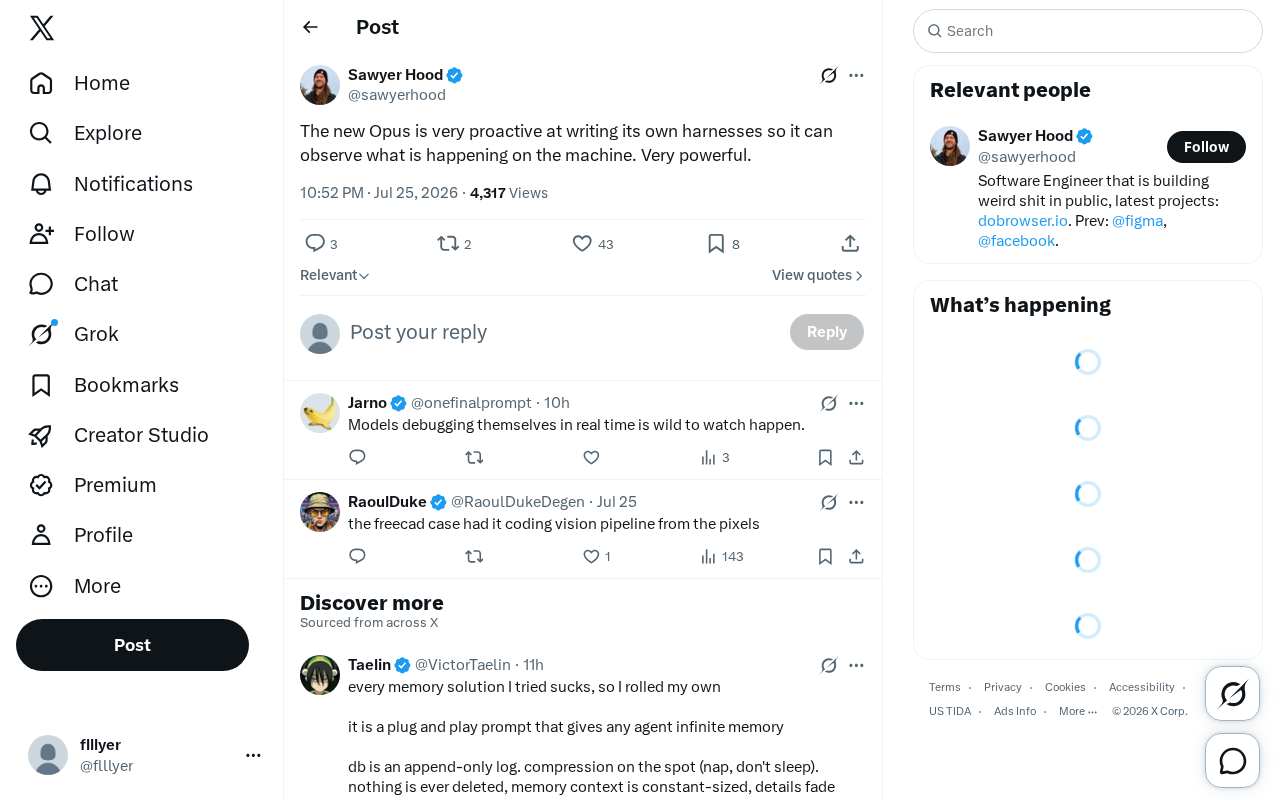
Claude Opus's Autonomous Debugging Capabilities: What It Means When AI Proactively Writes Test Harnesses
New Claude Opus proactively writes test harnesses to observe runtime behavior. We analyze how this shift from passive code generation to autonomous debugging marks a key evolution in AI programming.
Read more →

·4 min
AI Coding Tools in Practice: Which Ones Actually Stuck with the Team?
A 12-person product team shares real-world experiences with Cursor, Codex, Claude Code, and CodeRabbit—exploring efficiency plateaus, scenario matching, and selection criteria for AI coding tools that actually stick.
Read more →

·7 min
Getting Started with Codex: Installation and Usage Guide for OpenAI's AI Coding Agent
A comprehensive guide to OpenAI's new AI coding agent Codex: from concept and comparison of its four forms, to installing Git/Node.js/VS Code, configuring the API Key, and creating a workspace.
Read more →

·8 min
LangChain Crash Course: A Complete Roadmap from Zero to Agent Development
A systematic roadmap from LangChain and LangGraph to multi-agent development, covering RAG, Tool Calling, MCP, and more, helping developers break into AI app development.
Read more →
Tokio Launches Topcoat: A Full-Stack R…
·2 min
Tokio Launches Topcoat: A Full-Stack Rust Framework — What Does 439 Stars in One Day Mean?
Tokio launches Topcoat, a batteries-included full-stack Rust Web framework that gained 439 stars on day one. We break down its positioning, tech foundation, and ecosystem advantages.
Read more →

·3 min
Agent Infinite Loop Engineering Guide: Detection, Breaking, and Root Cause Analysis
How to handle Agent infinite loops? This guide covers three-layer loop detection, four strategy-switching techniques, root cause analysis, and multi-layer fallbacks for building stable, production-grade Agent systems.
Read more →

·2 min
OpenAI GPT-Live: The Full-Duplex Voice AI Revolution
OpenAI's GPT-Live voice model family brings full-duplex interaction, task delegation, GPT-5-level intelligence, real-time translation, and image understanding to voice AI.
Read more →

·2 min
Give Claude Code a Warcraft Voice Pack: Turning AI Coding into a Gaming Experience
An open-source project adds 43 game voice packs to Claude Code, covering 500+ lines from StarCraft, Red Alert, and Portal, triggered on task completion, authorization prompts, and errors.
Read more →