#checkpoint rollback
83 related articles

·6 min
10 Billion Tokens in Practice: An In-Depth Review of Codex's Long-Horizon Engineering Capabilities
Creator Ajiang burned 10B Tokens on Codex to migrate cc-haha from Tauri 2 to Electron. A deep dive into Codex's long-horizon engineering, Computer Use, costs, and practical advice for developers.
Read more →

·7 min
OpenAI Codex Shortcuts Getting an Upgrade — How Will the AI Programming Experience Evolve?
OpenAI announces Codex shortcut upgrades focused on developer workflow optimization. Analysis of upgrade directions, industry competition, and expected improvements to code completion and natural language triggers.
Read more →

·3 min
OpenAI's Official Plugin: Let Codex Review Your Code Inside Claude Code
OpenAI's official open-source plugin brings Codex into Claude Code for cross-model code review. Five core features including adversarial review and sub-agent delegation — with real risk warnings included.
Read more →

·4 min
AI Weekly: Top Coding Model Returns, Google's New Flash Checkpoint, and the Video Generation Race
This week in AI: Anthropic's flagship coding model returns globally with new safety classifiers, Google tests a new Gemini Flash checkpoint, video generation heats up, and Figure AI robots enter BMW factories.
Read more →

·4 min
AI Workbench: One-Click Content Creation from Topic Research to Final Output
AI Workbenches automate the full content creation pipeline — from topic research to visual output. Multi-model routing, transparent execution, and reusable workflow templates redefine how creators work.
Read more →

·7 min
A New Core Skill for Programmers: How to Effectively Lead Your AI Agent Dev Squad
Coding alone isn't enough anymore. Learn the 5 key steps to commanding AI Agents—define outcomes, split tasks, provide context, iterate small, and keep humans in the loop.
Read more →
·3 min
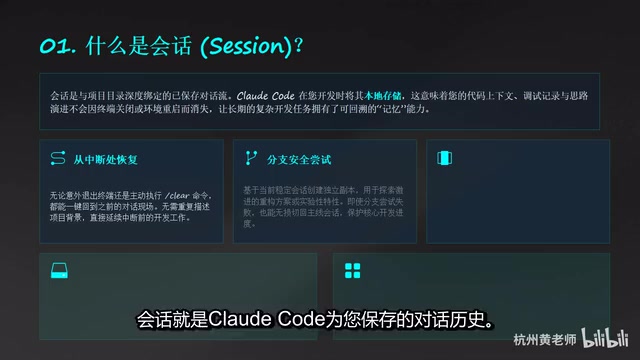
Claude Code Session Management Guide: Five Core Features — Resume, Naming, Browsing, Branching, and Export
A complete guide to Claude Code's five core session management features: resume, naming, browsing, branching, and export. Master shortcuts and context management for an efficient AI coding workflow.
Read more →
·4 min
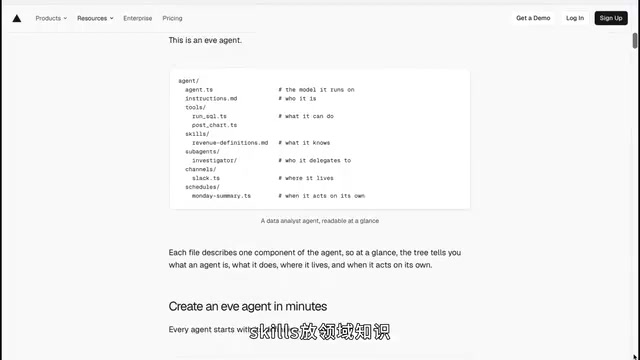
Deep Dive into Six AI Development Tools: Loop Recipe Library, Vercel Agent Framework, and More
Deep analysis of Loop workflow recipes, Vercel's open-source Agent framework, Pyker AI-native project management, Arrow P2P tool, DBX database client, and NVIDIA's Skill Spectre security tool.
Read more →

·3 min
Auto-Editing Videos with Claude Code: A Complete Hands-On Guide from Raw Footage to Final Cut
Learn how to use Claude Code with the open-source VideoIn project for automated video editing — from audio extraction and subtitle generation to transitions and final output.
Read more →

·4 min
Loop Engineering from Beginner to Expert: A Complete Guide to Agent Loop Development
A deep dive into Loop Engineering covering Agent Loop workflows, code implementation (While loops and Graph patterns), and how it differs from Prompt Engineering.
Read more →

·3 min
A Systematic Guide to Claude Code: From Deployment to Architectural Analysis of 510K Lines of Source Code
A systematic guide to Claude Code covering environment deployment, domestic model integration, six core systems (memory, multi-Agent, etc.), a full-stack ChatBot project, and eight design patterns from 510K lines of open-source code.
Read more →

·3 min
PiDeck 0.5.0 Released: Ten Versions in One Week, a Complete Overhaul of the Desktop AI Agent
PiDeck 0.5.0 completes the rebrand from PiDesktop, shipping 10 versions with ~100 changes in one week: design system overhaul, dark mode, LAN sharing, Git integration, and dual-layer proxy config.
Read more →

·1 min
Claude Fable 5 as a Computer Use Orchestrator Model: Excelling in Long-Running Agent Workflows
Anthropic launches Claude Fable 5 as a Computer Use orchestrator model for Pro and Max users, excelling in long-running agent workflows for automation tasks.
Read more →

·3 min
Open-Source Models Keep Throwing Errors in Your Code? The Problem Might Be the Framework
DeepSeek and Kimi keep failing at coding? The problem may not be the model but the framework. Learn how Commander Code fixes this with cache routing, tool call repair, and continuous learning.
Read more →
Loop Engineering: The Paradigm Shift f…
·3 min
Loop Engineering: The Paradigm Shift from Prompt Engineering to Automated Programming Agents
Deep dive into Loop Engineering's five core components including worktree isolation, skill files, and sub-agent separation. Explore why loop design is harder than prompt engineering.
Read more →
Deep Dive into the Three AI Programmin…
·3 min
Deep Dive into the Three AI Programming Frameworks: The Right Way to Do Specification-Driven Development
Deep dive into the three frameworks of Specification-Driven Development (SDD) for AI programming: Blueprint, Execution Flow, and Change Records — solving the problem of AI code going off the rails.
Read more →

·2 min
AI Agent Permission Management: How Sandboxing Mechanisms Limit Potentially Destructive Operations
An in-depth look at AI Agent sandboxing for permission management — how OpenAI uses execution isolation, resource limits, and progressive trust models to contain potentially destructive operations.
Read more →
 Product Reviews
·2 min
Gained 25K Stars in One Week: This Chinese Open-Source AI Coding Tool Takes on Claude Code
A Chinese open-source AI coding tool gained 25K GitHub Stars in one week, challenging Claude Code with autonomous closed-loop programming, parallel tasks, checkpoint resume, and intelligent model routing.
Read more →
 Deep Dives
·3 min
Deep Dive into Hermes Agent Self-Evolution: The GIPA Algorithm and Engineering Practice
Deep analysis of NousResearch's Hermes Agent Self Evolution project: GIPA genetic Pareto prompt evolution algorithm, six-step optimization loop, and five guardrail mechanisms for real-world Agent self-evolution.
Read more →
 Tutorials
·2 min
The Five-Step Rhythm Method for AI Programming: A Practical Strategy Where Slow Is Fast
A methodology for rhythm control in AI programming: use a five-step strategy (identify, plan, minimal change, test, risk assessment) to prevent AI from going off-track and causing rework.
Read more →