#checkpoint rollback
85 related articles

·5 min
The Complete Claude Code Guide: Installation, Core Features, and Advanced Workflows
An in-depth guide to Anthropic's Claude Code agentic coding tool, covering installation, pricing plans, model selection, token management, CLAUDE.md global memory, MCP integration, Subagents, and more.
Read more →

·3 min
Agent Infinite Loop Engineering Guide: Detection, Breaking, and Root Cause Analysis
How to handle Agent infinite loops? This guide covers three-layer loop detection, four strategy-switching techniques, root cause analysis, and multi-layer fallbacks for building stable, production-grade Agent systems.
Read more →

·2 min
Spring AI Alibaba Graph in Action: Build an HR Recruitment Workflow Agent from Scratch
Build a full HR recruitment Workflow Agent with Spring AI Alibaba Graph: résumé scoring, interview generation, Human-in-the-Loop, and state rollback across 20 technical concepts.
Read more →

·3 min
ASE Control Panel: How STATE_SYNC Tokens Enable AI State Persistence
A deep dive into ASE's core mechanism — the STATE_SYNC checkpoint token — and how it transforms stateless LLMs into stateful AI systems for complex multi-turn workflows.
Read more →
The Grepathy Incident: The Risks of AI…
·2 min
The Grepathy Incident: The Risks of AI Acting Unilaterally and Where to Draw the Line
The Grepathy incident on Hacker News reveals the risks of AI agents acting without approval. A deep dive into autonomous AI decision-making, Human-in-the-Loop design, and where to draw the line.
Read more →

·3 min
ShunCode In-Depth Review: Local Agent Execution + Bridge Mode Turns ChatGPT into Your Programming Brain
ShunCode is a VS Code-based AI code editor that connects ChatGPT to a local Agent execution system via Bridge Mode, enabling full-loop code reading, editing, and testing with Diff approval and MCP support.
Read more →

·2 min
The AI Model Versioning Crisis: What an Industry Rumor Reveals About Iteration Chaos
A viral AI rumor about a lost "version 5.6" model exposes three real industry pain points: version control chaos, compliance risk, and model asset management failures.
Read more →

·8 min
OpenAI Merges Codex with ChatGPT: A Deep Dive into the Unified Desktop App Overhaul
OpenAI officially merges its coding agent Codex with ChatGPT into a unified desktop app, adding new coding workflows, a Chrome extension, a built-in browser, and GPT-5.6-powered Computer Use capabilities.
Read more →

·4 min
Spring AI Alibaba Graph in Practice: HR Recruitment Workflow Agent Design and Core Technical Analysis
Build an HR recruitment workflow Agent with Spring AI Alibaba Graph, covering resume parsing, job matching, tiered question generation, HITL checkpointing, and time travel state rollback across 20 core technical points.
Read more →
·7 min
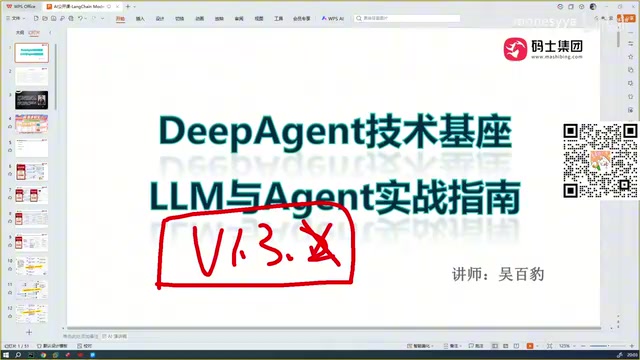
Getting Started with LangChain 1.3: Core Concepts of LLMs and Agents
An in-depth breakdown of LangChain 1.3's core concepts, covering the three major limitations of LLMs, Agent architecture, memory management, and a complete learning path. Master LangChain and LangGraph to quickly build AI development skills.
Read more →

·7 min
Previewing the AI Engineer Summit: Industry Signals of AI Engineering Reaching Maturity
An exclusive look at the AI Engineer Summit dress rehearsals, decoding the paradigm shift from research to production. A deep dive into AI Engineer challenges, RAG, agent systems, and AI engineering as a distinct discipline.
Read more →

·7 min
Harness Engineering: The Six-Layer Engineering Framework for Enterprise AI Agent Deployment
From Prompt Engineering to Harness Engineering, a deep dive into the core challenge of truly deploying AI Agents in enterprises. This article breaks down the six-layer architecture and shares real-world Hermes Agent practice.
Read more →

·7 min
LangSmith Engine: An Intelligent Operations Tool That Automatically Diagnoses and Fixes Agent Failures
LangChain's LangSmith Engine is an intelligent agent tool for tracking Agent failures, prioritizing issues, and auto-drafting fixes. Deep dive into its core capabilities, sandbox isolation, sub-Agent architecture, and continuous evaluation challenges.
Read more →

·3 min
Building LangGraph from Scratch in TypeScript: A Complete Agent Development Guide for Frontend Engineers
How can frontend developers get into AI Agent development with TypeScript? This guide covers a four-stage path from API calls to building LangGraph from scratch, including Zod, state management, and node-edge design.
Read more →

·4 min
Microsoft Fixes Windows 11 Storage Bloat Bug Caused by Runaway CapabilityAccessManager Database File
Microsoft's optional update KB5095093 fixes a Windows 11 bug where the CapabilityAccessManager.db-wal SQLite WAL file bloats to several GBs due to a failed checkpoint mechanism.
Read more →

·7 min
Electron + LangGraph in Practice: Building an AI Agent Visual Orchestration App from Scratch
A hands-on guide to building an enterprise-grade AI Agent workflow orchestration app with Electron Forge and LangGraph, covering local LLM deployment (Qwen3-0.6B), node-based visual canvas design, and full Function Calling integration.
Read more →

·7 min
A Complete Guide to LangGraph's Core Concepts: The Framework of Choice for Enterprise Agent Development
An in-depth analysis of LangGraph's core concepts: short-term and long-term storage mechanisms, its differences from LangChain, the MIT open-source license, and private deployment solutions for enterprise Agent development.
Read more →

·7 min
The Complete Codex Guide: From Installation to Real-World Practice
Master OpenAI Codex fast, even from scratch! Learn Codex vs ChatGPT differences, four versions, interface tips, plugins & skills, browser automation, plus six best practices.
Read more →

·5 min
Nonuniform Tensor Parallelism: NVIDIA's New Fault-Tolerance Approach to Boost LLM Training Goodput
NVIDIA introduces Nonuniform Tensor Parallelism, letting GPUs bear different compute loads so training can continue without checkpoint rollback during hardware failures—boosting LLM training Goodput and fault tolerance at scale.
Read more →

·3 min
The Short Leash Method: A Practical Methodology for Staying in Control of AI-Assisted Programming
The Short Leash AI coding method uses small steps and frequent human checkpoints to keep developers in control. Learn the core principles, benefits, and ideal use cases for this practical human-AI workflow.
Read more →