#cloud computing analogy
87 related articles

·6 min
Grok 4.5 Deep Dive: Coding on Par with Top Models, at a Fraction of the Cost
A senior developer's 24-hour deep test of Grok 4.5: a 1.5T-param MoE model at $2/M input tokens, with coding benchmarks rivaling GPT-5.5. Real performance, token efficiency, and limits explained.
Read more →

·5 min
Is AI Inference Really Profitable? Deconstructing the Cost Economics of Inference vs. Training
Are AI companies really losing money? This article deconstructs the fundamental differences between training and inference costs, revealing why pure AI inference services have structural profitability.
Read more →

·6 min
AMD Ryzen AI Halo Dev Kit: A $4,000 Local LLM Powerhouse Taking on Apple and NVIDIA
AMD officially unveils the Ryzen AI Halo local AI dev kit, priced around $4,000 with 128GB unified memory, capable of running 70B LLMs locally. An in-depth look at its specs, pricing, and market competition.
Read more →

·7 min
Getting Started with OpenAI LLM Development: A Practical Guide to Model Selection, Token Pricing, and API Usage
A systematic guide to the three cores of OpenAI LLM app development: GPT-4/GPT-3.5 model selection, token billing and cost-saving tips, and practical use of the Models, Completion, and Chat Completion APIs.
Read more →

·6 min
AutoScout24's AI-Native Journey: How Codex and Agents Are Reshaping Enterprise Efficiency
As one of the world's largest car marketplaces, AutoScout24 is going AI-native with OpenAI Codex and agents. It built a CapEx agent in 48 hours, saving ~$1M/year, and explores hands-off coding.
Read more →
·7 min
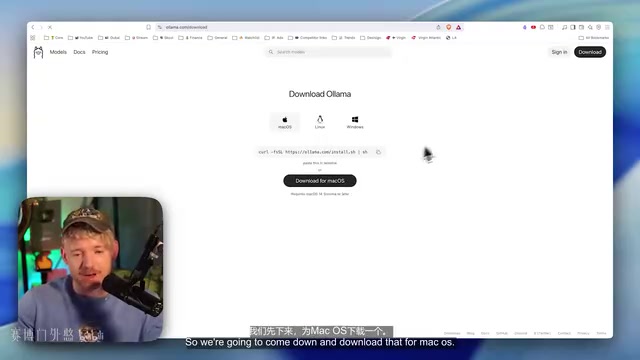
Ollama + Hermes Local AI Deployment: Building a 100% Private Personal AI Operating System
Build a fully private local AI system with Ollama + Hermes: zero cost, no rate limits, data stays local. Learn deployment steps, model selection tips, and private/cloud hybrid workflows.
Read more →

·6 min
A Beginner's Guide to AI Agents: How Large Models Are Driving a New Computing Revolution
What is an AI Agent? This article systematically explains the core architecture of AI agents (LLM + Planning + Memory + Tools), how they differ from ChatGPT, their combination with robots, and why developers must master Agent development skills.
Read more →

·6 min
Getting Started with Vibe Coding: Building Software with Natural Language from Scratch
Vibe Coding lets you build software with no coding background—just talk to AI in natural language. Learn its core ideas, learning path, and practical tools.
Read more →

·7 min
A Complete Guide to LangGraph's Core Concepts: The Framework of Choice for Enterprise Agent Development
An in-depth analysis of LangGraph's core concepts: short-term and long-term storage mechanisms, its differences from LangChain, the MIT open-source license, and private deployment solutions for enterprise Agent development.
Read more →

·6 min
Claude Comes to Azure: Three Enterprise-Grade Advantages of Microsoft Foundry's Anthropic Model Integration
Microsoft Foundry integrates Anthropic Claude models, enabling Azure customers to access Claude Opus 4.8 and Haiku 4.5 with unified authentication, billing, and commitment spend drawdown.
Read more →

·6 min
Claude Comes to Azure: Three Enterprise-Grade Advantages of Microsoft Foundry's Anthropic Model Integration
Microsoft Foundry integrates Anthropic Claude models. Azure customers can now access Claude Opus 4.8 and Haiku 4.5 with unified identity auth, billing, and commitment credit deduction.
Read more →

·6 min
AI Bubble Alarm: Why Banks and Cloud Giants Are Sounding Warnings Together
As cloud giants like AWS and Azure and major banks issue AI bubble warnings, how should markets read this signal? A deep analysis of valuation risks, capex concerns, and the dialectic between tech value and bubble risk.
Read more →

·7 min
Dispersion Loss: A Key Technique for Solving Embedding Condensation in Small Language Models
Embedding condensation is a hidden bottleneck in small language model training. Dispersion Loss combats this by enforcing representation spread during training at zero inference cost.
Read more →

·7 min
Kontext: One-Click AI Conversation Context Migration, Breaking Down Multi-Model Switching Barriers
Kontext is a context migration tool for multi-AI users, enabling one-click transfer of full conversation history between ChatGPT, Claude, and Gemini to solve the context silo problem.
Read more →

·6 min
LangChain 1.0 Comprehensive Guide: Three Core Frameworks and Hands-On AI Application Development
Deep dive into LangChain 1.0's architecture: LangChain framework, LangGraph multi-Agent orchestration, and LangSmith observability platform, with hands-on RAG and intelligent customer service projects.
Read more →
Ed Zitron Slams Generative AI: Questio…
·2 min
Ed Zitron Slams Generative AI: Questionable Business Value and the Growth Anxiety Behind Big Tech's Bets
Tech critic Ed Zitron blasts generative AI on CNBC: commercial viability is unproven, and Big Tech's AI bets reflect growth anxiety after traditional engines stalled.
Read more →

·6 min
Claude Team Edition Launches as Encrypted Reasoning Controversy Sparks AI Transparency Debate
Anthropic launches Claude for team collaboration while encrypted reasoning controversy erupts. Plus Sakana AI's routing model and OpenAI's alignment research breakthroughs.
Read more →

·7 min
AI Agent Memory Layer Comparison: Mem0, Zep, Letta, and Cloudflare — Four Major Solutions Evaluated
In-depth comparison of four AI agent memory layer solutions: Mem0's extract-retrieve approach, Zep's temporal knowledge graphs, Letta's self-editing memory, and Cloudflare Durable Objects as infrastructure primitives.
Read more →

·2 min
From Rapper to Wrapper: One Letter Apart, the Ultimate Programmer Self-Roast
Rapper and Wrapper are just one letter apart, yet they capture the humorous gap between childhood dreams and coding reality. Explore the viral meme and the real value of Wrappers.
Read more →

·3 min
From Vertical Depth to Horizontal Expansion in the AI Era: A Guide to Shifting Developer Mindset
AI tools are reshaping software development costs like cloud computing once did. Learn why developers should shift from vertical depth to horizontal expansion and build bigger systems with smaller teams.
Read more →