#cloud computing analogy
86 related articles

·3 min
Hansel: A Locally Encrypted AI Working Memory Assistant That Automatically Records Everything You Do
Hansel is an AI memory tool for Mac that auto-captures work activity with local encryption. This article covers its core features, privacy design, competitors, and usage considerations.
Read more →

·3 min
Hoplite: A Deep Dive into the Cloud-Based Coding Agent Deployment Platform
Deep analysis of YC S26 project Hoplite, a platform for cloud coding agent deployment and orchestration. Learn how it addresses execution isolation, scalable orchestration, and the AI programming infrastructure market.
Read more →

·3 min
Running a Local AI Voice Assistant on a $50 Arduino Board: A Practical Guide to Edge AI
How to run a fully local AI voice agent on a $50 Arduino Uno Q board, covering speech recognition, intent understanding, and TTS implementation for edge AI applications.
Read more →

·4 min
AI Bubble or Revolution? Investment Warnings from Tulip Mania to Tokens
From 1637 Dutch Tulip Mania to today's AI investment boom: analyzing shared traits of tech bubbles, key differences, and a rational framework for investors.
Read more →

·2 min
MacWages Index: Measuring the Economic Value of AI Tasks in Human Wages
MacWages Index borrows the Big Mac Index concept to convert AI task value into human wage equivalents, giving businesses an intuitive way to quantify AI ROI.
Read more →

·2 min
Tokimeter: Open-Source Local Token Usage & Cost Analyzer for AI Coding Tools
Tokimeter is an open-source local tool that unifies token usage and cost analysis across Claude, Cursor, Codex, and more AI coding tools—no account needed, data never leaves your machine.
Read more →

·3 min
How Cheap Can It Be to Serve a 2.8 Trillion Parameter Model? A Deep Dive into Inference Economics
Deep analysis of the real cost of serving a 2.8 trillion parameter model. From MoE sparse activation to batching scale effects and inference optimization, revealing why model size and serving cost are less correlated than assumed.
Read more →

·3 min
Open Source vs. Closed Source: Who Will Win the US-China AI Battle?
Chinese open-source models DeepSeek and Kimi K3 are challenging OpenAI's closed-source dominance. Analyzing the business logic, chip ecosystems, and US-China strategic dynamics behind the open vs. closed AI debate.
Read more →

·4 min
Jensen Huang Joins 50 Silicon Valley Giants to Champion Open-Source Models: How Capital Logic Overrides Political Correctness
Jensen Huang's first-ever tweet backs open-weight AI. 50 Silicon Valley giants oppose banning Chinese open-source models. Deep analysis of the interests behind closed vs. open AI ecosystems.
Read more →
·3 min
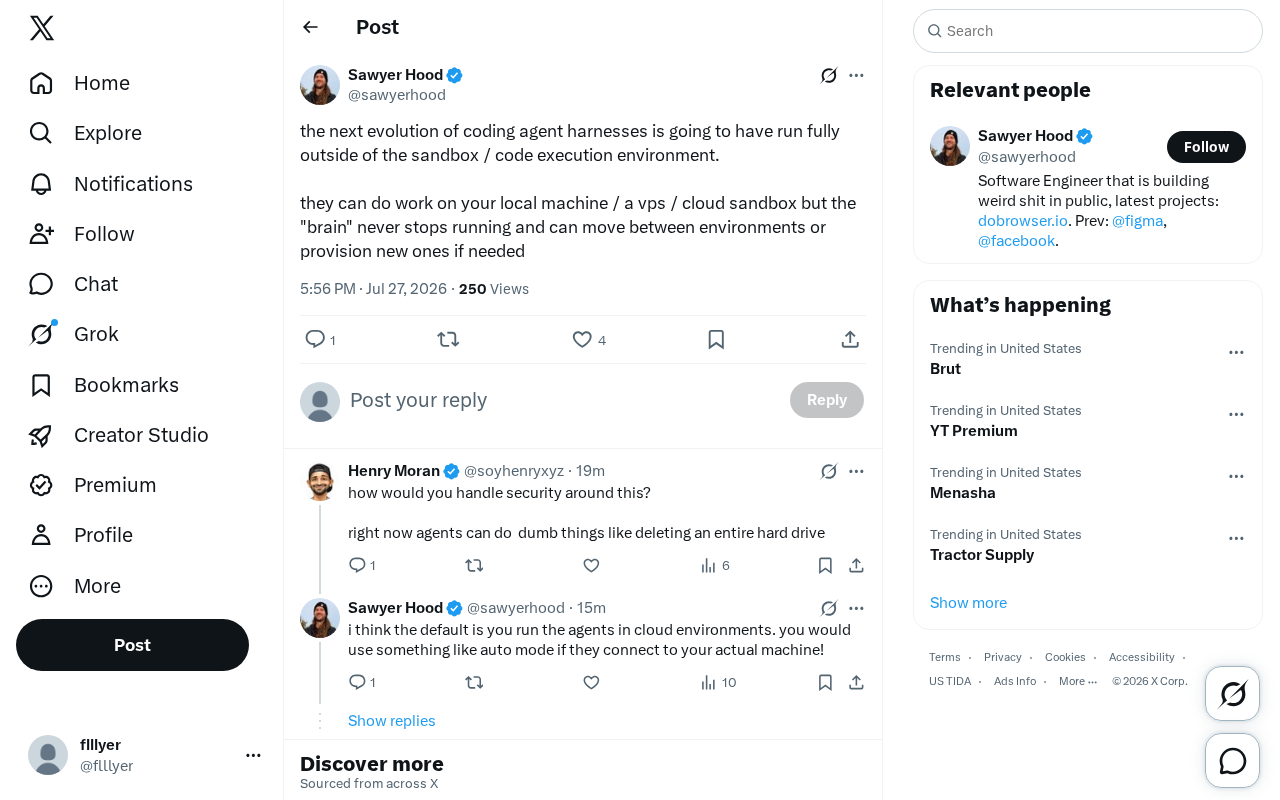
The Next Evolution of Coding Agents: Letting the Brain Break Free from the Sandbox
Exploring the key evolution in coding agent architecture: separating the reasoning core from code execution environments to decouple control and execution planes.
Read more →

·2 min
Jensen Huang Champions Open-Source AI: Distillation Is Not Plagiarism, DeepSeek and Kimi Are Excellent
NVIDIA CEO Jensen Huang defends open-source AI, calls distillation legitimate learning, praises DeepSeek and Kimi, and co-signs open letter with 20+ companies while OpenAI and Google stay silent.
Read more →

·3 min
Open Source vs. Closed Source: Who Will Win the US-China AI Battle?
Chinese open-source models DeepSeek and Kimi K3 challenge OpenAI's closed-source dominance. Analysis of open vs. closed AI strategies, CUDA moat erosion, and the US-China strategic battle for AI supremacy.
Read more →
·3 min
The Next Evolution of Coding Agents: Letting the Brain Escape the Sandbox
Exploring the next evolution in coding agent architecture: decoupling the reasoning core from code execution environments to separate control and execution planes.
Read more →

·3 min
Why Is Every Company Rushing to Embrace AI? A Multi-Layered Analysis of Capital, Technology, and Marketing
Why is every company embracing AI? An in-depth analysis of valuation premiums, FOMO, lower API barriers, and marketing narratives driving the AI craze.
Read more →

·4 min
jlens-gguf: Bringing Jacobian Lens Visualization and Steering to llama.cpp Local LLMs
jlens-gguf is an open-source tool bringing Anthropic's Jacobian Lens interpretability method to GGUF and llama.cpp, enabling internal observation, real-time steering, and abliteration for both dense and MoE models.
Read more →

·7 min
Getting Started with Claude Code: Five Dimensions to Understand Why It Outperforms Regular AI
Claude Code isn't just a chat AI—it can directly read projects, modify code, and run commands. This article compares Claude Code with regular AI across five dimensions to help you decide if it's worth trying.
Read more →

·8 min
LangChain Crash Course: A Complete Roadmap from Zero to Agent Development
A systematic roadmap from LangChain and LangGraph to multi-agent development, covering RAG, Tool Calling, MCP, and more, helping developers break into AI app development.
Read more →

·2 min
GPT-5.6 Three-Model Showdown: How Luna, Terra, and SOL Divide the Work to Save You Money
Is your $20/month ChatGPT Plus worth it? We test GPT-5.6's three models—Luna, Terra, and SOL—to show how to assign tasks smartly and get the most value.
Read more →

·3 min
OpenAI Eyes 5% Stake for Government Support: Mutual Gain or Backdoor Bailout?
OpenAI may offer the Trump administration a 5% stake to ease regulatory pressure. We examine the business logic: burn rates, token billing disputes, nationalization warnings, and political risk.
Read more →

·3 min
40-Hour Stress Test: An In-Depth Evaluation of GPT-5.6's Coding Capabilities
A developer spent 40 hours exhausting Codex Pro's weekly quota to benchmark GPT-5.6 on real enterprise projects. Key findings: proactive root cause tracing, stronger global codebase understanding, and stable long-task execution.
Read more →