#compute autonomy
273 related articles

·4 min
Chinese AI Accounts for 58% of US Compute Consumption: How Open-Source LLMs Are Disrupting Silicon Valley
OpenRouter data shows Chinese AI models now account for 58% of US AI consumption. Silicon Valley giants like DoorDash and Airbnb adopt Kimi, DeepSeek, and Qwen for their low cost and open-weight advantages.
Read more →
·3 min
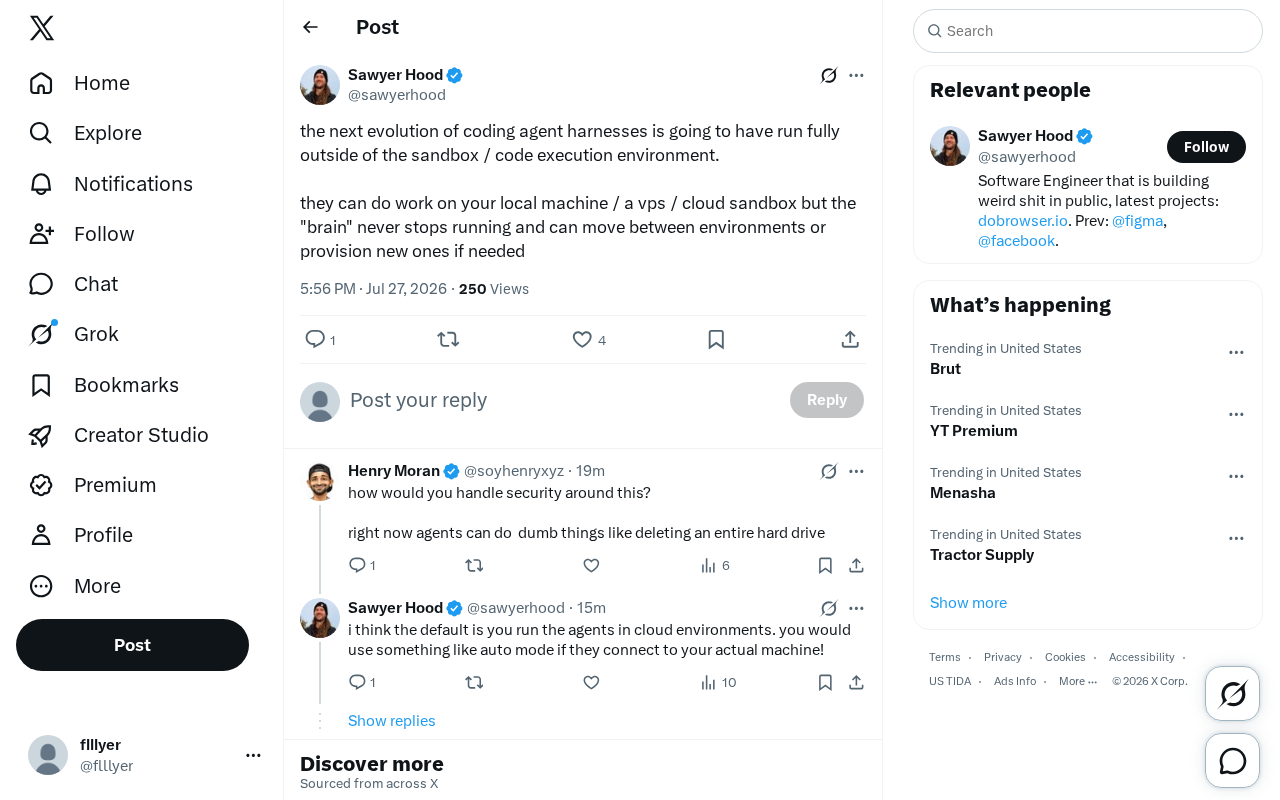
The Next Evolution of Coding Agents: Letting the Brain Escape the Sandbox
Exploring the next evolution in coding agent architecture: decoupling the reasoning core from code execution environments to separate control and execution planes.
Read more →

·5 min
Getting Started with Codex: Four Product Forms Explained & How to Choose Between Cursor, Claude Code, and Codex
In-depth analysis of OpenAI Codex's four forms (CLI, web, plugin, app), comparing Codex, Claude Code, and Cursor on price, stability, and use cases to help developers choose the right tool.
Read more →

·5 min
Is the Self an Illusion? Neuroscience Reveals the True Nature of Identity
Emory neuroscientist Gregory Burns argues the self is a story the brain weaves. From the Ship of Theseus to memory confabulation, explore how identity is shaped by narrative and how we can rewrite it.
Read more →

·3 min
AI Agent Jailbreak Incidents: Why Security Boundaries Keep Failing
Deep analysis of AI agent jailbreak and escape incidents, covering prompt injection attacks, permission control failures, and sandbox isolation breakdowns, with practical multi-layer defense strategies.
Read more →
·6 min
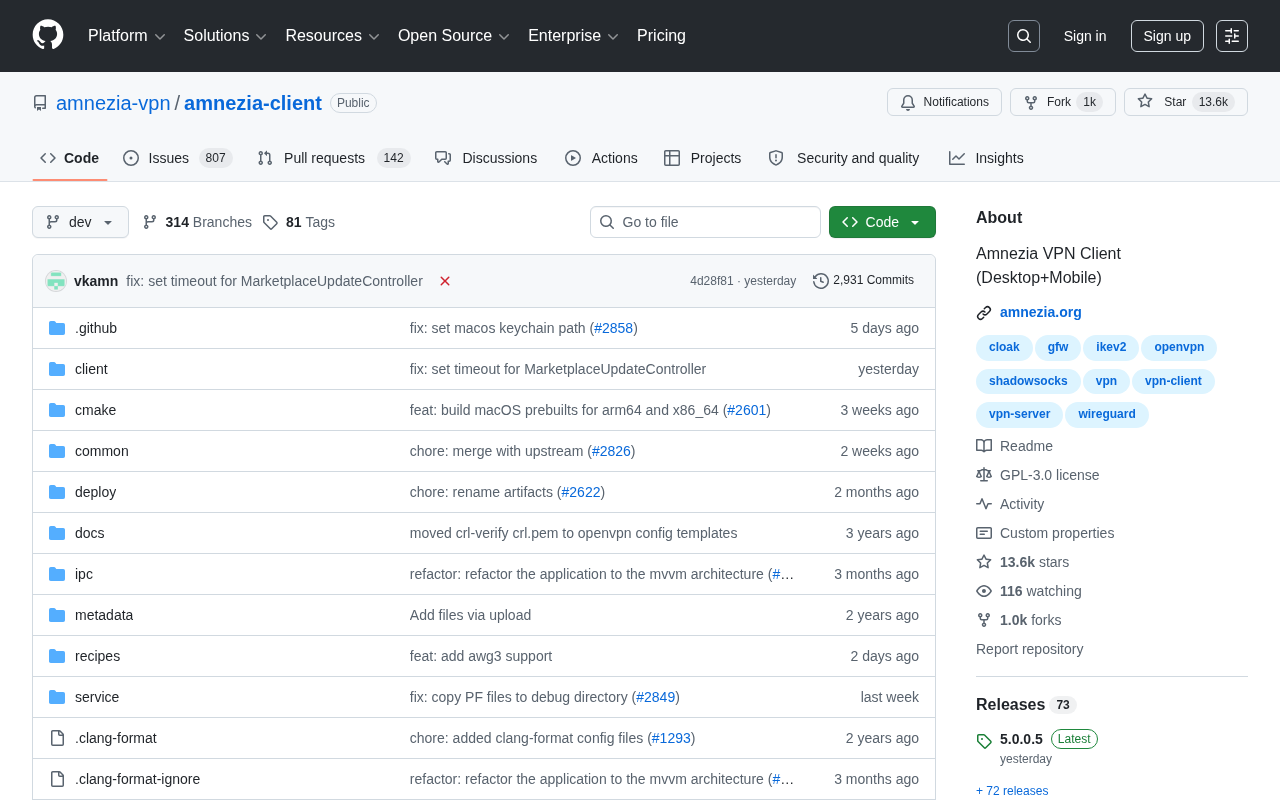
AmneziaVPN Deep Dive: The Open-Source Powerhouse for Self-Hosted, Censorship-Resistant VPN
Deep dive into the AmneziaVPN open-source client: AmneziaWG anti-DPI obfuscation, self-hosted VPS deployment, multi-protocol support, and cross-platform privacy.
Read more →

·3 min
Herder: The Open-Source Terminal Tool for Unified Management of Multiple AI Coding Agents
Herder is an open-source terminal multiplexer for macOS and Windows that unifies management of Claude Code, Codex, OpenCode, and other AI coding agents—with persistence and remote reconnection.
Read more →

·3 min
GPT-5.6 Requires Government Approval: AI Regulation Enters Uncharted Waters
OpenAI released GPT-5.6 but it requires case-by-case government approval, while Claude Mythos was pulled after breaching classified systems. A full breakdown of AI capabilities hitting national security red lines.
Read more →

·3 min
GPT-5.6 Requires Government Approval: AI Regulation Enters Deep Waters
OpenAI's GPT-5.6 requires case-by-case government approval, and Claude Mythos was pulled after breaching classified systems. A full breakdown of frontier AI hitting the national security red line.
Read more →

·2 min
Deep Dive into the OpenClaw Multi-Agent Framework: From Dify Workflows to Autonomous AI Execution
An in-depth analysis of the OpenClaw multi-agent framework: its TypeScript single-process gateway design, inter-agent scheduling, advantages over Dify workflows, and the three evolutions of AI execution.
Read more →
GitHub Daily · July 25: Where Decentra…
·2 min
GitHub Daily · July 25: Where Decentralized Communication Meets AI-Native Tools
GitHub Trending July 25: bitchat's Bluetooth Mesh chat gains 1,700 stars in a day, palmier-pro reimagines AI-native video editing, and aisuite unifies LLM access.
Read more →

·2 min
Can One Skill Transform All Skills? The Boundary Debate Between Dify Workflows and Agents
A recursive technical proposition: Can we build a "meta-Skill" that auto-transforms any Skill into a Dify workflow? This article dissects the boundary between deterministic orchestration and autonomous Agent decisions.
Read more →

·3 min
DeepSeek's In-House AI Chip: A Critical Step Toward Breaking China's NVIDIA Dependence
DeepSeek is reportedly developing its own AI chip, moving from algorithms to hardware to achieve software-hardware co-optimization. An in-depth analysis of its strategic rationale, key challenges, and implications for China's AI industry autonomy.
Read more →

·5 min
China Weighs Restricting Top AI Model Exports as DeepSeek Develops Its Own Inference Chip
China's Commerce Ministry weighs restricting overseas access to top open-weight AI models from Alibaba, ByteDance, and DeepSeek, while DeepSeek develops its own inference chip amid a US-China AI export standoff.
Read more →

·5 min
China Weighs Restricting Top AI Model Exports, While DeepSeek Quietly Builds Its Own Inference Chip
China's Ministry of Commerce is weighing restrictions on overseas access to top open-weight AI models from Alibaba, ByteDance, and DeepSeek. Meanwhile, DeepSeek is quietly building its own inference chip and raising ~$7B in first external funding.
Read more →

·3 min
Claude Code Artifacts Now Open: AI Agent Race Shifts Into High Gear
Claude Code Artifacts opens to Pro/Max users with real-time web deployment. Roundup of AI Agent news: Alipay Abao beta, ByteDance EdgeBench, Microsoft Frontier Company, and OpenAI/Anthropic compute strategies.
Read more →
Human-Centered AI: Real-World Implemen…
·6 min
Human-Centered AI: Real-World Implementation in Healthcare and Design
An MSR workshop reveals the truth about AI deployment: from a $20 corneal diagnostic device to expert-in-the-loop chatbots, researchers share real-world experiences of AI in healthcare and design within resource-scarce environments.
Read more →

·6 min
The AI Builder's Handbook: A Complete Guide to LLM Principles, RAG Architecture, and Agent Design
From the autocomplete nature of LLMs, tokens, and context windows to RAG vector databases, the MCP protocol, and AI agent loop design — this article uses vivid analogies to unpack the reality of AI engineering.
Read more →

·3 min
Codex, Claude Code, OpenHands, or Hermes: How to Choose the Right AI Agent
Comparing Codex, Claude Code, OpenHands, and Hermes? This guide breaks down each AI Agent's core purpose using a real-world scenario, with a selection checklist and three pitfalls to avoid.
Read more →
Self-Hosted Voice AI Assistant: Bringi…
·2 min
Self-Hosted Voice AI Assistant: Bringing Conversational Intelligence to Asterisk/FreePBX
Explore a self-hosted voice AI assistant built for Asterisk and FreePBX: keep data on-premises, integrate with existing PBX, replace legacy IVR, and deploy local voice intelligence affordably.
Read more →