#compute autonomy
299 related articles

·4 min
Running Qwen3.6 27B Locally on a Single RTX 3090: A Complete Guide to Cloud-Rivaling Performance
One used RTX 3090, one 16.8GB GGUF file, and Qwen3.6 27B runs locally offline. SWE-bench score of 77 rivals Claude Sonnet. MTP boosts speed to 59 tok/s. Full local AI coding assistant deployment guide.
Read more →
·3 min
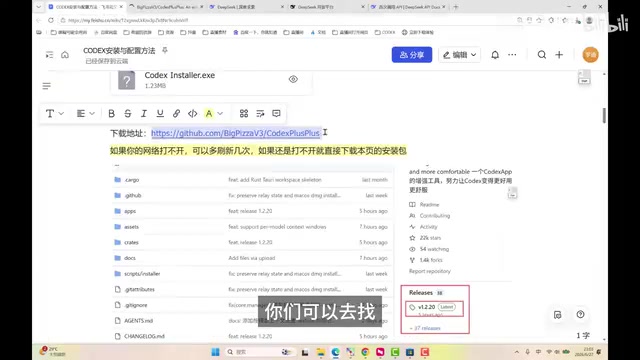
Connect Codex to DeepSeek: A Complete Setup Guide for Beginners
No ChatGPT Plus? No problem. Learn how to connect DeepSeek and other domestic LLMs to Codex using Codex++, with full setup steps from install to launch.
Read more →

·4 min
LangChain in Practice: Mastering the Four Core Modules of the Agent Ecosystem
A deep dive into LangChain's four core modules: LangChain components, LangGraph orchestration, Deep Agents, and LangSmith. Build your first Agent from scratch.
Read more →

·2 min
GPT-5.6 Launch Triggers Industry Chain Reactions: The New Competition Landscape of Compute, Energy, and Open Source
GPT-5.6 raises frontier model expectations, Anthropic extends Fable 5; data center power bottlenecks emerge; open-source GLM5.2 rivals top closed models; AI review burden overlooked.
Read more →
Deep Dives
Deep Dive into OpenAI's Official GPT-5…
·3 min
Deep Dive into OpenAI's Official GPT-5.6 Prompting Guide: The Shift from Manual to Automatic
A deep dive into OpenAI's official GPT-5.6 Sol prompting guide: conciseness-first, outcome-oriented design, autonomy boundaries, tool routing, and reasoning intensity tuning.
Read more →

·4 min
GPT-5.6 Deep Dive: AI Training AI Opens a New Paradigm in the Model Race
OpenAI's GPT-5.6 launches as three models: SO, TERA, and LUNA. The flagship SO autonomously completed LUNA's post-training, marking a new era of AI-trained AI. Deep dive into pricing, Programmatic Tool Calling, METR safety findings, and government oversight.
Read more →
There's No Best Agent Framework — Only…
·2 min
There's No Best Agent Framework — Only the Right One for Your Needs: A Deep Comparison of Leading Options
LangGraph, PydanticAI, OpenAI Agents SDK, CrewAI — a senior developer's practical guide to choosing the right AI Agent framework for your project.
Read more →

·3 min
How to Test High-Risk Actions in AI Agents Before Going Live: A Complete Strategy Beyond Mocking
Mock testing can't cover the real side effects of high-risk, irreversible AI Agent actions. Learn sandbox environments, shadow mode, dry run, HITL, and more.
Read more →

·3 min
Ornith 1.0 9B Model Local Test: Tower Defense Game Exposes Small Model Coding Limitations
Hands-on test of Ornith 1.0 9B open model on a 16GB M4 Mac mini. A tower defense game task reveals the precision limits of small-parameter models vs 35B.
Read more →

·2 min
Paying $200/Month but Can't Access the Flagship Model? Claude's Subscription Dilemma and the Token Multiplier Solution
A $200/month Anthropic subscriber can't access the latest flagship model. We analyze AI subscription pricing tensions and explore how token multipliers could solve the fixed-fee vs. variable-cost mismatch.
Read more →

·5 min
The Definitive Guide to Claude Code: Core Methodology and Best Practices for Agentic Programming
A deep dive into Claude Code, the definitive course from DeepLearning.AI and Anthropic: from agentic principles and context optimization to three hands-on cases—RAG chatbot, Figma-to-frontend, and data analysis. Master AI-assisted coding methodology.
Read more →

·6 min
A Beginner's Guide to Claude Code: Why Is It More Powerful Than Cursor and Trae?
Claude Code is Anthropic's local AI programming assistant that reads your entire codebase, auto-debugs, and delivers far higher accuracy than Cursor and Trae. Here's why it's the strongest AI coding tool today.
Read more →
How Fixing Three Bugs Made Qwen3.5-122…
·3 min
How Fixing Three Bugs Made Qwen3.5-122B Run Reliably on Mac Studio
A developer fixed three critical bugs to make Qwen3.5-122B run reliably as a daily driver on Mac Studio. Explore memory management, inference stability, and quantization precision.
Read more →

·4 min
Hands-On with GPT-5.6: A Single Prompt Builds a Real-Time Voice Anime App
Hands-on with GPT-5.6 Sol: auto-generate real-time voice anime characters from one prompt, write physics engines from scratch, and build unfamiliar toolchains autonomously. In-depth review of coding, agentic tasks, benchmarks, and its hallucination weakness.
Read more →

·3 min
LangChain V1.3 Hands-On Tutorial: A Complete Breakdown of RAG, Multi-Agents, and Engineering Mindset
An in-depth look at LangChain V1.3's core philosophy: from RAG to multi-agent workflows. Master LangGraph, Chain, and DeepAgent, learn token control and Human-in-the-loop, and become a true master of AI app development.
Read more →

·1 min
A Growth Guide for Independent AI Researchers: Opportunities, Challenges, and Core Strategies
How can independent AI researchers grow without institutional support? This article analyzes the three core challenges—compute, mentorship, and recognition—and offers practical growth strategies.
Read more →

·6 min
GPT-5.6 vs Grok 4.5 on the Same Day: A Packed Week of Flagship AI Model Launches
OpenAI's GPT-5.6 launches with Sawa, Terra, and Luna sub-models the same day as Musk's Grok 4.5, while Anthropic, Meta, and NVIDIA make their moves. A packed week of flagship AI launches.
Read more →

·3 min
AI Compute Prices Surge Across the Board + Rise of Two Domestic Coding Tools: The Wave of Self-Reliance Arrives
The U.S. imposes its strictest-ever export controls on top AI models, while Zhipu AI and Moonshot launch self-developed coding tools the same day—amid rising GPU and cloud compute prices. A deep dive into three trends driving cost rationality and tech autonomy.
Read more →

·5 min
How Can Working IT Professionals Learn AI Efficiently? A Practical Learning Path from Zero to Real-World Projects
Limited time but want to learn AI systematically? This guide maps out a practical learning path for working IT pros—from AI application engineering and prompt engineering to RAG and Agents.
Read more →
Mesh LLM: A Practical Exploration of B…
·3 min
Mesh LLM: A Practical Exploration of Building a P2P Distributed AI Inference Network with iroh
Mesh LLM leverages the Rust P2P framework iroh to integrate compute from scattered nodes, exploring a viable path for decentralized LLM inference. This article analyzes its architecture, challenges, and prospects.
Read more →