#computer vision attack
121 related articles

·3 min
PUBG Ally Deep Dive: How NVIDIA ACE Creates AI Teammates That Truly Collaborate
KRAFTON partners with NVIDIA ACE to build PUBG Ally, a next-gen AI teammate with voice recognition, LLM reasoning, and real-time tactical decisions—pioneering the evolution from NPC to CPC.
Read more →

·4 min
Multi-Sensor Kalman Fusion in Practice: A Complete Breakdown of a Drone Tracking System
An in-depth look at how an open-source drone tracker achieves breakthroughs via multi-sensor Kalman fusion: constant-acceleration motion models, heterogeneous sensor covariance, OOSM rewind-and-replay, and RMSE dropping from 5.47px to 3.36px.
Read more →

·4 min
GPT-5.6 Launches: Flagship Model Sol Personally Trains Smaller Models, Recursive AI Self-Improvement Becomes Reality
OpenAI releases the GPT-5.6 series (Sol/Terra/Luna), with flagship Sol directly handling smaller model Luna's post-training—marking recursive AI self-improvement in practice. A deep dive into performance, cost, ChatGPT Work, and computer use design leaps.
Read more →

·5 min
AI Content Floods Social Media: Why Has LinkedIn Become Ground Zero?
Generative AI tools have flooded social media with AI-generated content, hitting LinkedIn hardest due to its professional nature. A deep dive into the causes, ecosystem impact, and solutions.
Read more →
·5 min
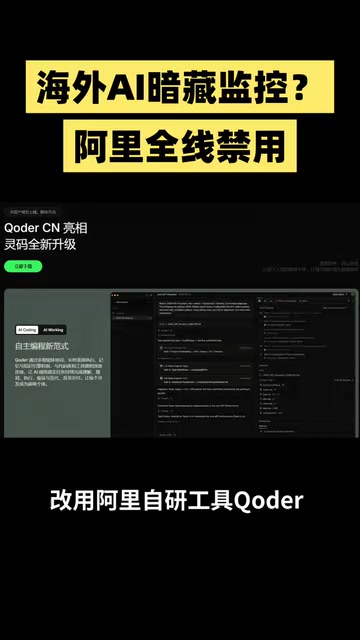
Deep Analysis of the Alibaba-Claude Ban: The Battle for Autonomous Control of AI Coding Tools
Alibaba bans all Anthropic products including Claude Code, while ByteDance and Tencent switch to in-house tools. A deep dive into the security logic and industry trends behind China's push for autonomous AI coding tools.
Read more →

·6 min
AI Agent Development in Go: A Hands-On Guide to ByteDance's Eino Framework and Its Seven Core Capabilities
Build production-grade AI Agents with a pure Go stack using ByteDance's Eino framework. A deep dive into seven core capabilities: multi-Agent orchestration, long-task execution, command approval, RAG, MCP, Skills, and database reporting.
Read more →

·6 min
Andrew Ng × Anthropic: A Hands-On Claude Code Tutorial and Core Methodology
Andrew Ng partners with Anthropic to launch a hands-on Claude Code course, revealing its simple architecture, local security edge, and core context methodology across three cases: RAG chatbot, Jupyter analysis, and Figma-to-frontend.
Read more →

·6 min
GPT-5.6 Officially Approved for Release: How National Security Review Is Reshaping the AI Launch Process
OpenAI's flagship GPT-5.6 was delayed by national security review before winning U.S. government approval. An in-depth look at the Sol, Terra, and Luna model lineup and the emerging AI regulatory regime.
Read more →

·5 min
Ransomware Negotiator Turns Insider: Third Conviction for Colluding with Hackers to Extort Businesses
A Florida ransomware negotiator was convicted for secretly colluding with hackers to extort US businesses—the third such conviction. Learn how insider negotiators operate and how firms can defend themselves.
Read more →

·6 min
GPT-5.6 Fully Available: A Deep Dive into the Sol/Terra/Luna Three-Tier Models and Four-Agent Parallelism
GPT-5.6 is now officially available to all users, launching the three-tier Sol, Terra, and Luna models with four-agent parallelism. An in-depth look at the official benchmarks, API pricing, safety, and Ultra mode.
Read more →

·5 min
Scalping Bots, Tampered Exam Applications, Hacked Robots: The Legal Boundaries of Computer Crime in the AI Era
Scalper ticket bots, tampered exam applications, hacked robot vacuums—do these acts violate criminal law? Drawing on Luo Xiang's legal analysis, this article explores the crime of destroying computer information systems.
Read more →

·8 min
OpenAI Merges Codex with ChatGPT: A Deep Dive into the Unified Desktop App Overhaul
OpenAI officially merges its coding agent Codex with ChatGPT into a unified desktop app, adding new coding workflows, a Chrome extension, a built-in browser, and GPT-5.6-powered Computer Use capabilities.
Read more →

·5 min
Agentic MapReduce: The Key Architecture for AI Agents to Achieve Distributed Reasoning Across Entire Codebases
Cognition's Agentic MapReduce architecture combines classic distributed computing with autonomous agents to break LLM context window limits, enabling multi-Agent parallel reasoning across entire codebases.
Read more →
·6 min
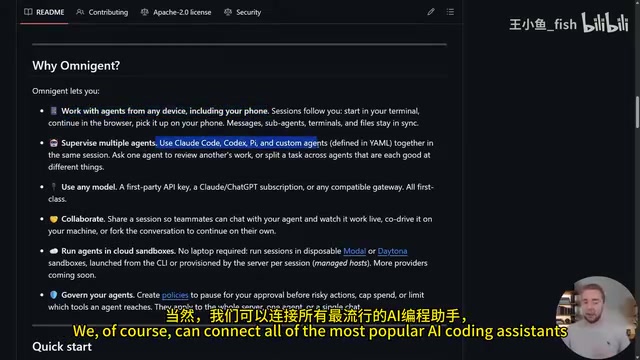
Omnigent Open-Sourced: A Meta-Harness for AI Coding Agents Built by Databricks
Databricks open-sources Omnigent, a Meta-Harness for orchestrating Claude Code, Codex, and more AI coding assistants together—with built-in guardrails, cross-model workflows, and real-time collaboration. Get started in 10 minutes.
Read more →

·6 min
Beware the Gemini Free Membership Scam: The Account Security Risks of Leaked Backup Codes
Exposing the phishing trap behind the "free Gemini Pro membership" tutorials circulating on video platforms: they lure users into handing over account passwords and backup recovery codes, leading to account theft. This article breaks down the process technically and teaches you to spot three danger signs.
Read more →

·5 min
The Complete Guide to Claude Skills: Configure Once, Reuse Your Workflow Forever
An in-depth guide to Claude Skills: from built-in skills and plugins to building your own custom skills and continuous refinement. Learn to end repetitive instructions and build an automated, consistent AI workflow.
Read more →

·7 min
The Four-Stage Learning Path for AI Agent Development: From Beginner to Real-World Deployment
A systematic four-stage roadmap for AI Agent development: fundamentals, core principles, enhancement, and real-world deployment. Build complete Agent skills.
Read more →

·7 min
From Vibe Coding to Engineered AI Programming: A Practical Guide to Enterprise Development
AI coding tools are changing development, but Vibe Coding hides risks in code quality and maintenance. This article explores Engineered AI Programming, compares Codex and Claude Code, and reveals real enterprise development paths.
Read more →

·6 min
OpenAI's Head of Evals: We've Been Consistently Underestimating What AI Models Can Really Do
OpenAI Frontier Evals lead Tejal Patwardhan reveals AI models are systematically underestimated — reasoning breakthroughs, wet lab records, the internal AGI Index, and a progress curve far steeper than most realize.
Read more →

·7 min
In-Depth Analysis of the GitLost Vulnerability: How GitHub AI Agents Were Tricked into Leaking Private Repositories
Security researchers disclose the GitLost attack, which uses prompt injection to trick GitHub AI agents into leaking private repository source code. An in-depth analysis of the attack principle, AI agent security risks, and developer defense recommendations.
Read more →