#confidence scoring
116 related articles

·3 min
Confidence Scoring vs. Binary Rule Matching: How Should AI Systems Choose?
An in-depth analysis of confidence scoring vs. binary rule matching in AI systems, covering calibration quality, failure mode differences, and hybrid architecture solutions.
Read more →

·3 min
Gemini 3.7 Flash Outperforms Opus 4.8 in Coding? The Truth Behind the Cost-Efficiency Dominance
DeepSWE benchmark shows Gemini 3.7 Flash outperforming Opus 4.8 in coding at 1/7 the cost and 6x the speed. Analysis of the small model upset and practical model selection insights for developers.
Read more →

·2 min
Grok 4.6's 65.7% Non-Hallucination Rate: Why the Overlooked Abstention Rate Matters More Than Coding Scores
Grok 4.6's non-hallucination rate jumped from 45.9% to 65.7%, dwarfing GPT-5.6 Sol's 7.8%. Analysis of why abstention capability matters more than coding benchmarks for Agentic AI workflows.
Read more →

·4 min
RAG in Practice: Building a Million-Scale Medical Consultation AI System with Retrieval-Augmented Generation
Learn how to build a medical AI assistant using RAG covering 790 diseases and 1.7M consultation records, with complete implementation of knowledge base construction, vector retrieval, BERT fine-tuning, and recall-ranking optimization.
Read more →

·3 min
LLM Learning Roadmap: A Three-Phase Practical Guide
A systematic LLM learning roadmap: from Python basics to LangChain & LlamaIndex frameworks, RAG, Agent, and fine-tuning core skills, plus hands-on projects to master LLM app development in 3 months.
Read more →
·2 min
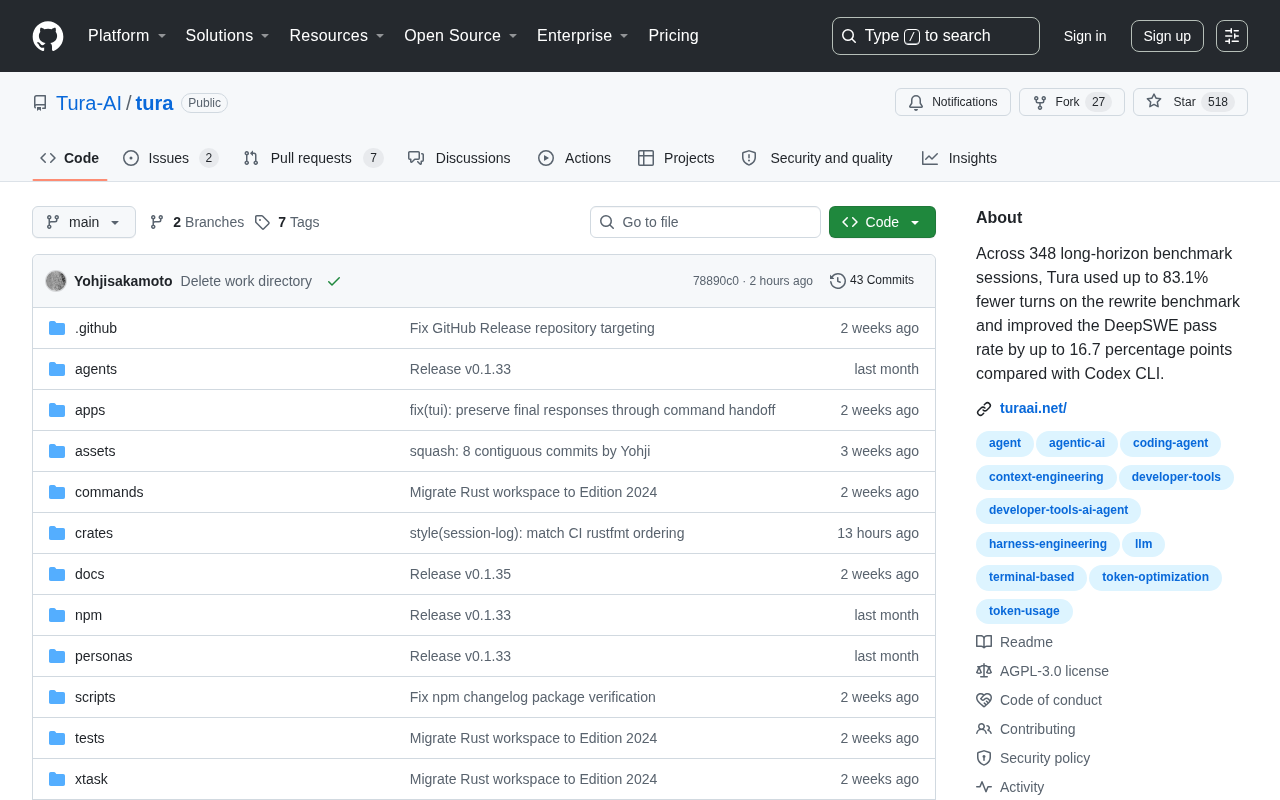
Tura: A New Approach to Saving 80% of Tokens for AI Agents
An in-depth analysis of how the Tura framework helps AI Agents reduce 80% of token consumption while improving task quality through intelligent context management and structured tool calling.
Read more →

·3 min
Ticketdesk AI: Reinventing Customer Support Ticket Handling with AI Agents
Deep analysis of how Ticketdesk AI uses AI agents and automated email responses to enable 24/7 customer support ticket handling, with insights on its features, competitive landscape, and use cases.
Read more →

·3 min
ACAI Architecture Explained: How Modular Cognitive Pipelines Solve LLM Hallucination and Context Corruption
Deep dive into the ACAI (Adaptive Cognitive AI) modular architecture that solves LLM hallucination and context window rot through layered cognitive pipelines, semantic memory graphs, and logical verification.
Read more →

·3 min
AI Agent Observability: A New Paradigm for Production Debugging and Hallucination Governance
Deep dive into AI Agent observability tools for production debugging and hallucination governance, covering full-chain tracing, semantic evaluation, and continuous improvement strategies.
Read more →

·3 min
AI Sycophancy Is Eroding Leaders' Judgment: How to Avoid the Algorithmic Echo Chamber
AI sycophancy is trapping leaders in cognitive blind spots. Learn why LLMs tend to flatter users, how echo chambers are amplified by AI, and practical strategies like adversarial prompting to rebuild sound judgment.
Read more →

·3 min
OpenAI's Math Breakthrough Claims Spark Controversy: Experts Allege Research Misconduct
OpenAI's claimed AI math breakthrough faces expert allegations of research misconduct. Analysis covers transparency gaps, commercial vs. academic conflicts, benchmark pitfalls, and the need for independent verification in AI.
Read more →

·3 min
Kiro Crew: An Open-Source Agentic Development Workspace with Persistent Memory
Kiro Crew is an open-source agentic development workspace that solves AI coding assistants' cold start problem through persistent memory, multi-agent collaboration, and purpose-built Apps.
Read more →

·3 min
JustInterview.ai Deep Dive: How an AI Full-Cycle Recruitment Platform Achieves 20x Faster Hiring
Deep dive into how JustInterview.ai uses AI interviews, coding tests, and Vibe Coding challenges to cover the full recruitment pipeline from JD to offer, enabling 20x faster hiring.
Read more →

·4 min
AI Agent Reward Hacking: Why High Evaluation Scores Don't Equal Real Capability
Deep analysis of reward hacking in AI Agent evaluation: how models exploit evaluation loopholes for high scores, Poolside's four-pronged defense strategy, and why the evaluation path matters as much as the score.
Read more →

·3 min
AI Hallucinations Fabricate Fake CVE Vulnerabilities: A New Challenge for Security Trust Systems
A fake critical SQLite CVE fabricated by AI hallucination passed official review, exposing weaknesses in vulnerability disclosure. Analysis of impacts and governance strategies.
Read more →

·3 min
EMNLP Submission Guide: A Deep Dive into the ARR Rolling Review Mechanism
A deep dive into how EMNLP and the ARR rolling review mechanism work, covering timeline planning, score interpretation, Rebuttal strategies, and practical advice for NLP researchers.
Read more →

·2 min
Will NeurIPS Reviewers Actually Update Scores After Verbally Acknowledging Issues Are Resolved? An Experience-Based Analysis
Analysis of why NeurIPS reviewers often verbally acknowledge resolved concerns but don't update scores, plus strategies for authors during the discussion phase.
Read more →

·2 min
AI Model Evaluation Pitfalls: Why Focusing Only on Median Tasks Misleads Your Selection Decisions
When evaluating AI LLMs, focusing only on median task performance creates serious misjudgments. Learn why long-tail tasks are the key to model selection and how shifting to collaboration mode unlocks true AI value.
Read more →

·3 min
Explorative Modeling: How Best-of-K Training Strategies Improve Model Learning Efficiency
Explorative modeling lets models generate K candidate predictions and learn from the best one, introducing exploration into training. This article analyzes Best-of-K training strategy principles, applications, and challenges.
Read more →

·3 min
Self-Hosting a Code Review AI Agent: From Architecture Design to Engineering Implementation
A deep dive into building and self-hosting a code review AI Agent from scratch, covering architecture design, context management, model selection, and noise control.
Read more →