#data interoperability
318 related articles
Code Review Graph: Using Intelligent C…
·3 min
Code Review Graph: Using Intelligent Code Graphs to Deliver Precise Context for AI
Code Review Graph is a local-first open-source code intelligence graph supporting MCP and CLI. It reduces AI context noise in large repos with persistent graph structures.
Read more →

·3 min
AI Coding Agents Explosion: CodeWell Goes Open Source, Kimi K3 Launches, Claude Gets Browser Access
CodeWell open-sources a multi-model terminal coding agent, Kimi K3 launches with ultra-long context, MiniMax Code 2.0 rebuilds its Agent architecture, and Claude gets browser access. AI is accelerating from content generation to task execution.
Read more →
Designing APIs for AI Agents: A Paradi…
·3 min
Designing APIs for AI Agents: A Paradigm Shift from Human Interfaces to Agent-Friendly Design
When AI Agents become the primary API callers, traditional interface design assumptions break down. This article explores agent-friendly API design principles and how MCP is driving this paradigm shift.
Read more →
Smart Proxy: The Key Architecture for …
·3 min
Smart Proxy: The Key Architecture for Running AI Coding Agents Safely and Autonomously
Too much AI permission is risky; too little kills productivity. A smart proxy acts as a controllable middleware layer — intercepting, auditing, and policy-gating AI agent actions in tools like Claude Code and Cursor for safe autonomous operation.
Read more →

·6 min
A Deep Dive into OpenAI Codex: How AI Engineers Are Reimagining Software Development with Agents
OpenAI Codex is redefining how AI engineers work: from code completion to autonomous Agents, from single-threaded to parallel Value Maxing. A deep dive into the Codex App architecture, open ecosystem, and Manager of Agents practice.
Read more →

·4 min
From Tokens to Agents: A Complete Guide to Core AI Concepts
Master 8 core AI concepts — LLM, Token, Context Window, Prompt, Tool, Agent, MCP, and Agent Skill — and understand the complete logic chain behind AI's evolution.
Read more →

·3 min
AI Tool Selection Guide for Test Engineers: A Hybrid Approach to Avoid Three Common Pitfalls
How should test engineers choose AI tools? This guide breaks down the pitfalls of pure AI solutions and recommends a hybrid strategy using tools like DeepSeek, TRAE, Claude Code, and Skill encapsulation.
Read more →

·2 min
MCP vs. Skills: A Clear Breakdown of AI Agent Architecture Layers
MCP and Skills aren't alternatives — they occupy different layers of AI Agent architecture. This article breaks down Function Call, MCP, and Skills to clarify each layer's role.
Read more →
7 Weeks on Interrail: Documenting 6,37…
·2 min
7 Weeks on Interrail: Documenting 6,379 Kilometers Across Europe by Rail
A tech traveler crossed 13 countries in 7 weeks with an Interrail pass, covering 6,379 km by rail. A data-driven look at quantified travel, digital nomad life, and sustainable transport.
Read more →

·2 min
Pocket ID Achieves Official OIDC Certification and Adds OAuth 2.0 Authorization Support
Pocket ID v2.10.0 achieves OpenID Connect Certified™ status and adds OAuth 2.0 Resource Servers & Scopes. A lightweight, Passkey-first SSO solution for homelab self-hosting.
Read more →

·3 min
CutWire Prism: A Free, Open-Source Node-Based Live Video Mixer Explained
CutWire Prism is a free, open-source node-based live video mixer supporting multi-source input, chroma key, background removal, Lua scripting, and web remote control. Available for Windows and Linux.
Read more →

·3 min
Generate a Mini-Game from a Single Prompt? Testing the Cocos AI Agent Plugin
Deep dive into the Cocos Creator AI Agent Plugin: three-level context compression, tool approval, multi-agent parallelism, and DeepSeek-powered Mario scene building — all in one test.
Read more →

·3 min
Biome's Missing ESLint Rule: A Community Voting Guide for padding-line-between-statements
Biome.js currently lacks the popular ESLint rule padding-line-between-statements. This article explains the rule's purpose and configuration, and explores how community voting can drive Biome's feature completeness and aid ESLint migration decisions.
Read more →

·3 min
Decoding Databricks' AI Strategy: The Omnigents Orchestration Platform and LTAP Unified Storage Architecture
An in-depth look at the AI strategy of Databricks co-founders Matei Zaharia and Reynold Xin: the open-source Agent platform Omnigents, the unified storage architecture LTAP, and how Dream Engine reshapes data and intelligence.
Read more →

·4 min
Home Assistant: The Local-First Open Source Smart Home Platform That Puts Privacy and Freedom First
Home Assistant is the most mature open source smart home hub, prioritizing local control and privacy, supporting thousands of devices across ecosystems with 88,000+ GitHub stars.
Read more →

·7 min
Unity Custom MCP Tool Development Guide: Enabling AI Agents to Precisely Control the Editor
Learn how to develop custom tools based on the Unity MCP Relay Server, enabling AI agents like Cursor to directly control the Unity editor. Covers setup, tool building, parameter validation, and MCP Pro comparison.
Read more →
·6 min
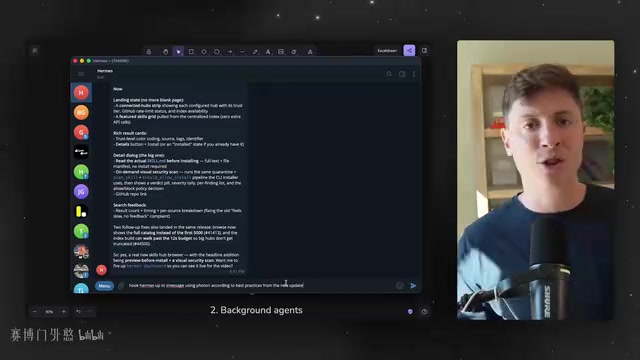
Hands-On With Hermes Agent's Eight Major Updates: A Complete Guide to AI Automation and Self-Evolution
The Hermes Agent gets a major upgrade with eight new features: native iMessage, parallel background sub-agents, Unreal Engine MCP support, a self-evolving Skill Hub, and more. A hands-on breakdown of the core changes and their real impact on personal AI automation workflows.
Read more →

·4 min
Coze in Practice: A Complete Guide to Building Multi-Agent Collaboration Teams
A systematic guide to Coze's positioning and capabilities, covering Agent-building platform categories, Skill modules, workflow orchestration, and multi-Agent team building.
Read more →

·3 min
Xiaomi Smart Home Screen 10 In-Depth Review: An AI-Powered Whole-Home Smart Control Hub
Xiaomi Smart Home Screen 10 review: a 10.1-inch display with AI-powered Xiao Ai, compatible with 3,000 smart devices and 261 IoT platforms. Supports scene automation, video calls, IR control, and privacy protection.
Read more →

·5 min
Browser Use: A Deep Dive into the Event-Driven Browser AI Agent Framework
Browser Use is an open-source AI Agent framework that lets LLMs autonomously drive browser operations via natural language. This article breaks down its four-layer architecture, core Agent loop, CDP perception layer, dynamic Tools dispatch, and its Skills, Sandbox, and MCP extension capabilities.
Read more →