#decoding strategies
175 related articles

·4 min
Two Paths to Better AI Reasoning: Test-Time Scaling and Formal Verification
This article synthesizes two MSR India Summit talks, exploring two key paths to better AI reasoning: test-time scaling with variable granularity search, and a formal verification framework for trustworthy agent execution.
Read more →

·6 min
The Frontier of AI Interpretability Research: Opening the Neural Network Black Box
An in-depth look at AI interpretability research: from chain of thought and probes to sparse autoencoders, exploring how scientists understand neural network internals and assess AI alignment and safety.
Read more →
Hardware-Software Co-Design: A Guide t…
·2 min
Hardware-Software Co-Design: A Guide to Building Hardware-Friendly LLM Architectures
Explore AI Model Co-Design principles and how hardware-friendly LLM architecture design — covering MoE, GQA, and FP8 quantization — optimizes the accuracy, throughput, and latency trade-off.
Read more →
Structured Information Extraction with…
·3 min
Structured Information Extraction with Local 7B Quantized Models: Root Cause Analysis and Engineering Optimization
Using Qwen 2.5 7B quantized locally to extract 60+ fields from insurance/financial contracts? Learn why it struggles and how task splitting, RAG, GBNF, and smarter chunking can fix it.
Read more →

·2 min
Distributed AI Systems: A Practical Engineering Guide to Training, Inference, and Production Deployment
A deep dive into distributed AI systems engineering: data/model/tensor parallelism for training, KV cache, quantization, elastic scaling for inference, and cloud deployment with Kubernetes, Ray, and DeepSpeed.
Read more →

·3 min
Distributed AI Systems in Practice: A Complete Guide to Training, Inference, and Production Deployment
A deep dive into Distributed AI Systems: a new book distilling 10 years of AI engineering experience covering distributed training, inference optimization, and production model serving.
Read more →

·2 min
15-Year-Old Trains 200M MoE Language Model from Scratch: Full Architecture & Hands-On Breakdown
A 15-year-old trained Tiny-MoE, a 200M-parameter MoE language model from scratch using free Kaggle GPUs, featuring MLA attention, RoPE+YaRN, and native PyTorch.
Read more →

·2 min
Grok 4.5 Hands-On Review: Speed, Accuracy, and Value in a Three-Way Evaluation
A power-user developer tests Grok 4.5: blazing-fast responses, high accuracy, and great value. A deep dive into Grok 4.5's real-world AI coding performance in Cursor.
Read more →

·4 min
Deep Learning Data Normalization: Global Statistics vs. Per-Image Normalization — A Practical Guide
A deep dive into global vs. per-image normalization in deep learning, with remote sensing segmentation case studies covering data leakage, Min-Max vs. Z-score, and best practices for multi-channel satellite imagery.
Read more →

·3 min
The Real Bottleneck for Conversational AI: Model Capability or Training Data Quality?
Conversational AI shines in the lab but fails in real conversations. This article analyzes voice assistants' core weaknesses—model architecture or overly "clean" data? Covering ASR, VAD, and end-to-end systems engineering.
Read more →

·2 min
Why Does Speech-to-Text Keep Failing? A Practical Guide to Optimizing Messy Audio Transcription
Meeting recordings, mixed languages, and background noise causing speech-to-text to drop words or produce gibberish? This article dives deep into ASR hallucination causes and offers practical solutions.
Read more →

·3 min
CPU-Native Language Models: Breaking Through Inference Bottlenecks with Memory Bandwidth Co-Design
SiliconLLM builds a CPU-native LLM architecture from scratch, combining selective SSM, ternary (1.58-bit) LUT MLP, and granular MoE, co-designed around the L3 cache bandwidth cliff. Ternary kernels show 4-5x speedup over fp32.
Read more →

·4 min
OpenAI GPT-Live Voice Model: How Full-Duplex Interaction Reshapes Human-AI Conversation
OpenAI unveils the GPT-Live voice model family, with full-duplex interaction enabling AI to listen and speak simultaneously and delegate complex reasoning to GPT-5.5. GPQA benchmark jumps from 45% to 80%.
Read more →

·5 min
In-Depth Comparison of AI Image Generation Tools: How to Choose Between Flux, Midjourney, and Gemini?
A comprehensive comparison of mainstream AI image generation tools: Flux, Midjourney, Grok, Gemini, and Stable Diffusion. Dissecting their pros and cons across quality, freedom, and usability to help you find the right AI drawing solution.
Read more →
·5 min
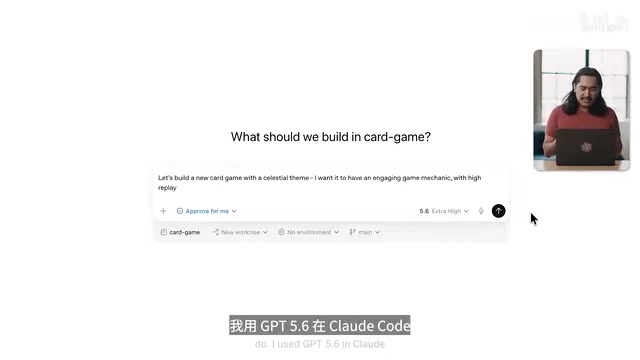
GPT-5.6 Released: Hands-On Analysis of Programmatic Tool Calling and Autonomous Agents
GPT-5.6 is officially released with core upgrades including programmatic tool calling, autonomous subagent delegation, and higher token information density. A hands-on card game build reveals its Agentic power.
Read more →
Local Coding Agents in Practice: A Com…
·6 min
Local Coding Agents in Practice: A Complete Guide to Replacing Your Claude Subscription with Open-Source Models
An in-depth look at local coding agents—core concepts, advantages, and real challenges. Compare against Claude Code and learn to build a zero-subscription, private AI coding workflow with open-weight models.
Read more →
·5 min
GPT-5.6 Triple Launch: Understanding the Positioning and Key Differences of Sol, Terra, and Luna
OpenAI released three GPT-5.6 models—Sol, Terra, and Luna—covering everything from flagship reasoning to lightweight speed. A deep dive into their positioning, performance differences, pricing, and industry signals.
Read more →

·2 min
Does Yelling at AI Make It Smarter? Breaking Down LLM Behavior and Prompting Techniques
Why does yelling at AI sometimes seem to work? This article breaks down LLM behavior using technical principles and offers actionable prompt engineering tips.
Read more →

·7 min
Grok 4.5 Launch: Coding AI Market Reshuffle, Anthropic Claims Half the Territory
Grok 4.5 launches at just $0.49 per task, 90% cheaper than rivals. Anthropic's Claude Code claims 50% of the AI coding market. SambaNova raises $1B. Read the latest AI market shifts.
Read more →

·4 min
GPT-5.6 Sol vs Grok 4.5: Same $20 Subscription — Which One Is Actually Worth It?
GPT-5.6 Sol or Grok 4.5 — both at $20/month, but which delivers more value? We break down use cases, intelligence benchmarks, and ecosystem tradeoffs to help you decide.
Read more →