#deterministic AI
780 related articles
Why Does AI Take Such Bad Notes? A Dee…
·4 min
Why Does AI Take Such Bad Notes? A Deep Dive into the Limits and Trade-offs of LLM Memory
Why does Claude remember random junk? This deep dive explores how LLM memory systems work, their technical limits, privacy risks, and how to design AI that knows what to forget.
Read more →

·4 min
ctx: An Open-Source Tool for Searching Your Local AI Coding Assistant History
ctx is a local-first open-source tool that lets developers search and reuse conversation history from Claude Code, Cursor, and GitHub Copilot without uploading data to the cloud.
Read more →

·3 min
Unsloth Major Update: GLM-5.2 Support, 3x Longer Context, and a New Model Hub
Unsloth v0.1.471-beta adds full GLM-5.2 support, 3x longer context (up to 200K tokens on a single GPU), a new Model Hub, and Chat Canvas — a major leap for local LLM fine-tuning.
Read more →

·5 min
Introduction to Prompt Engineering: A Complete Guide to Core Concepts, Methodologies, and Limitations
Prompt engineering is a core skill in the AI era. This article breaks down the essential differences between prompts and prompt engineering, the six-step workflow, four evaluation criteria, and key limitations like context limits and hallucination.
Read more →

·4 min
Why Large Language Models Are Starting to 'Invent Words': The Nature of LLM Language Boundaries
Top LLMs are pushing beyond existing human vocabulary, producing neologisms and expressive distortion. This article analyzes the tension between LLM high-dimensional semantic spaces and natural language symbol systems.
Read more →

·5 min
The Attention Bottleneck in AI Coding: Hands-On Agent Workflows from the Father of Crayfish
OpenClaw author Peter shares his thinking on AI coding: when compute is no longer the bottleneck, developer attention becomes the new ceiling. Learn three practical skills—Agent Transcript, Auto-Review, and the Crapbox sandbox.
Read more →

·3 min
Kimi K2.7 Code Goes Open Source | Chinese Image Model HiDream Tops Global Rankings
Kimi K2.7 Code open-sourced with 30% fewer tokens; HiDream O1 Image 1.5 tops global rankings, beating Google and ByteDance. A roundup of China's latest AI breakthroughs.
Read more →

·4 min
AI Agents in Action: A Complete Breakdown of Automated Vendor Onboarding
Why does vendor onboarding always drag on? The real bottleneck isn't the tasks — it's the waiting between them. Learn how AI agents automate cross-department workflows across procurement, legal, finance, and IT.
Read more →

·3 min
Agentic AI in Practice: Core Principles, Engineering Challenges, and Practical Recommendations
A deep dive into Agentic AI: core components (planning, tool calling, memory), engineering challenges (reliability, cost, safety), and practical development recommendations for production deployment.
Read more →

·6 min
Semi-AI Mode: A Practical Guide to Implementing API Automation Testing
Can't make pure AI work? This guide explores the Semi-AI approach to API automation testing, covering key challenges, enterprise framework design, and how AI and frameworks work together for maximum impact.
Read more →
·5 min
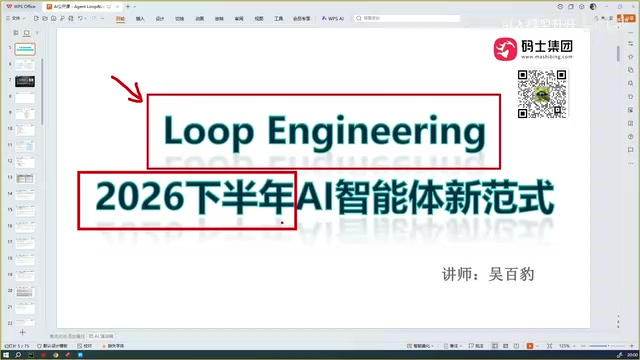
Loop Engineering: A Comprehensive Guide to AI Agent Loop Design
A deep dive into Loop Engineering for AI Agents — what loop feedback mechanisms are, how they differ from Harness Engineering, and a complete guide from principles to production implementation.
Read more →
Morph Reflexes: Building Real-Time Beh…
·4 min
Morph Reflexes: Building Real-Time Behavioral Guardrails for AI Agents with Multi-Head Classifiers
Morph Reflexes is an open-source AI agent monitoring tool that uses multi-head classifiers for real-time trace classification — enabling safety guardrails, quality scoring, and training data filtering.
Read more →

·6 min
LangChain 1.0 Comprehensive Guide: Three Core Frameworks and Hands-On AI Application Development
Deep dive into LangChain 1.0's architecture: LangChain framework, LangGraph multi-Agent orchestration, and LangSmith observability platform, with hands-on RAG and intelligent customer service projects.
Read more →

·7 min
Engineering Vibe Coding in Practice: Taming AI Programming with Superpowers and gstack
A deep dive into engineering Vibe Coding: using Superpowers for project-level decomposition and gstack for module layering and constraints to tame AI coding assistants like Codex and Claude Code.
Read more →

·5 min
Deep Dive into Vercel's eve Framework: How AI Agents Are Becoming an Entirely New Form of Software
Vercel's Chief of Software Andrew Qu explains the eve Agent framework's design philosophy, covering Skills modularity, Sandboxes security, and agent-readable websites—revealing the paradigm shift from instruction-driven to goal-driven software.
Read more →
AI Engineer World's Fair Closing Day: …
·2 min
AI Engineer World's Fair Closing Day: The Loops Debate, State of the Industry, and What to Build Next
AIEWF closing day recap: the agent loops debate, the State of AI Engineering report, and a keynote on what to build next — covering AI engineering's key divides and trends.
Read more →

·4 min
Complete Guide to Connecting External Models in Codex: Two Methods to Unlock Full Capabilities
Two methods for connecting external models to Codex: manually configure keys via relay services, or use the CC Tool to auto-bridge GPT, DeepSeek, and more. Covers auth/config files, CC Tool usage, and multi-model switching.
Read more →

·6 min
Codex Configuration in Practice: A Complete Guide to Accessing GPT-5.5 at Low Cost from China
A detailed guide for Chinese developers on configuring the Codex CLI AI coding tool with GPT-5.5 via API proxies, covering setup steps, efficiency gains, and security risks.
Read more →

·7 min
Andrew Ng Teams Up with LangChain: Core Principles of LangGraph Agent Development
Andrew Ng and LangChain CEO Harrison Chase present AI Agents in LangGraph, covering five core agent design patterns and LangGraph's graph-based framework for building cyclical agentic workflows.
Read more →
·7 min
Andrew Ng Teams Up with LangChain: Core Concepts of LangGraph Agent Development
Andrew Ng and LangChain CEO Harrison Chase's AI Agents in LangGraph course covers five agent design patterns and LangGraph's graph-based framework for building cyclical AI workflows.
Read more →