#distributed tracing
204 related articles

·7 min
Dify Local Deployment in Practice: A Complete Guide with BT Panel + Docker
A step-by-step guide to locally deploying the open-source Dify AI platform using the BT Panel on a VMware virtual machine—covering Ubuntu setup, Docker config, and image pull troubleshooting.
Read more →

·2 min
Voice AI Agent Architecture: Pipecat Flows vs Vapi Squad — A Deep Comparison
A deep comparison of Pipecat Flows and Vapi Squad for voice AI agent architecture — covering latency, accuracy, multi-agent handoffs, and when to use each.
Read more →

·7 min
Harness Engineering: Why a Powerful Model Isn't Enough — Here's What Really Matters
A data-deletion disaster reveals the biggest AI Agent risk: the problem isn't the model, it's Harness design. Learn context management, process standards, and permission isolation.
Read more →

·3 min
LangChain v1.3 Hands-On Tutorial: Deep Dive into Agents, RAG, and Local Model Deployment
Deep dive into LangChain v1.3: compare LangChain, LangGraph, and DeepAgent paradigms, explore RAG pipelines, multi-agent systems, and local LLM deployment for enterprise AI apps.
Read more →

·2 min
Spring AI Alibaba Admin: A Deep Dive into the Java Visual AI Workflow Platform
Spring AI Alibaba Admin is a visual AI workflow platform for Java, comparable to Dify. It supports Dify-to-Graph migration, multi-model integration, and code export. This article covers core features and local deployment tips.
Read more →

·2 min
Dependency Drift in Production AI Agents: Detection, Response, and Building Resilient Systems
AI Agents in production face systemic dependency drift risks — model updates silently change outputs and silent failures are hard to detect. Learn detection strategies, hidden costs, and engineering practices.
Read more →

·4 min
Zero-Code AI Voice Agents with Claude Code: 5 Real-World Business Scenarios Unpacked
Build a production AI voice agent with Claude Code + Telnyx single-stack — no code needed, live phone number in 5 minutes. Covers 5 business scenarios including appointment booking, lead qualification, and support triage.
Read more →

·2 min
Call Codex Directly Inside Claude Code: A Dual-AI Cross-Validation Workflow
Codex Plugin for Claude Code lets developers invoke Codex reviews directly inside Claude Code. Supports code review, proposal review, background task delegation, and context handoff for a dual-AI workflow.
Read more →

·3 min
The Truth Behind Three RAG Pipeline Crashes: Why Inter-Stage Data Contracts Matter
A RAG pipeline crashed three times due to inter-stage data format mismatches. Learn how JSON Schema and Pydantic explicit contracts turn fragile AI pipelines into maintainable systems.
Read more →
Multi-Agent Collaboration: A GPT Team …
·2 min
Multi-Agent Collaboration: A GPT Team Engineering Paradigm and Practical Guide
Explore multi-agent collaboration architecture: role division, communication protocols, coordination mechanisms, and how Workbench templates help developers build efficient AI agent teams.
Read more →

·2 min
From Workflow Graphs to Distributed Protocols: Dissecting Multi-Agent System Architecture Paradigms
How does Cosmonapse replace LangGraph's graph structure with event-driven distributed protocols? A deep dive into two multi-agent architecture paradigms, their trade-offs, and when to use each.
Read more →

·4 min
Microsoft Teams Collaborative AI Agents: The Three-Pillar Framework of Manners, Privacy, and Polish
Microsoft Build deep dive: how to deploy AI agents in Teams multi-user collaboration. A three-pillar framework—Manners, Privacy, Polish—covering emoji reactions, targeted messages, Adaptive Cards, and more for enterprise agent developers.
Read more →

·2 min
Karma: An AI Coding Agent Orchestration Tool for Building Multi-Agent Collaborative Systems
Karma is an orchestration layer for AI coding agent frameworks, solving multi-agent collaboration, task decomposition, state management, and observability challenges. Compatible with Aider, OpenHands, and more.
Read more →

·3 min
Cosmonapse: A Decentralized Multi-Agent Framework Built on an Event Bus
Cosmonapse is an open-source multi-agent framework that replaces central orchestrators with peer nodes, using typed signals and an event bus to fully decouple tool calls, memory, and HITL. Supports Python and TypeScript under Apache 2.0.
Read more →
·2 min
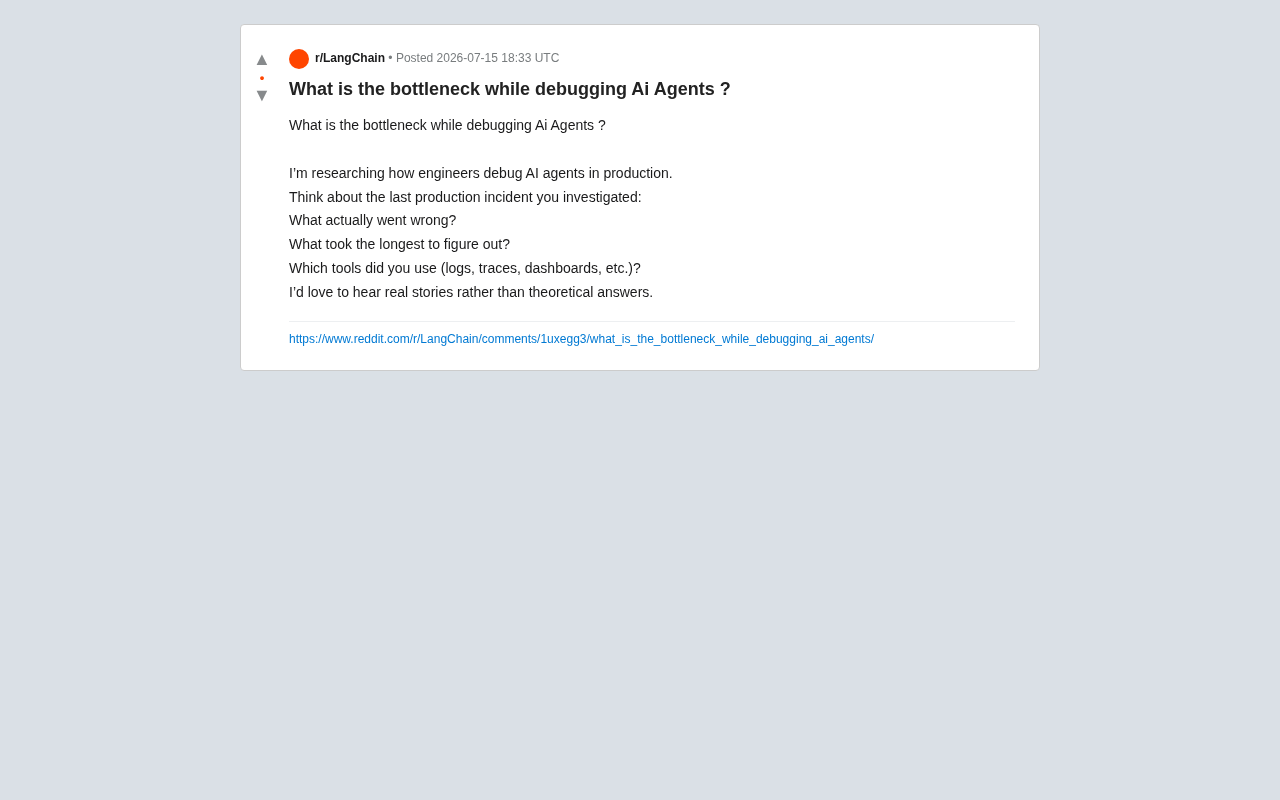
AI Agent Debugging Bottlenecks: A Practical Guide to Production Observability
Explore core AI Agent debugging challenges in production: non-determinism, multi-step error propagation, and observability gaps — with practical guidance on LangSmith and tracing tools.
Read more →
·5 min
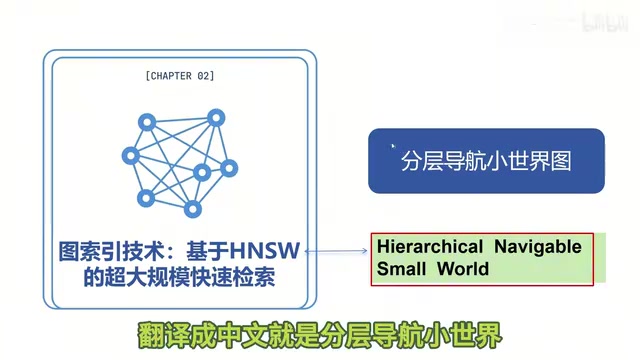
A Deep Dive into Vector Search for AI Agents: The Technical Foundations of RAG and Long-Term Memory
An in-depth look at the core tech behind AI Agents: how the HNSW, IVF, and PQ vector search algorithms power RAG and long-term memory. Understand where a model's "memory" and "knowledge" come from.
Read more →

·3 min
Waku Agent Deep Dive: The Four Core Pillars of a Local-First AI Assistant
A deep dive into Waku Agent's four pillars: Loop Engineering, three-tier Memory system, Eval assessment, and the Harness scaffold. Full walkthrough of a local-first AI assistant from task execution to memory consolidation.
Read more →
Production-Grade LangGraph Template: A…
·2 min
Production-Grade LangGraph Template: A Practical Guide to Engineering AI Agents for Production
A deep dive into production-grade LangGraph templates covering state management, observability, error handling, and containerized deployment to bridge the gap from demo to production.
Read more →
Agentic Loop Explained: The Three-Loop…
·2 min
Agentic Loop Explained: The Three-Loop Architecture of Reasoning, Tool Use, and Orchestration
A deep dive into the Agentic Loop — breaking down the three-layer architecture of reasoning, tool use, and orchestration to help developers build and debug reliable AI agent systems.
Read more →
Codex Encrypts Sub-Agent Prompts: The …
·2 min
Codex Encrypts Sub-Agent Prompts: The AI Black-Box Trend and What Developers Should Do
OpenAI Codex is encrypting sub-agent prompts, sparking debate about AI transparency. We analyze the motivations, community concerns, and strategies for developers navigating the black-box trend.
Read more →