#hardware vulnerability
121 related articles

·2 min
Apple Sues OpenAI: The Battle Over Hardware Talent Poaching and Trade Secrets
Apple formally sues OpenAI, alleging systematic hardware talent poaching and trade secret theft, including bringing Apple parts to interviews and illegal cloud access.
Read more →

·3 min
Anthropic's Project Glass Wing: The Arms Race in AI Code Security Auditing
Anthropic launches Project Glass Wing—its Mythos Preview model found over 10,000 critical infrastructure vulnerabilities in hours, spanning 150 organizations across 15 countries. A deep dive into AI security auditing.
Read more →

·6 min
GPT-5.6 vs Grok 4.5 on the Same Day: A Packed Week of Flagship AI Model Launches
OpenAI's GPT-5.6 launches with Sawa, Terra, and Luna sub-models the same day as Musk's Grok 4.5, while Anthropic, Meta, and NVIDIA make their moves. A packed week of flagship AI launches.
Read more →

·6 min
AI Agent Security in Practice: 7 Attack Techniques and a Five-Layer Defense System
An in-depth breakdown of the 7 major attack techniques against AI agents (prompt injection, data poisoning, image attacks, etc.) and a five-layer defense system, with real cases from Doubao and DeepSeek.
Read more →

·6 min
Jacobian-Lens in Practice: Manually Reshaping LLM Behavior with J-Space
After Anthropic released Jacobian-Lens, a developer reversed it from an interpretability tool into a behavior editor, manually tuning J-Space to reshape LLM outputs. An in-depth look at the tech, representation engineering, and AI safety risks.
Read more →

·5 min
The Complete Guide to Building an AI-Powered Second Brain with Obsidian + Hermes Agent
An in-depth guide to building an AI-driven second brain with Obsidian + Hermes Agent. Covers living files, VPS deployment, core memory mechanisms, and skill visualization.
Read more →

·5 min
GPT-5.6 In-Depth Review: Crushing Competitors on Value, But Its Jailbreak Vulnerabilities Can't Be Ignored
OpenAI's GPT-5.6 Soul, Terra & Luna are priced at one-third of Claude, leading Anthropic Fable on many benchmarks. We analyze its value, reasoning, and jailbreak risks.
Read more →

·6 min
Home Self-Hosting Server Setup Guide: Building a Private Cloud Ecosystem from Scratch
One 32GB server, 8 hours to build a complete home self-hosting ecosystem. This article details the selection logic behind core services like Jellyfin, Forgejo, Immich, and Ollama, plus infrastructure setup essentials for Nginx Proxy Manager and Podman Compose.
Read more →

·2 min
GhostLock: A Deep Dive into the 15-Year-Old Linux Stack UAF Vulnerability
GhostLock is a stack use-after-free (stack-UAF) vulnerability affecting all major Linux distributions, lurking for 15 years. A deep dive into its mechanics, severity, scope, and practical mitigation.
Read more →
·5 min
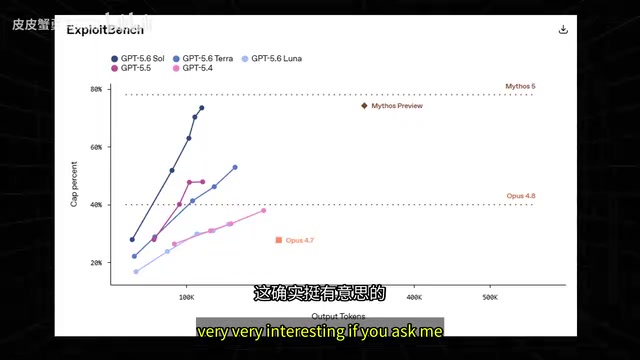
GPT-5.6 Released: Outperforms Rivals but Halted by Government—Cybersecurity Capabilities Trigger Regulatory Red Line
OpenAI releases GPT-5.6 (Sol/Terra/Luna), beating Anthropic on Terminal Bench at ~40% lower cost. But its cybersecurity capabilities hit danger thresholds, limiting access to trusted partners at government request.
Read more →

·6 min
Alibaba Bans Claude Code: The Battle Over AI Coding Tool Security and Data Sovereignty
Alibaba bans Claude Code over security risks, sparking tech community debate. An in-depth analysis of data leakage risks with cloud AI coding tools and the rise of local AI deployment.
Read more →

·5 min
Prismata Analysis: How to Defend Web Agents Against Cross-Site Prompt Injection Attacks
Cross-site prompt injection is becoming the trickiest security threat for Web agents. This article analyzes the Prismata project's 'confining defense' approach—controlling injection's blast radius via context isolation, permission boundaries, and trust grading.
Read more →

·7 min
Grok 4.5 Launch: Coding AI Market Reshuffle, Anthropic Claims Half the Territory
Grok 4.5 launches at just $0.49 per task, 90% cheaper than rivals. Anthropic's Claude Code claims 50% of the AI coding market. SambaNova raises $1B. Read the latest AI market shifts.
Read more →
·6 min
GPT-5.6 Sol Limited Preview: The Safety Boundaries Behind AI's Capability Expansion
OpenAI's flagship GPT-5.6 advances on three fronts—Sol, Kara, Luna tiered rollout; ByteDance CGN 5.0 Pro and Meta Muse push image generation toward controllable workflows; AI coding agents expose new supply chain risks.
Read more →

·6 min
GPT-5.6 Officially Approved for Release: How National Security Review Is Reshaping the AI Launch Process
OpenAI's flagship GPT-5.6 was delayed by national security review before winning U.S. government approval. An in-depth look at the Sol, Terra, and Luna model lineup and the emerging AI regulatory regime.
Read more →

·6 min
European Parliament Members Investigating Spyware Hacked by Pegasus: The Watchdogs Become the Watched
EU spyware committee members hacked by Pegasus, exposing the regulatory crisis of commercial spyware. Deep analysis of zero-click attacks, systemic risks to democratic oversight, and the urgent need for international regulation.
Read more →

·6 min
GPT-5.6 Hands-On Deep Dive: ChatGPT and Codex Merge, Full Analysis of the Sol Model
GPT-5.6 is officially released, merging ChatGPT and Codex into one app and launching the three-tier Sol, Terra, and Luna models. A detailed breakdown of 16 hands-on tests plus Worker mode and Codex dev upgrades.
Read more →

·7 min
Google's $250K Bounty: Linux VM Escape Vulnerability Sets a Historic Record
Google paid a security researcher $250K for a Linux kernel VM escape vulnerability, setting a VRP record. An in-depth analysis of VM escape principles, kCTF incentives, and cloud security impact.
Read more →

·6 min
GPT-5.6 Fully Available: A Deep Dive into the Sol/Terra/Luna Three-Tier Models and Four-Agent Parallelism
GPT-5.6 is now officially available to all users, launching the three-tier Sol, Terra, and Luna models with four-agent parallelism. An in-depth look at the official benchmarks, API pricing, safety, and Ultra mode.
Read more →

·4 min
DeepSeek Coder Deep Dive: How This Open-Source Code LLM Outperforms GPT-4
A deep dive into DeepSeek Coder V1 to V2: MoE architecture, 128K context, 90.2% HumanEval pass rate, and how it became the first open-source model to beat GPT-4 Turbo.
Read more →