#hyperparameter grid search performance
19 related articles

·5 min
Open-Source STEM Education Robot: Smart Ball-Fetching Interaction Powered by Edge AI Object Detection
An open-source STEM education robot using Edge Impulse edge AI for local object detection, teaching kids computer vision and ML through an engaging ball-fetching game with anthropomorphic design.
Read more →

·3 min
AI Research Automation: More Like Data Cleaning Than Inventing the Transformer
AI research automation will look more like data cleaning than inventing the Transformer. Explore how automating 60%-80% of repetitive research work reshapes the AI research paradigm.
Read more →
·3 min
AI Research Automation: More Like Data Cleaning Than Inventing the Transformer
Why AI research automation looks more like data cleaning than inventing the Transformer. Exploring the value of automating 60%-80% of repetitive research work and how human-AI collaboration reshapes the research paradigm.
Read more →

·2 min
SVM Training Taking 10 Minutes? A Deep Dive into Grid Search Performance Pitfalls for Beginners
SVM training taking 10 minutes on 8,000 samples? This post dissects GridSearchCV combinatorial explosion, probability=True overhead, and redundant params — with actionable fixes.
Read more →

·2 min
Build From Scratch or Just Use sklearn? A Complete ML Engineer Learning Path Guide
Should you implement ML algorithms from scratch or just use sklearn? This guide breaks down the optimal learning path for ML engineers by career stage and company type.
Read more →
Building RL-Powered Autonomous Researc…
·2 min
Building RL-Powered Autonomous Research Agents with NVIDIA NeMo
How NVIDIA NeMo combines reinforcement learning to train agent skills and build an Autoresearch workflow capable of autonomously running ML experiments end-to-end.
Read more →
Fine-Tuning Cosmos Models in One Day w…
·2 min
Fine-Tuning Cosmos Models in One Day with Agent Skills — Breaking 90% Accuracy
NVIDIA uses Autonomous Coding Agents and Agent Skills with TAO to fine-tune Cosmos visual reasoning models in one day, achieving over 90% accuracy.
Read more →
Paper Reproduction as an Entry Point i…
·4 min
Paper Reproduction as an Entry Point into Scientific Machine Learning: Path Selection and Pitfall Guide
How can applied math students efficiently enter Scientific Machine Learning (SciML)? This guide covers the value and pitfalls of paper reproduction, with a layered path from numerical PDEs to research.
Read more →

·3 min
How to Systematically Learn Machine Learning After Mastering Math and Python
Already know math and Python? Learn the complete machine learning roadmap: from data science tools and classical algorithms to deep learning frameworks and specialization.
Read more →

·4 min
E2AM: An Open-Source Tool to Quantify AI Training Energy Consumption and Carbon Emissions in Two Lines of Code
E2AM is a Green AI open-source tool that monitors AI model training energy use, carbon emissions, and accuracy-per-joule metrics in just two lines of code. Supports PyTorch and Hugging Face, runs locally with no server needed.
Read more →

·4 min
A Guide to Avoiding Pitfalls in PCA Visualization of Self-Supervised Vision Models: Why the Colors Are Meaningless
Running self-supervised vision models (SSL) on a MacBook CPU isn't hard. This article reveals the core misconception of PCA visualization through ViT-S experiments: colors can't convey semantics across images, and changing resolution reverses hues entirely.
Read more →

·7 min
Training Machine Learning Models from Scratch: A Complete Beginner's Guide
A complete walkthrough of training machine learning models from scratch—covering problem definition, data preprocessing, algorithm selection, hyperparameter tuning, and evaluation, with tool recommendations for beginners.
Read more →

·2 min
Fine-Tuning PaliGemma 2 for Custom Object Detection: A Practical Guide from General to Specialized
Learn how to fine-tune Google's open-source PaliGemma 2 VLM for custom object detection. Covers model architecture, data formatting, fine-tuning strategies, and real-world value.
Read more →

·4 min
FTPO: A Training-Level Solution to AI Repetition Loops
FTPO (Final Token Preference Optimization) tackles AI "Doom Loops" at the training level rather than patching them at inference time — exploring its principles, value for small/quantized models, and open challenges.
Read more →

·7 min
Discord Wrongfully Bans 8,000 Accounts: Why an AI Moderation System Mistook Chessboards for Violating Content
Discord admits a safety-system bug wrongfully banned over 8,000 accounts, triggered by chessboards, Minecraft screenshots and other grid images. A deep dive into AI moderation false positives and the efficiency-vs-accuracy dilemma.
Read more →

·7 min
Dispersion Loss: A Key Technique for Solving Embedding Condensation in Small Language Models
Embedding condensation is a hidden bottleneck in small language model training. Dispersion Loss combats this by enforcing representation spread during training at zero inference cost.
Read more →
·4 min
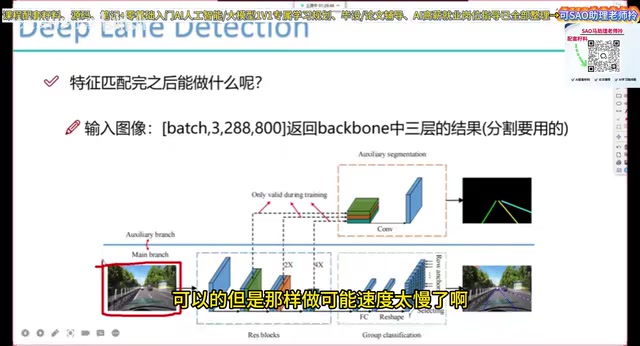
Deep Learning Lane Detection: From Segmentation to Classification for 300+ FPS Real-Time Inference
Deep learning lane detection algorithm that simplifies dense segmentation into efficient grid classification, achieving 300+ FPS real-time inference with row selection, Focal Loss, and expectation-based localization.
Read more →
 Product Reviews
·4 min
Cube Studio Deep Dive: Tencent's Open-Source One-Stop Cloud-Native AI Platform
Deep dive into Tencent's open-source AI platform Cube Studio, covering distributed training, LLM fine-tuning, inference deployment, VGPU virtualization, and domestic hardware support for enterprise MLOps.
Read more →
