#indie game developer
145 related articles

·2 min
yatta!: The Minimalist To-Do List That Cheers for You After Every Completed Task
yatta! is a minimalist iOS to-do app with just three categories—Today, Later, Someday—that celebrates each completed task with cute characters and fireworks. Free and fully offline.
Read more →

·2 min
AI Builds the Largest Open-World MMO in History: A New Paradigm for Game Development
Exploring how AI drives large-scale MMO development, from scalable content generation to dynamic NPC interaction, analyzing technical pathways, challenges, and industry implications.
Read more →

·2 min
Godot Engine VR Development Log: Lessons and Pitfalls from Porting to PSVR2
An in-depth analysis of an indie developer's experience using Godot to develop VR games and port to PSVR2, covering OpenXR integration, performance optimization, and console certification challenges.
Read more →

·4 min
Pure Vibecoding Builds a 130+ Card Multiplayer CCG: Full AI Tech Stack Breakdown
An indie dev built a 130+ card multiplayer CCG entirely through vibecoding with Claude Code, GPT, and ElevenLabs. Full AI tech stack breakdown and analysis of vibecoding's capabilities and limits.
Read more →

·4 min
9 Hours, 4 Million Tokens: AI Creates a Stunning WebGPU Snow Rendering Masterpiece with Claude Code
Reddit user Noniv used Claude Code with the Opus model to build SNOWFLOW, a stunning WebGPU real-time snow renderer, in just 9 hours using 4 million tokens. A deep dive into prompt strategy, snow shaders, and performance optimization.
Read more →

·2 min
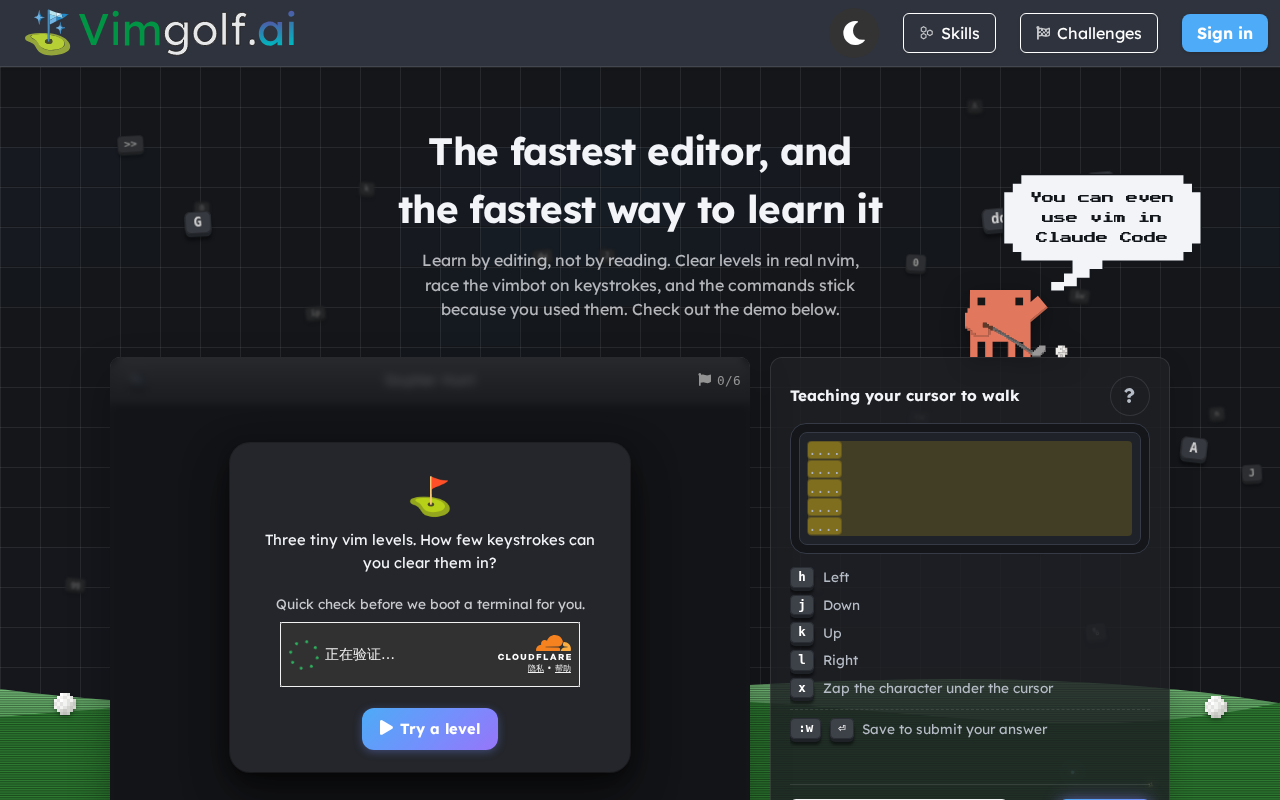
Vimgolf.ai: Learn Vim Through a Level-Based Game
Vimgolf.ai is a gamified Vim learning tool that helps users progressively master Vim commands through level-based challenges. We analyze its approach and compare it with VIM Adventures and similar tools.
Read more →
·2 min
Vimgolf.ai: Learn the Vim Editor Through a Level-Based Game
Vimgolf.ai is a gamified Vim learning tool that helps users progressively master Vim commands through level-based challenges. We explore its core philosophy, gamification advantages, and compare it with tools like VIM Adventures.
Read more →

·4 min
Project Rai-chan Technical Breakdown: A Complete Guide to Building a Fully Local AI Companion
Deep dive into Project Rai-chan's tech stack: Ollama+Gemma local LLM, Unity rendering, VOICEVOX speech synthesis, and more — exploring the technical path for local AI companions.
Read more →

·3 min
Should You Open Source Your Project? A Layered Open Source Strategy Using Project Replay as a Case Study
Should indie developers open source their projects? Using the game custom achievement tool Project Replay as a case study, this article analyzes the open source decision and offers a practical layered strategy.
Read more →

·2 min
Training AI to Play Devil May Cry 3 with Reinforcement Learning: Challenges and Practices for Action Game AI
An indie developer trains AI to autonomously play Devil May Cry 3 using reinforcement learning. This article analyzes the core challenges including sparse rewards, high-dimensional action spaces, and real-time decision-making.
Read more →

·5 min
Opus 5 Builds a No Man's Sky-Style Exploration Game in One Day: MCP and Sub-Agent Architecture Explained
A developer used Anthropic's Opus 5 model to build a No Man's Sky-style space exploration game in one day using Blender MCP and sub-agents. Deep dive into the technical architecture and industry implications.
Read more →

·3 min
A Practical Guide for Java Developers Transitioning to AI Application Development
Facing the AI wave, how can Java developers transition from traditional CRUD backend work to AI application development? This article breaks down the AI+ national strategy, China's AI catch-up logic, and offers a practical path.
Read more →

·4 min
Vibe Coding in Practice: AI-Assisted Refactoring of a Unity Game's SO Architecture
Learn how to use Vibe Coding to collaborate with AI in refactoring a Unity game, introducing ScriptableObject (SO) data architecture, with hands-on tips.
Read more →

·4 min
Vibe Coding in Practice: Refactoring a Unity Game's SO Architecture with AI
A deep dive into refactoring a Unity game with Vibe Coding and AI, introducing ScriptableObject (SO) architecture—covering visual map editors, Codex remote control, and collaboration pitfalls.
Read more →

·3 min
Building an Online Game Solo with AI: 877 Users, 12 Daily Actives — What's Still Missing?
One developer used AI (Claude/ChatGPT/Gemini) to build a multiplayer web ARPG in a month for a few hundred dollars. 877 users, 12 daily actives — here's the real story.
Read more →

·3 min
Open Source and Restraint: What Independent Developers Can Learn from Liang Wenfeng's Long-Term Philosophy
How does DeepSeek founder Liang Wenfeng's open-source philosophy inspire indie game developers? This article unpacks three core methodologies for long-term thinking in technical creation.
Read more →

·7 min
0 Lines of Hand-Written Code, 3 Hours to Build an AI Product That Can Take Payments
A real case: a creator launched an AI photo generation product in 3 hours with zero code, and got paid the next day. This article breaks down the full loop methodology.
Read more →

·2 min
Repaint: Free, Open-Source Offline Painting App with 16-Bit Color and AI Integration
Repaint is a free, open-source, fully offline cross-platform digital painting app built with C/C++, Raylib, and ImGui, featuring 16-bit color, modular brushes, non-destructive layers, and offline Stable Diffusion AI integration.
Read more →

·2 min
Building 3D Aerial Combat Game AFTERBURN Solo with Claude Code: A Full Development Diary
An indie developer built low-poly aerial combat game AFTERBURN using Claude Code, covering flight controls, dogfight AI, weapon systems, and cinematic replay. A real look at AI-assisted game development.
Read more →

·3 min
Building 'Beat the Couch' with Claude: Can You Outperform Doing Nothing?
Beat the Couch is a minimalist web game built with Claude that challenges you to outperform a buy-and-hold strategy using real S&P 500 history. 25,000+ plays prove market timers almost always lose to the couch.
Read more →